Graffiti Vandalism in Lajares: A Clash Between Art and Heritage
The Incident: Local Authorities Intervene
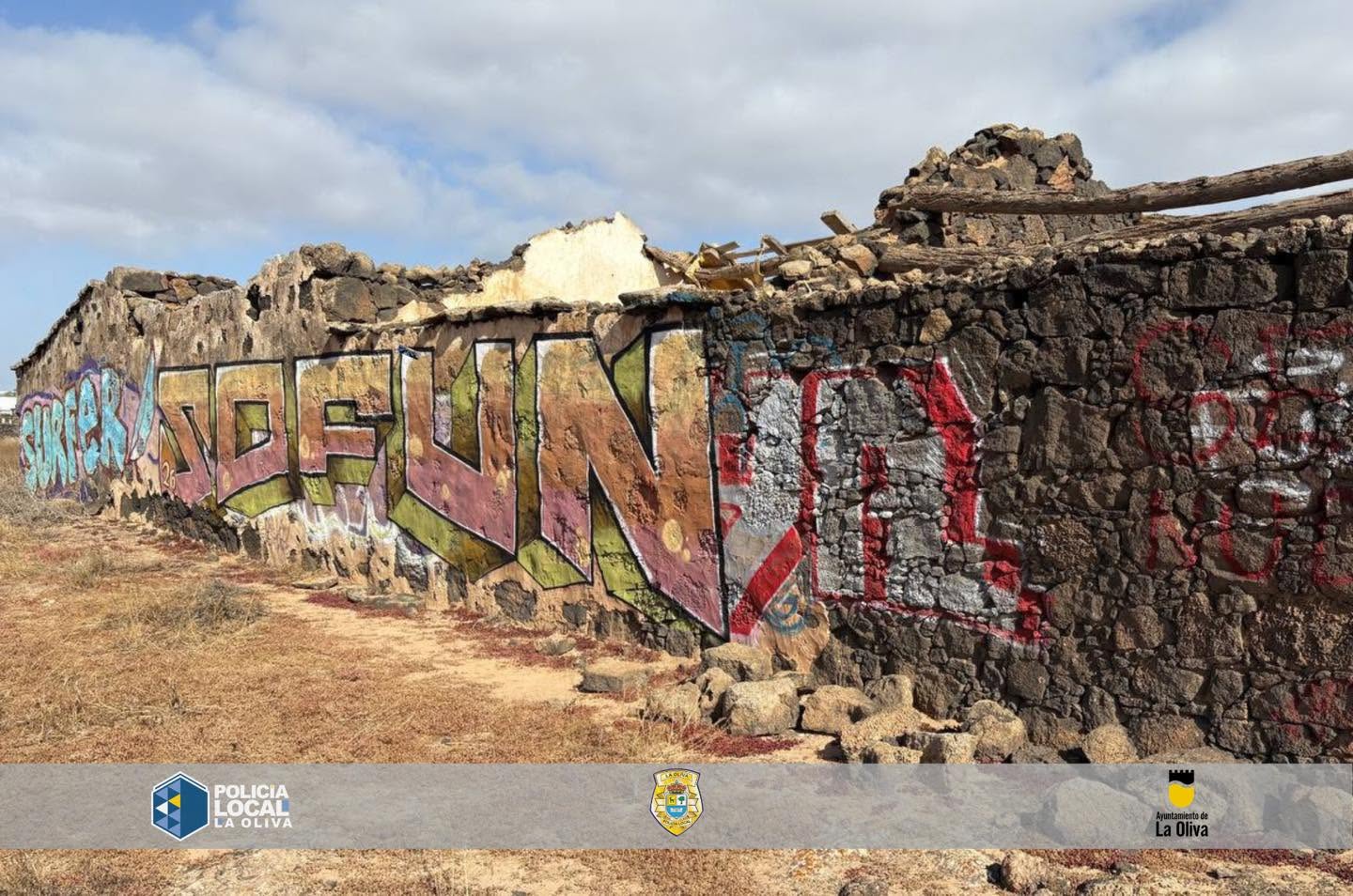
On a recent morning in Lajares, the Local Police of La Oliva made a startling discovery. Responding to a tip-off from a concerned citizen, officers encountered an individual in the act of defacing a cherished piece of the town’s history: an ancient stone house. This particular structure stands as a rare example of traditional architecture from the 19th and early 20th centuries—a time period that shaped the cultural landscape of the region. The confrontation led to the confiscation of several aerosol paint cans that matched the vivid colors of the graffiti being applied to the historic walls.
The Significance of the Structure
The old stone house represents more than just a building; it is a testimony to the unique historical and cultural identity of Lajares. As one of the few remaining examples of local architectural style, its preservation is essential for understanding the community’s heritage. The act of vandalism targeted in this incident threatens not only the structure but also the collective memory associated with it. Such buildings are not merely bricks and mortar; they embody the stories, traditions, and aesthetics of a bygone era.
Legal Ramifications of Vandalism
Upon their arrival, the officers identified the suspect and promptly informed him of the serious legal implications of his actions. The paint inscriptions could lead to significant administrative fines or even criminal charges. This is particularly relevant when the property in question is recognized for its historical or cultural significance, creating an additional layer of responsibility for those who may wish to express themselves artistically in public spaces. The incident serves as a reminder that freedom of expression can sometimes brush against the boundaries of legality and ethics.
Local Heritage Protection: A Mixed Record
La Oliva is one of three municipalities in Fuerteventura with a Heritage Catalog aimed at protecting sites of cultural importance. This catalog includes iconic structures that tell the story of the island’s rich history. Unfortunately, despite this protection framework, the community has witnessed similar acts of vandalism in the past. A notable example occurred on April 25, 2022, when graffiti appeared on the 18th-century defensive tower of El Tostón in the nearby area of El Cotillo. That case remains unresolved, highlighting the ongoing challenge of safeguarding historical sites in the face of such disregard for cultural heritage.
The Impact Beyond the Immediate Act
The implications of graffiti extend beyond just the immediate act of vandalism. It raises questions about urban space, public art, and the responsibilities that come with community heritage. While street art can serve as a powerful form of expression, it should not come at the expense of destroying or defacing recognized landmarks. The interplay between artists and the community must be navigated carefully to find ways to promote creativity without undermining the very essence of the locality.
A Broader Perspective on Cultural Preservation
Discussions surrounding cultural preservation often bring about diverse opinions. Some advocates argue for stricter regulations to protect historical sites, while others believe in promoting dialogue between artists and city planners to find solutions that celebrate both modern creativity and heritage conservation. Initiatives involving local artists, education, and community engagement may lead to a more harmonious coexistence of artistic expression and cultural preservation.
Conclusion
The events in Lajares reflect a broader societal conversation about the value we place on our cultural heritage and the necessity of protecting it. While the local authorities in La Oliva took immediate action to apprehend the perpetrator and seize the graffiti tools, the community must also engage in a continuous dialogue about the role of art in public spaces and how it respects or challenges our historical narratives. As the town works to safeguard its architectural treasures, the incident serves as a poignant reminder of the ongoing responsibility individuals have in preserving cultural legacies for future generations.