Community Protests Against the Antenna Installation in Antigua
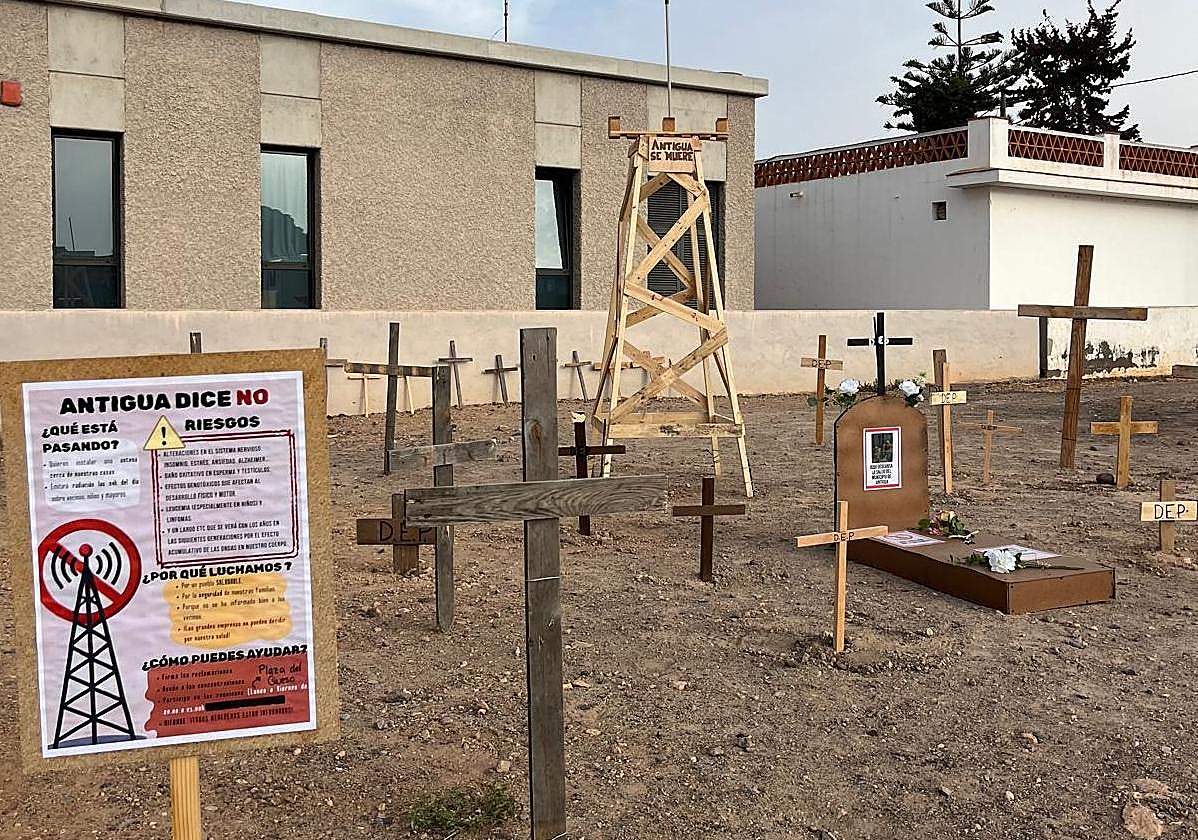
In a striking display of community activism, residents of Antigua are gaining national attention for their opposition to the installation of a telecommunications antenna. This week, their protests escalated from mere gatherings at town hall to a dramatic installation featuring crosses, tombstones, and a wooden replica of the antenna, underscoring their commitment to the cause.
The Origins of the Protest
The protests began when citizens first learned about the antenna’s planned placement along Camino de las Piletas, close to their homes. Concerned about the potential health implications and environmental impacts of such installations, locals swiftly organized daily demonstrations. These gatherings have moved from the town hall to a more visible location—the Plaza del Queso along the main road—reflecting a growing momentum in their movement.
Activists argue that the proximity of the antenna poses significant risks to both health and aesthetics in the community. As these gatherings intensified, participants opted for a more evocative approach, setting up a symbolic display in a vacant lot near the local health center. This artistic representation serves not just as a protest but also as a poignant reminder of their collective fears.
Legal and Expert Support
As their efforts grow, the local movement has garnered the expertise and support of notable figures, including Pedro Costa Morata. Costa Morata is an engineer, sociologist, journalist, and recipient of the National Environment Award in 1988. With experience consulting for the United Nations Environment Program, he has joined the locals, emphasizing the necessity for telecommunications infrastructure to be located far away from residential areas. His voice adds credibility to their concerns, providing a strong argument that underscores the importance of community well-being over corporate interests.
Residents are also seeking legal advice, enlisting a lawyer to navigate the complexities of halting the antenna’s installation. This combination of grassroots activism backed by professional support illustrates a well-rounded approach to their cause, amplifying their message and increasing their chances of a successful outcome.
The Broader Context
This protest in Antigua is not an isolated incident; it reflects a growing trend where communities worldwide are pushing back against infrastructures that they perceive as threats to their health and environment. Issues surrounding telecommunications antennas—ranging from health risks like radiation exposure to environmental degradation—are becoming increasingly relevant in today’s rapidly advancing tech landscape.
The mobilization of communities around such issues highlights a larger movement advocating for more stringent regulations regarding the placement of these infrastructures. Residents are not just voicing complaints; they are building a cohesive community narrative that emphasizes the importance of sustainability and public health in governmental decision-making.
The Future Ahead
As the situation unfolds, it remains to be seen what actions local authorities will take in response to these protests. The residents of Antigua are prepared to continue their demonstrations, united in their mission to protect their home and advocate for healthier living spaces. Their story is a reminder that communities have the power to influence decisions that affect their lives and environments, driving conversations around responsibility and safety in urban planning.
With continued advocacy, community engagement, and expert support, the fight against the antenna installation is more than just a neighborhood issue; it’s a reflection of a wider demand for responsible governance and the prioritization of citizen health and welfare in public policy.