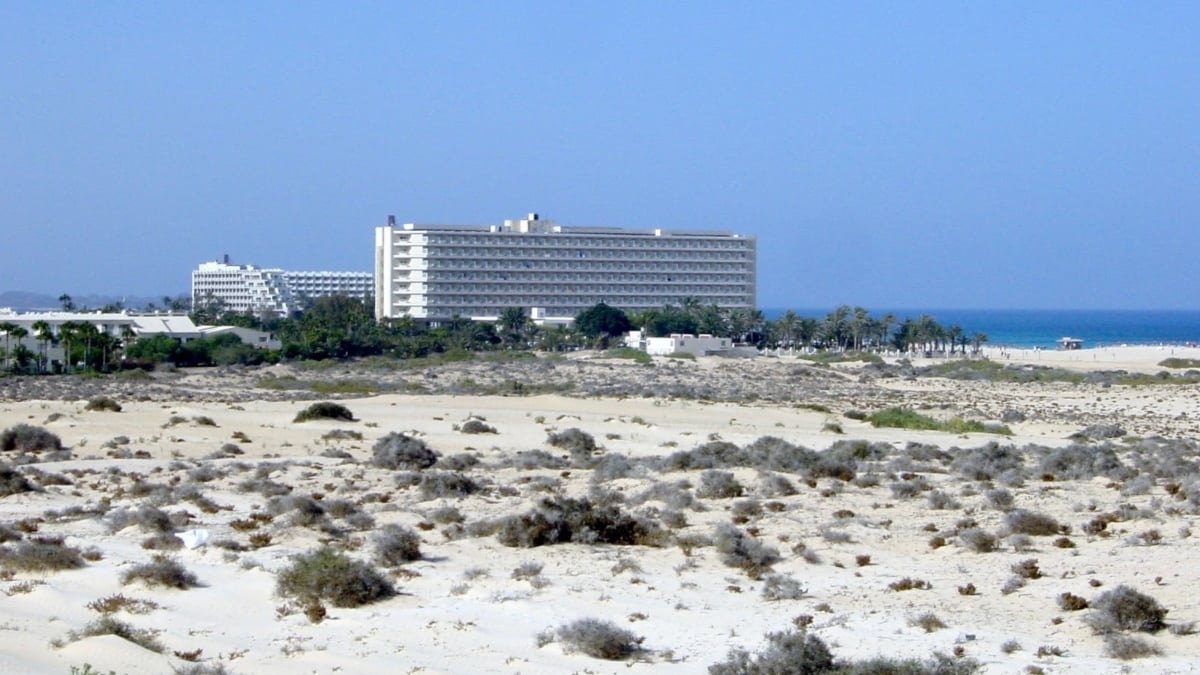
The Controversy Surrounding Riu Hotels in Fuerteventura
Two hotels and an apartment complex owned by the Riu hotel chain are at the center of a heated debate between the Spanish government and the Canary Islands executive. These establishments are located within the Corralejo Natural Park in Fuerteventura and have been flagged for demolition due to their positioning in protected zones.
The Legal Dispute
The controversy revolves around a caducity file initiated by the Ministry for Ecological Transition (MITECO), particularly targeting the Hotel Riu Oliva Beach Resort. This move also includes the Riu Palace Tres Islas. Following a ruling from the Constitutional Court, which sided with the state regarding the caducity proceedings, environmental organization SEO/BirdLife indicated that this decision clears the path for the demolition of these tourist infrastructures.
Coastal Competencies at Stake
A central point of contention is the issue of coastal competencies within the Canary Islands. The local government claims these competencies belong to them, arguing that they should be able to halt the caducity process issued by MITECO. A recent meeting between both parties on August 22 aimed to address these coastal competencies, stated to be fully under the governance of the Canary Islands as per the 2018 Statute of Autonomy.
However, the Constitutional Court unanimously rejected the regional government’s appeal against the caducity of the concessions, thereby allowing MITECO to proceed with the demolition process.
State Concessions
The concession allowing Riu to operate these hotels was granted decades ago. The Constitutional Court reaffirmed that this concession is a matter of state authority. Historical context is crucial here: while the Corralejo dunes became a protected natural park in 1982, the Hotel Riu Oliva Beach had already been established for over five years.
The state issued a three-decade concession beginning in 2003, but it was noted as early as 1992 that the hotel was encroaching on public domain.
The Caducity Timeline
Over the years, the licensing for Riu’s properties fluctuated, receiving modifications and extensions. However, by 2020, assessments revealed that the hotel and the apartments had expanded beyond allowed limits. Consequently, the Secretary of State for the Environment formally annulled the concession, mandating that the hotel be demolished for violating coastal regulations.
Protecting the area is paramount since both the apartments and hotels pose significant visual disruption and harm to the local ecology, particularly affecting numerous protected bird species.
Riu’s Position
Despite the unfavorable ruling, Riu hotels have stated, “this Constitutional resolution does not imply the demolition of the Hotel Riu Oliva Beach.” They maintain their intent to defend their rights through the judicial system, emphasizing that this could become a lengthy process.
Riu has expressed that the claims made by the Ministry lack legal grounding and instead reflect a misalignment with the actual situation on the ground. They argue that the local support for their operations underscores the economic importance of the hotels, which employ over 400 staff members.
Ecological Considerations
SEO/BirdLife has called for collaboration between regional and central authorities to explore solutions for the employees who could be affected by potential demolitions. The region in question is classified as a Special Area of Conservation (ZEC Corralejo) and Special Protection Area for Birds (ZEPA Dunas de Corralejo and Lobos Islet), all integral parts of the Natura 2000 network.
Notably, these regions are home to several endangered species, including the Canary bustard, the Saharan courser, and the Ortega’s sandgrouse, all protected under various environmental laws.
Future Prospects
The situation remains dynamic as both the Riu group and environmental organizations prepare for the next steps. This complex legal and ecological debate highlights the tension between commercial interests and environmental conservation in one of Spain’s most beautiful natural landscapes. The outcome will not only impact the local ecosystem and biodiversity but also the livelihoods of many workers in the tourism sector of Fuerteventura.


