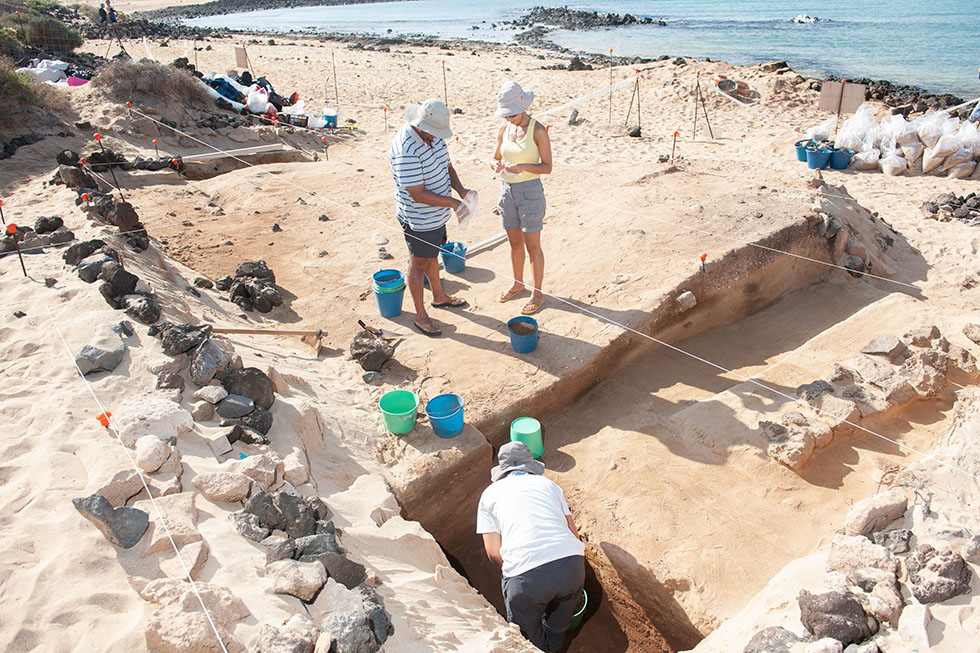
The Roman Purple Workshop on Lobos Island: A Glimpse into Ancient Industries
Nestled off the coast of Fuerteventura, Lobos Island holds the remnants of a bustling Roman workshop that dates back to the years between the 1st century BCE and the 1st century CE. This workshop, centered around the extraction of purple dye, was an economic powerhouse at the time, possibly employing between 10 and 20 operatives who toiled under challenging conditions. The primary raw material? The extract from the marine mollusk known as Stramonita haemastoma. These workers dedicated their daylight hours, working tirelessly in the face of strong winds, to break open the shells and procure the precious dye that adorned the textiles of the elite.
Discovery of the Site
In 2012, a chance encounter by tourists unearthed fragments of ceramic while sunbathing on the beach. This discovery prompted archaeologists to conduct extensive excavation campaigns in collaboration with institutions from Fuerteventura and Tenerife. As more artifacts emerged, the hypothesis of Lobos being a Roman purple production site gained traction, thanks largely to the ceramics which suggest a connection to the Roman Republic and the early Empire.
Insights from Archaeology
Renowned archaeologist Ramón Cebrián has played a critical role in studying this site and is the first to hold a doctoral thesis focusing on the Roman remains of Lobos. He asserts that the dating of the site aligns with Roman influence through the pottery unearthed in the area. Artifacts such as cooking and dining ware indicate active habitation, which correlates with Roman manufacturing practices from workshops across regions like the Lower Guadalquivir and beyond.
As excavations progressed, evidence of various structures, identifiable as storage areas or workstations, began to come to light, fundamentally shaping our understanding of the operational layout of this ancient workshop. Each object uncovered adds another layer to the narrative of Lobos as a significant player in the Roman economy, particularly in the dye trade.
The Murileguli: Experts of Dye Extraction
Cebrián’s research illuminates the operational techniques of workers known as murileguli. The challenge of extracting purple dye was a precise and labor-intensive process, described in classical texts, albeit often vaguely. Through experimental archaeology, a clearer picture of the working methods has emerged. By reconstructing these methods, researchers identified the necessary tools and processes involved in the delicate extraction of the dye from muricid mollusks.
The Process of Dye Extraction
Excavations have revealed conch piles, alongside remains of square-shaped structures that likely served storage or workspace functions. Notably, 98% of the shellfish remains found belong to the muricid family, exhibiting specific fracture patterns indicative of dye extraction techniques. Moreover, archaeologists discovered remnants of hearths, vital for the controlled heating process necessary in dye production.
Workers would gather muricids during specific seasons—primarily from November to April—capitalizing on seasonal fishing patterns. With the fishing of tunas temporarily halted, operations shifted towards gathering these mollusks, potentially allowing the workers to transition from tunas to muricids seamlessly.
Resource Management and Sustainability
The site of Lobos fulfilled several essential criteria for a successful purple dye workshop: abundant accessibility to muricids, effective extraction methods, and structures for combustion. Workers managed to harvest the mollusks efficiently and subject them to the elaborate cooking process required for dyeing, which entailed a week-long simmering period at low heat.
Dye from these mollusks would adorn not just textiles but also architectural elements, from grand togas to decorative details in buildings, enhancing the prestige of those who wore or displayed them.
The Economic Impact
Cebrián estimates that the finds from the excavations—over 184,000 muricid specimens—suggest a dye capacity of around 26 kilograms of wool. This impressive amount of dye underscores the economic significance of Lobos in the Roman purple trade, where the resulting textiles could embellish numerous garments, including the highly valued toga picta, woven entirely from this rare dye.
Lobos: A Center of Trade and Craftsmanship
Lobos is now regarded as part of the wider “Purpurarias” region, recognized as a vital hub in the Mediterranean dye trade. The similarities in found ceramics link Lobos’ operations to the larger Roman world, including major urban centers in Gibraltar and even as far as North African cities like Lixus. The archaeological narratives suggest that artisans in Lobos were not isolated but instead connected to broader commercial networks spanning the Roman Empire.
The Inhabitants and Their Lifestyle
Cebrián considers the sociocultural aspects of the workers, speculating about their origins. Most likely, artisans were drawn from regions such as Cádiz, with a possibility of varied backgrounds throughout the empire, likely indicative that the purple dye trade attracted skilled laborers familiar with specialized crafts.
During their stay on the island, the operatives relied on supplies from home, but archaeological evidence also hints at their adaptability; they brought livestock and ate local resources when necessary. The discovery of various artifacts related to fishing indicates that sustenance was both imported and locally sourced.
A Rich Tapestry of History
Thus, the Lobos workshop offers a fascinating glimpse into ancient Roman industrial practices and trade, bridging the past with our understanding of economics, craftsmanship, and the blending of cultures. The ongoing excavations promise more revelations about this ancient site that significantly ties the Canaries to the long history of the Mediterranean world, affirming its role in an intricate web of ancient commerce and craftsmanship.