Fuerteventura’s Blue Flag Beaches: Summer 2026 Update
Fuerteventura, one of the stunning Canary Islands, has made significant strides in beach quality and sustainability. As the summer of 2026 approaches, the island proudly boasts a total of 11 beaches recognized with the Blue Flag, an increase from the previous year, thanks to the much-anticipated recovery of Corralejo Viejo in La Oliva. While the total matches the standards of 2023 and 2024, it still falls short of the record 12 flags achieved in 2022, when Antigua secured the title for the Playa de El Castillo.
Enhancements in Quality
The recognition of Corralejo Viejo is a testament to the diligent efforts of La Oliva’s Ayuntamiento to improve water quality in Corralejo bay, an area historically plagued by contamination from old cesspools. This recovery highlights the importance of environmental management and proactive measures in restoring natural resources. However, contrast this with Antigua, where the main tourist beach lost its Blue Flag after retaining it for only one year since its 2022 accolade, despite having undergone five assessments since then.
Image Reference:
Playa de Esquinzo Butihondo, as showcased by Turismo de Islas Canarias.
Unique Coastal Dynamics
The case of Betancuria is notably different from the other municipalities. Its coastline is primarily characterized by cliffs, lacking traditional tourist beaches suitable for the services mandated by the Blue Flag standard. This absence limits the potential for amenities such as lifeguard stations, waste disposal facilities, and accessibility options for people with reduced mobility.
Spain’s Blue Flag Leadership
On a wider scale, Spain leads the world in Blue Flag awards, achieving a total of 794 flags in 2026, which is 44 more than in 2025. Notably, the Canary Islands account for 52 of these flags, placing the archipelago fifth in the national ranking, alongside Galicia, both of which boast over 1,500 km of coastline. This significant achievement underscores the commitment of both regions to beach quality and environmental stewardship.
Breakdown of Blue Flags by Municipality
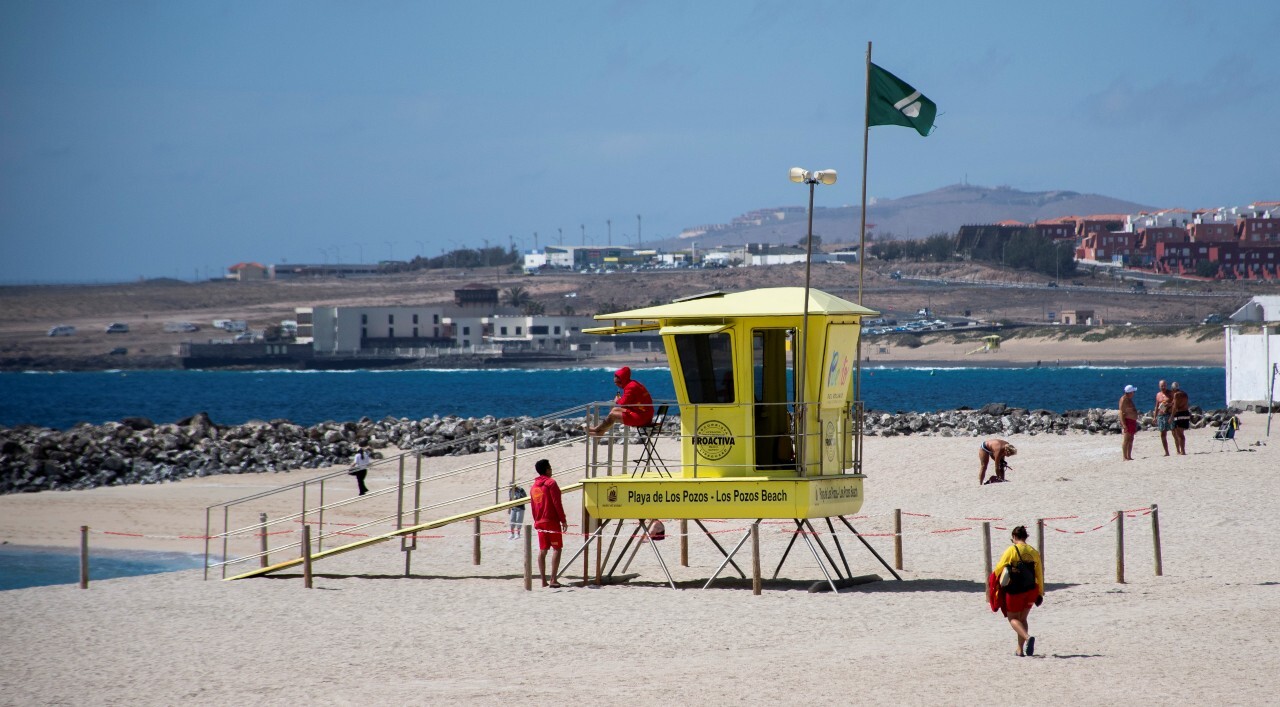
On Fuerteventura, the municipality of Pájara stands out, boasting four Blue Flag beaches: Butihondo, Costa Calma, El Matorral, and Morro Jable. Following behind, La Oliva holds three flags with Corralejo Viejo, the Grandes Playas of Corralejo, and La Concha in El Cotillo. Puerto del Rosario also maintains three Blue Flags across Playa Blanca, Los Pozos, and Puerto Lajas, while Tuineje holds onto the Blue Flag for Playa de Gran Tarajal.
Image Reference:
The Blue Flag raised at the Grandes Playas of Corralejo in 2025.
Contextualizing 52 Blue Flags in the Canary Islands
Across the entire Canary Islands, 52 Blue Flags were awarded by ADEAC to beaches in 29 municipalities, marking an increase of five flags from 2025. The breakdown by islands reveals that Gran Canaria leads with 15 recognized beaches, while both Fuerteventura and Tenerife follow closely with 11 each. Lanzarote also made significant gains, recovering four beaches in the municipality of Tías: Grande, Matagorda, Pila de la Barrilla, and Pocillos. Other islands, such as La Palma, add six flags, while El Hierro has two, and La Gomera has one.
The Absence of Canarian Municipalities in the Top Ten
Despite being a popular tourist destination, no Canarian municipality features in Spain’s top ten for the highest number of Blue Flags. This list is led by Sanxenxo, boasting 21 flags, followed by other notable locations such as Vigo, Águilas, and Cartagena.
It’s important to clarify that the Blue Flag is not a comprehensive ranking of all beaches. Instead, it is a distinction awarded based on municipal applications. The evaluation process considers multiple criteria, including water quality, environmental education, safety measures, service provision, and accessibility options.
Image Reference:
Flag raised at Puerto del Rosario in 2024.
Focus on Water Quality and Services
In the evaluation for 2026, ADEAC reported that 713 beaches in Spain submitted applications, of which 677 were awarded the Blue Flag—an impressive conversion rate of 95%. The primary reasons for disqualification often relate to substandard water quality and non-compliance with coastal laws due to overcrowding or unauthorized installations.
The award for this edition is designated for the 2026-2027 period, introducing a transitional mechanism due to changes in international accreditation requirements and European regulations. Nonetheless, it is crucial to highlight that recognition is contingent upon ongoing adherence to these criteria and continuous monitoring throughout 2027.
With a clear focus on maintaining high standards for environmental quality and beach facilities, Fuerteventura continues to thrive as a premier destination for both locals and tourists, aiming for sustainability without sacrificing the beauty and enjoyment of its natural landscapes.