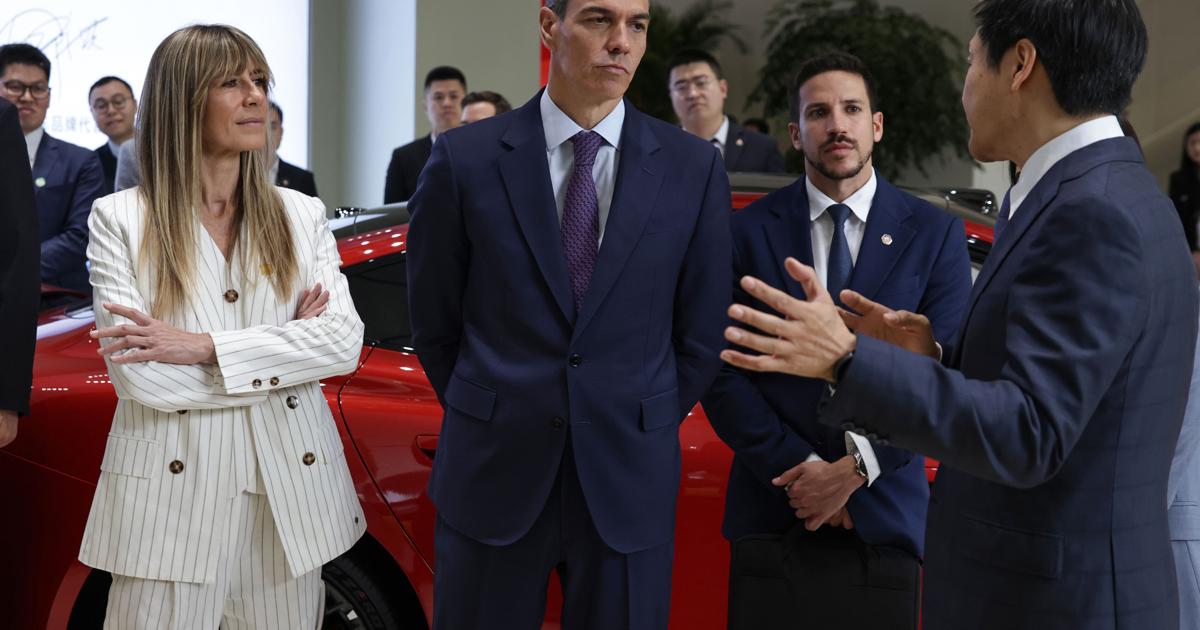
Sánchez’s Diplomatic Dance: Strengthening Spain-China Relations
Spanish Prime Minister Pedro Sánchez is making headlines again as he embarks on his fourth trip to China in just over three years. This visit underscores Spain’s commitment to enhancing its political and commercial ties with the world’s second-largest economy. As Sánchez navigates this complex geopolitical landscape, his trip arrives at a time when European leaders are striving to influence the ongoing U.S.-Israeli conflict in the Middle East, particularly concerning Iran.
A Call for Multipolarity
During his visit, Sánchez addressed students and faculty at Tsinghua University in Beijing, urging China to take on a more significant role in fostering a multipolar world. He emphasized the importance of international law and called for an end to conflicts in regions like Lebanon, Iran, Gaza, and Ukraine. This appeal reflects Spain’s desire for a more balanced global power dynamic, especially as tensions rise between the U.S. and various nations.
Diversifying Political Relations
Spain’s strategy is clear: diversify its political relationships with major global powers, including China. Spanish officials have articulated a desire to attract more Chinese investment and boost exports, even though trade policy is primarily managed by the European Union. This approach is particularly vital for Spain, which relies heavily on renewable energy sources and requires critical raw materials, solar panels, and green technologies from China to support its transition away from fossil fuels.
Navigating U.S.-China Tensions
Sánchez’s visit comes at a time when Spain’s relationship with the U.S. is under strain. His government has openly criticized U.S. military actions in the Middle East, even going so far as to close its airspace to U.S. planes involved in the Iran conflict. This bold stance has led analysts to suggest that Sánchez’s annual trips to China have gained heightened significance amid increasing frictions with the U.S. administration.
The Trade Imbalance
Despite Spain’s efforts to strengthen ties with China, the trade relationship remains heavily skewed. China accounts for approximately 74% of Spain’s overall trade deficit, highlighting the challenges Spain faces in achieving a more balanced economic partnership. While Sánchez’s government has made strides in advocating for dialogue over confrontation, the reality is that Spain’s exports to China are significantly outpaced by Chinese imports.
A Soft Power Approach
Spain has positioned itself as a relatively soft and conciliatory partner within the EU, advocating for dialogue rather than adopting a more adversarial stance toward China. This approach has drawn both praise and criticism, as some experts argue that it reflects an unbalanced relationship. Sánchez’s repeated visits to Beijing signal a commitment to fostering a more collaborative environment, but the effectiveness of these efforts remains to be seen.
Strengthening Global Ties
Sánchez’s vision extends beyond China; he aims to cultivate stronger bilateral ties with other major global powers, including India and the U.S. His recent diplomatic engagements, including King Felipe VI’s official visit to China, highlight Spain’s strategic interest in enhancing its international relationships. This multifaceted approach is designed to position Spain as a key player on the global stage.
Climate Change and Global Health
During his discussions in Beijing, Sánchez also emphasized the need for China to collaborate with the EU on pressing global issues such as climate change, public health, and the responsible development of artificial intelligence and nuclear weapons. His call for China to step up its involvement in these areas reflects a broader desire for cooperative solutions to global challenges, especially in light of the U.S.’s recent withdrawal from various international commitments.
Conclusion
As Sánchez continues his diplomatic journey in China, the implications of his visit resonate beyond bilateral relations. The evolving dynamics between Spain, China, and the U.S. will undoubtedly shape the future of international politics and trade, making this trip a pivotal moment in Spain’s quest for a more balanced and diversified global presence.