The Shenzhen-Zhongshan Megabridge: A New Era in Infrastructure
In the ever-evolving landscape of automotive infrastructure, few projects have the potential to redefine the possibilities of road construction like the Shenzhen-Zhongshan Megabridge. Officially opened on June 30, 2025, this monumental structure stretches over 20 kilometers across the sea, featuring eight lanes of traffic, a unique blend of bridges, artificial islands, and an underwater tunnel. For countries like Spain, where transport accessibility and highway capacity are constant challenges, this project sets a new benchmark for engineering ambition and technological innovation.
Technology and Scale
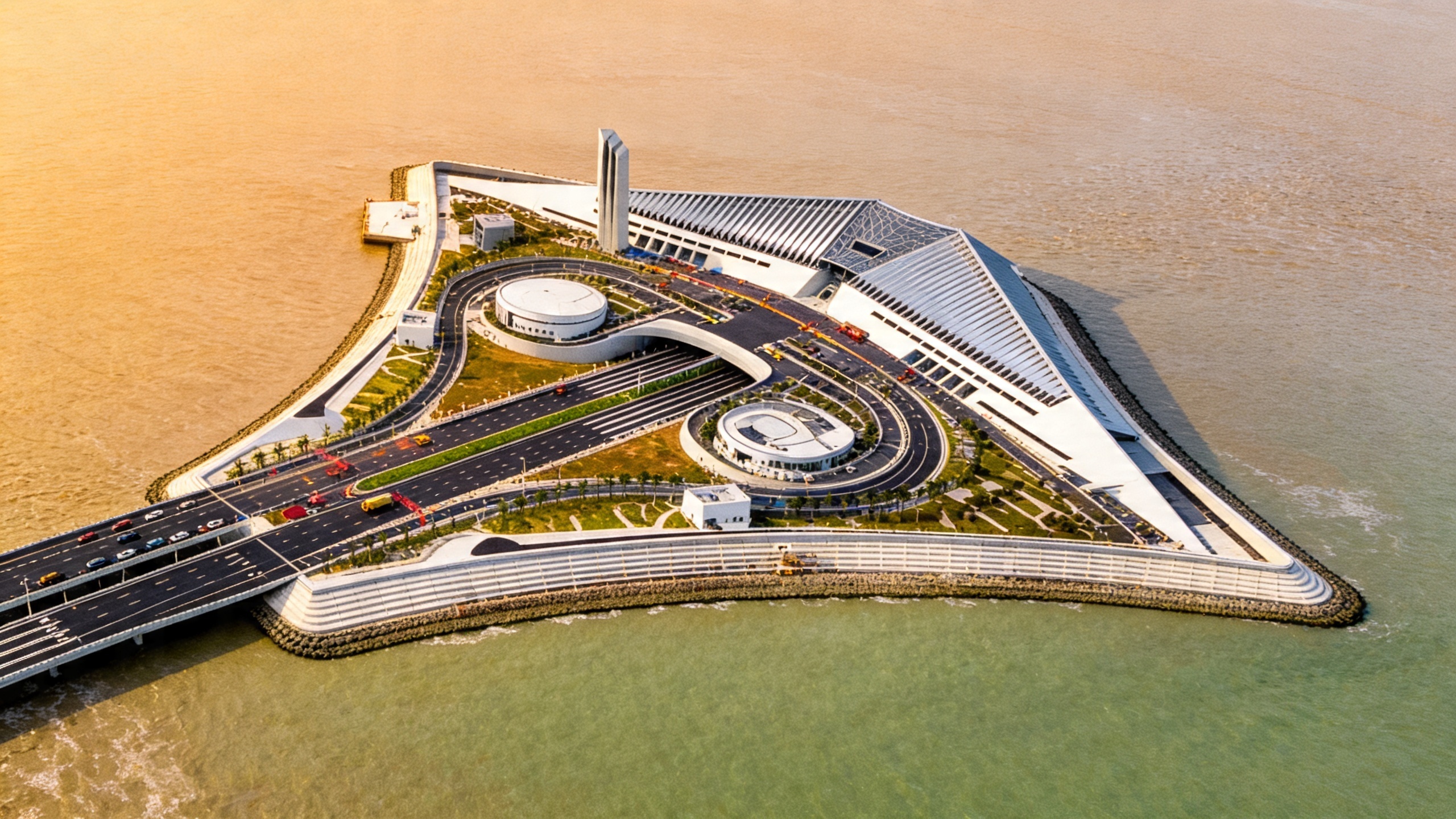
The G2518 bridge complex is not merely another transport artery; it represents a revolutionary leap in marine infrastructure. It is the world’s first project to seamlessly integrate two bridges, two artificial island platforms, and a substantial underwater tunnel constructed from concrete and steel, measuring an impressive 46 meters in width. The underwater tunnel spans 7 kilometers and accommodates eight lanes of traffic, designed to handle up to 181,000 vehicles per day during peak periods. To put this into perspective, Spain’s busiest motorway manages nearly eight times less traffic.
Chinese engineers have achieved ten world records with this project, including the longest suspension bridge supported by marine steel, a free navigational span of 91 meters, and the largest anchoring foundation, which utilized a staggering 344,000 cubic meters of concrete. Safety is paramount; the structure is engineered to withstand winds of up to 83.7 m/s, and a sophisticated monitoring system featuring 14 robots ensures real-time traffic and facility condition control.
The Economy of Time and New Standards
Prior to the bridge’s inauguration, the journey between Shenzhen and Zhongshan took a cumbersome two hours. With the new infrastructure, that travel time has been slashed to just 30 minutes. Travelers can even pause at one of the artificial island platforms, which now hosts a 137,000 m² engineering museum. The fare of 10 euros seems reasonable given the level of infrastructure provided. This significant reduction in travel time has already had a positive impact on tourism; during the National Day holiday in 2024, Zhongshan welcomed 3.41 million visitors, marking a remarkable 102% increase from the previous year.
For Spain, the implications of such advancements are both inspiring and challenging. While discussions about new bridge and tunnel projects are commonplace, the scale and technological sophistication of the Shenzhen-Zhongshan Megabridge remain unmatched. This contrast highlights differing approaches to transport infrastructure development: China’s focus on integrating cutting-edge technologies and maximizing capacity stands in stark contrast to Spain’s more conservative model, which emphasizes the gradual modernization of existing routes.
Safety and Innovation
Beyond its impressive dimensions, the G2518 Bridge sets a new standard for safety. The underwater tunnel is equipped with advanced fire suppression and smoke extraction systems that are 42% more efficient than traditional methods. The lighting system is designed to automatically adjust its color based on temperature and traffic intensity, significantly reducing the risk of accidents. This innovative approach to safety and automation could serve as a benchmark for future Spanish infrastructure projects, especially as the demand for intelligent transport systems continues to grow.
Globally, there are numerous examples where technological innovations in infrastructure have acted as catalysts for entire markets. For instance, the introduction of Volvo’s hydrogen trucks illustrates how engineering solutions can transform industry standards.
Lessons for Spain
For Spanish motorists and transport professionals, the Chinese experience is not merely a topic for discussion; it serves as a tangible example of how scale, technology, and practical benefits can be harmonized. The pressing question remains: how quickly can such standards be adopted in Spanish infrastructure projects, and which of these innovative solutions will resonate most with the local market?
As Spain navigates its own transport challenges, the Shenzhen-Zhongshan Megabridge stands as a beacon of what is possible when ambition meets innovation. The future of infrastructure may very well depend on how quickly and effectively these lessons can be integrated into Spain’s evolving transport landscape.