Adolfo Daniel Vallejo’s Controversial Exit from the 2026 French Open
Adolfo Daniel Vallejo’s journey at the 2026 French Open has taken a dramatic turn, leaving him with a significant financial penalty and a cloud of controversy hanging over his head. The Paraguayan player, who advanced to the second round after Cameron Norrie’s mid-match retirement, found himself embroiled in a heated exchange regarding the officiating of chair umpire Ana Carvalho during his match against French player Moïse Kouamé.
The Match and Its Tensions
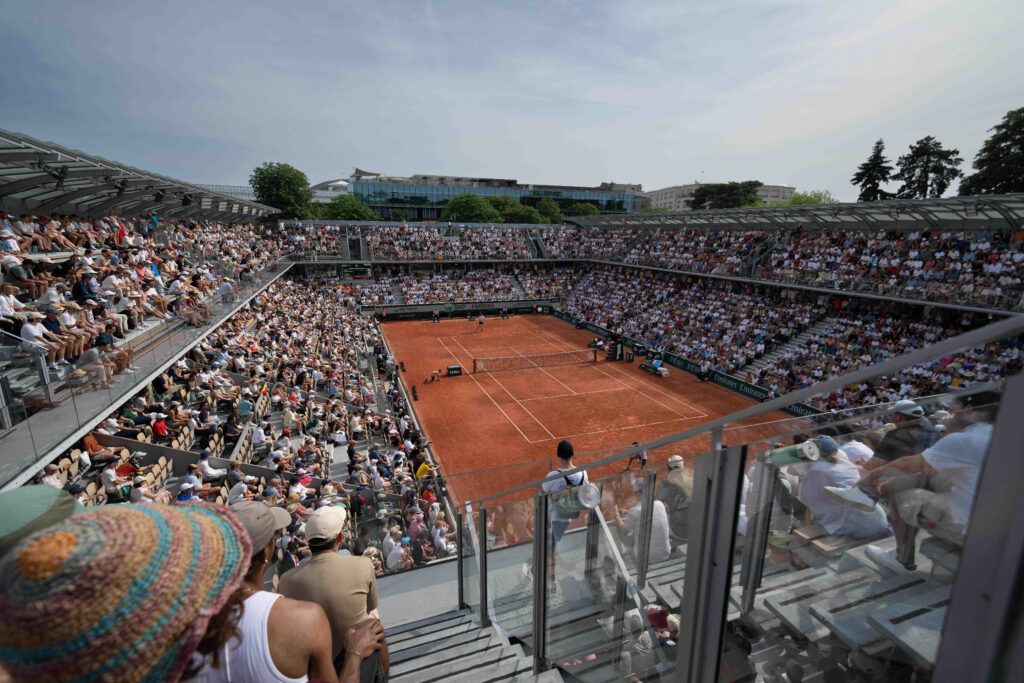
Vallejo’s second-round match against Kouamé was a grueling affair, lasting nearly five hours and culminating in a nail-biting fifth set tiebreak. The Paris crowd, fervently supporting their home favorite, added an extra layer of intensity to the match. Vallejo’s frustration boiled over as he felt that Carvalho was unable to manage the partisan atmosphere effectively.
In a post-match interview with CLAY, Vallejo made remarks that would soon ignite a firestorm. He suggested that a male umpire would have been better suited to handle such a demanding crowd, stating, “These types of matches have to be officiated by a man; it’s very difficult for a woman to do it.” His comments were met with immediate backlash, perceived by many as not only inappropriate but also sexist.
The Fallout
The reaction to Vallejo’s remarks was swift and severe. The French Open organizers condemned his comments as “completely unacceptable” and “sexist,” announcing that he would face a hefty fine for his statements. Tournament director Amelie Mauresmo emphasized the seriousness of the situation, stating, “It is roughly half of his prize money. Clearly, this is something that is not acceptable for us as a tournament.”
Vallejo’s fine was set at $65,000 (€56,000), a substantial amount considering his total prize money for reaching the second round was $151,000 (€130,000). This financial penalty not only stung but also served as a stark reminder of the consequences of crossing the line in professional sports.
Vallejo’s Apology
In the wake of the uproar, Vallejo took to Instagram to clarify his comments, expressing regret for how they were interpreted. He stated, “I want to clarify that my comments were not meant in the way they have been understood. I have respect for the umpire and for the job they do.” Vallejo’s attempt to mitigate the damage, however, did little to quell the criticism he faced from fans and commentators alike.
Mixed Reactions from the Tennis Community
The tennis community’s response to Vallejo’s fine has been polarized. Some fans argued that the punishment was justified, viewing it as a necessary step to deter similar behavior in the future. One fan remarked, “Blaming the umpire’s gender because a hostile French crowd was being loud at Roland Garros is a crazy excuse. Deserved fine.”
Conversely, others felt that the fine was excessive, especially considering Vallejo’s relatively modest career earnings of approximately $502,556. Critics pointed out the disparity between Vallejo’s punishment and that of athletes in other sports, such as NBA star Jaylen Brown, who received a $50,000 fine for criticizing officials while earning a significantly higher salary.
Broader Context of the French Open
Vallejo’s controversy is just one of several issues that have marred the 2026 French Open. The tournament has faced criticism for its refusal to adopt electronic line calling, leading to disputes in various matches. Players have also voiced concerns about the effectiveness of the heat rule amid sweltering conditions in Paris. Additionally, the placement of sponsor boards at the back of the court has raised safety concerns among competitors.
As the tournament progresses, Vallejo’s situation serves as a reminder of the complexities and pressures athletes face, particularly in high-stakes environments like the French Open. The incident has sparked discussions about gender dynamics in sports officiating and the broader implications of athletes’ comments in the public eye.