The Vibrant Watch Market in Spain: A Blend of Tradition and Innovation
Spain has emerged as one of Europe’s most vibrant consumer markets for watches, driven by a rich fashion culture, rising disposable incomes, growing tourism, and an increasing enthusiasm for wearable technology. Once seen primarily as functional accessories, watches have transformed into lifestyle products that reflect personal identity, status, fashion preferences, and technological sophistication.
Evolving Consumer Preferences
The modern Spanish consumer seeks a blend of style, innovation, and practicality. Luxury mechanical watches continue to attract affluent buyers and collectors who appreciate craftsmanship and exclusivity. Meanwhile, smartwatches are gaining traction among younger consumers who prioritize health tracking, connectivity, and convenience. This dual interest in both luxury and technology illustrates the diverse preferences shaping Spain’s watch market.
Market Growth Projections
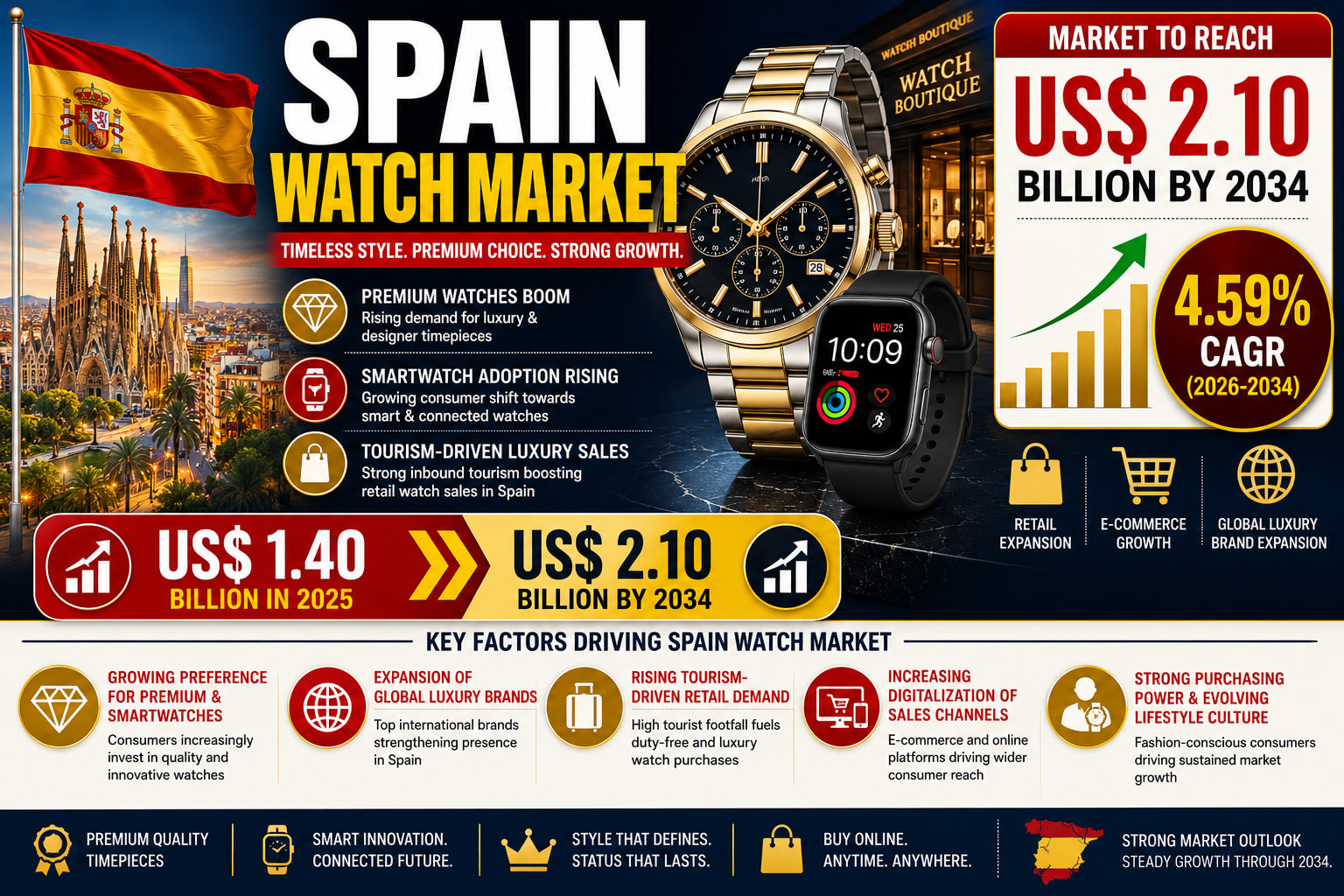
According to Renub Research, the Spain Watch Market is projected to grow from US$ 1.4 billion in 2025 to US$ 2.1 billion by 2034, registering a compound annual growth rate (CAGR) of 4.59% between 2026 and 2034. Factors such as a growing preference for premium and smartwatches, the expansion of global luxury brands, rising tourism-driven retail demand, and increasing digitalization of sales channels are expected to support this growth.
Watches Beyond Timekeeping
While timekeeping remains the core function of a watch, modern designs now offer a plethora of additional features. Today’s watches incorporate chronographs, GPS navigation, activity tracking, health monitoring, and smartphone notifications. In Spain, watches are increasingly viewed as expressions of style, craftsmanship, and personal identity, serving not just as timepieces but as fashion accessories and symbols of success.
Luxury Watches: A Premium Market
One of the strongest drivers of Spain’s watch industry is the growing demand for luxury and premium watches. Affluent consumers are on the lookout for high-end timepieces that signify exclusivity, craftsmanship, and brand prestige. Spain’s status as a luxury shopping destination further bolsters this segment, with international tourists frequently purchasing premium watches in major cities like Madrid and Barcelona. The gifting culture surrounding luxury watches also contributes significantly to market demand, as they are often given for weddings, anniversaries, and professional achievements.
The Smartwatch Revolution
The rapid rise of smartwatches represents a significant development in Spain’s watch market. Consumers are increasingly seeking devices that offer more than basic timekeeping. Smartwatches provide features such as activity tracking, heart-rate monitoring, GPS navigation, and smartphone synchronization. Young professionals and tech-savvy consumers are leading the charge in smartwatch adoption, driven by a preference for connectivity and convenience.
Health and Wellness Trends
Spain’s growing focus on health and wellness has become a catalyst for smartwatch adoption. Consumers are looking for tools that help monitor fitness progress and manage exercise routines. Features like sleep tracking, heart-rate monitoring, and workout analytics are highly desirable among health-conscious individuals. As preventive healthcare and active living gain importance, health-focused smartwatches are expected to remain a major growth driver.
Tourism’s Impact on Watch Sales
Spain’s thriving tourism industry plays a crucial role in supporting the watch market. Millions of visitors flock to Spain each year, drawn by its cultural landmarks and luxury shopping districts. Many tourists purchase watches as souvenirs or luxury investments, particularly in cities like Madrid and Barcelona, which are known for their premium boutiques and flagship stores. Duty-free outlets and airport retail locations also contribute significantly to watch sales.
The Omnichannel Retail Experience
The expansion of omnichannel retail strategies is transforming consumer experiences in the watch market. Retailers are increasingly combining physical stores with online platforms, virtual consultations, and personalized services. This approach allows consumers to research products online while retaining the option to complete purchases in-store. Interactive product demonstrations and flexible return policies enhance consumer confidence, making the shopping experience more engaging.
E-Commerce Growth
The rapid growth of e-commerce has significantly transformed watch retailing across Spain. Online platforms enable consumers to browse extensive product selections, compare prices, and access international brands. Digital channels have proven particularly effective in reaching consumers outside major urban centers. The convenience of online shopping, coupled with improved logistics and secure payment systems, continues to encourage consumers to purchase watches through digital platforms.
The Stability of Quartz Watches
Quartz watches remain one of the most stable segments within Spain’s watch market. Consumers appreciate quartz watches for their affordability, reliability, and low maintenance requirements. This segment appeals particularly to middle-income buyers seeking practical yet stylish accessories. Frequent product refreshes and competitive pricing help maintain strong consumer interest in quartz models.
The Rise of Electronic Watches
Electronic watches are experiencing rapid growth due to increasing consumer interest in digital functionality. These watches offer practical features such as alarms, timers, and basic fitness tracking capabilities while remaining more affordable than advanced smartwatches. Students and budget-conscious consumers often choose electronic watches for their durability and utility.
Women’s Watch Segment Growth
The women’s watch market in Spain is experiencing healthy growth, with consumers increasingly viewing watches as both practical accessories and fashion statements. Demand spans luxury, mid-range, and affordable categories, reflecting diverse style preferences. Minimalist designs and jewelry-inspired watches are particularly popular, driven by social media influence and gifting occasions.
Challenges in the Market
Despite the promising growth, Spain’s watch market faces challenges, including intense competition among global luxury brands, fashion watch companies, and smartwatch manufacturers. Consumers have access to a wide range of products, making differentiation increasingly difficult. Digital marketplaces further intensify competition by enabling easy price comparisons.
Madrid: The Market Leader
Madrid stands out as Spain’s most important watch market, driven by its affluent consumer base and luxury shopping districts. The city’s strong tourism sector also bolsters demand across all watch categories, making it a hub for luxury mechanical watches, premium fashion accessories, and advanced smartwatches.
Barcelona: A Fashion and Tourism Hub
Barcelona is another major growth center in Spain’s watch industry. The city’s fashion-conscious consumers and high tourist traffic support demand for both traditional and modern watches. Retailers emphasize experiential shopping through customization services and exclusive collections, enhancing the overall shopping experience.
Valencia: An Emerging Market
Valencia is gaining importance within Spain’s watch landscape, supported by rising consumer spending and expanding retail infrastructure. The city’s younger demographic shows enthusiasm for wearable technology and hybrid models that combine style with digital functionality.
Zaragoza: A Stable Market
Zaragoza represents an increasingly important secondary market, benefiting from urban development and rising consumer interest in both traditional and modern timepieces. The growth of e-commerce has improved accessibility and product availability for local consumers.
Future Outlook
The future of the Spain watch market looks promising, with growing demand for luxury watches, increasing adoption of wearable technologies, and expanding tourism activity expected to drive strong growth through 2034. Manufacturers that successfully combine innovation, design excellence, and premium customer experiences will be well-positioned to capture emerging opportunities.
Final Thoughts
Spain’s watch market is undergoing a remarkable transformation as luxury craftsmanship and digital innovation converge. With substantial opportunities for luxury brands, technology companies, and retailers, the landscape is evolving rapidly, reflecting changing consumer preferences and technological advancements.