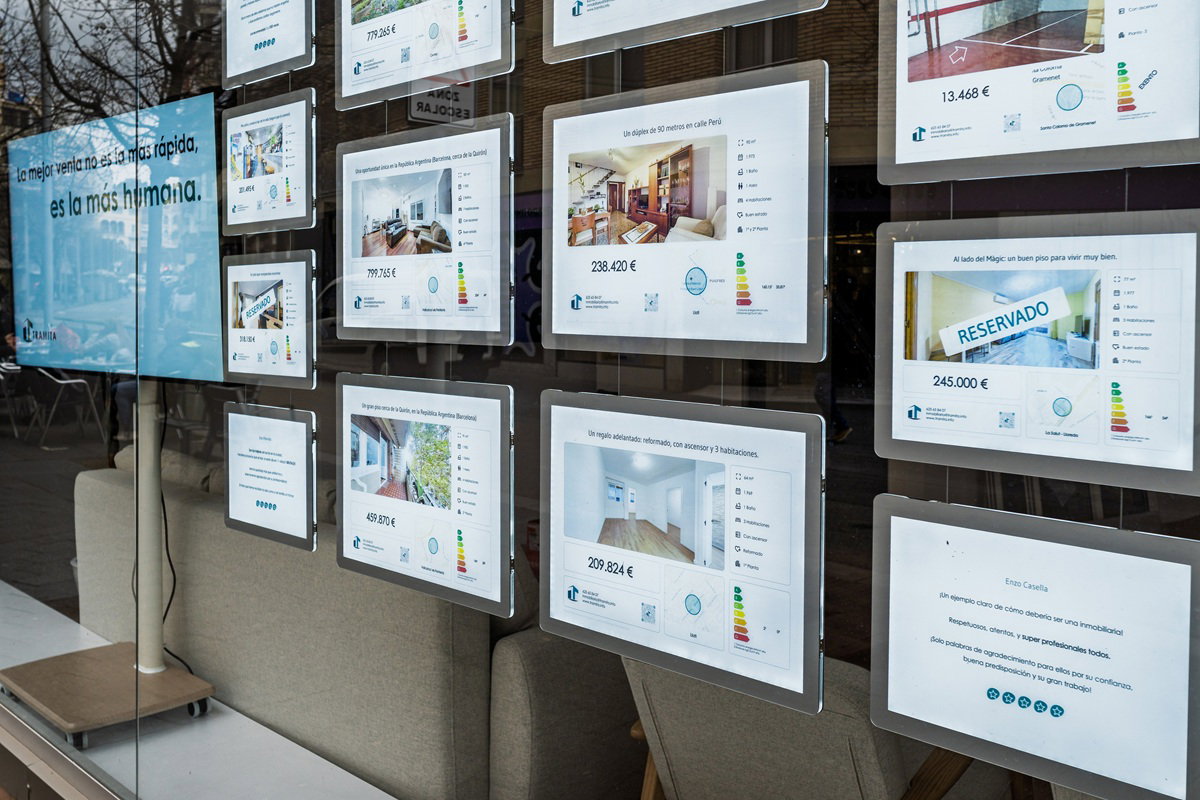
The Spanish Property Market: A Surge in House Prices
If you’ve been contemplating buying a home in Spain, hoping for a dip in prices, the latest statistics might not be what you were hoping for. Recent data from Spain’s National Statistics Institute (INE) reveals that house prices surged by 12.9% in the first quarter of 2026 compared to the same period last year. This growth mirrors the pace recorded at the end of 2025 and marks one of the most significant annual increases since the pre-crash era.
The Challenge for First-Time Buyers
For those trying to enter the property market, the reality is stark: homes are becoming increasingly expensive, and the rate of increase is surprising many analysts. The most notable trend is that the strongest price hikes are no longer coming from new developments. Instead, the second-hand home market is experiencing fierce competition, pushing prices to unprecedented levels.
The Rise of Second-Hand Homes
Walk into any estate agency today, and you’ll likely hear a similar narrative. Properties that would have languished on the market for months are now attracting interest almost immediately. In many areas, potential buyers find themselves in bidding wars, competing against multiple interested parties for the same property.
According to the latest figures, prices for existing homes skyrocketed by 13.5% in the first quarter of the year—the highest increase recorded since the INE began tracking these statistics nearly two decades ago. While new homes are also becoming pricier, their price growth of 9.1% is less dramatic, indicating a shift in buyer preferences.
Supply and Demand Dynamics
The crux of the issue lies in supply and demand. Spain continues to build new housing, but the pace is insufficient to meet the soaring demand in many regions. Consequently, buyers unable to find suitable options in new developments are turning to the resale market, intensifying competition for second-hand homes.
This dynamic has led to a market that refuses to slow down. Spain has now recorded 48 consecutive quarters of house price growth—twelve straight years of rising values. Many experts had anticipated a slowdown long before now, citing higher prices, affordability concerns, and economic uncertainty as potential dampeners. Yet, demand remains remarkably resilient.
Quarterly Growth Trends
The first quarter of 2026 also saw a 3.5% increase in prices compared to the last quarter of 2025, marking the strongest quarterly growth since mid-2025. For homeowners, these figures may provide reassurance, but for prospective buyers, they paint a daunting picture. Young households are particularly affected, struggling to save for a deposit while grappling with rising rents and living costs. Each increase in property prices pushes homeownership further out of reach.
Property portal pisos.com noted that the market entered 2026 with little sign of exhaustion. Their analysis indicates that while housing prices have been on an upward trajectory for over a decade, the recent increases stand out due to their scale rather than just their duration. In many locations, prices have surpassed the peaks seen during Spain’s property boom years.
The Interest Rate Factor
One critical factor that analysts are closely monitoring is interest rates. For much of the recent housing boom, buyers have enjoyed favorable financing conditions, even amid broader economic pressures. However, this situation may not last indefinitely. Renewed inflationary pressures across the eurozone could lead to tighter monetary policies and higher borrowing costs.
If mortgages become less affordable, some buyers may find their purchasing power diminished. However, this doesn’t necessarily mean that prices will plummet. Most analysts agree that the primary issue remains the shortage of available housing. As long as demand continues to outstrip supply, significant price corrections seem unlikely.
What might occur instead is a gradual moderation in price growth. Instead of double-digit annual increases, the market could begin to stabilize at a slower pace. Yet, as of now, there’s little evidence to suggest that such a shift has begun.
Regional Price Increases
Every autonomous community in Spain recorded annual house price growth above 10% during the first quarter of 2026. Regions like Aragón and Murcia saw the largest increases, both reaching 15.6%. Following closely were Castilla y León and Ceuta at 14.9%. Even areas with the smallest increases, such as Catalonia and Navarra, recorded growth of 10.5%, while the Basque Country saw a 10.2% rise.
For buyers hoping for a reprieve in prices, these figures tell a consistent story: Spain’s housing market may eventually cool, but for now, it remains a challenging landscape for prospective homeowners.