The Diplomatic Fallout: Spain’s Isolation in NATO
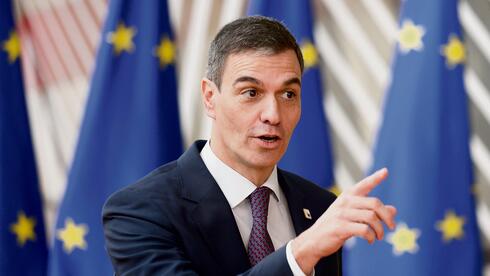
Within the opulent confines of the Beştepe Presidential Compound in Ankara, a palpable tension hung in the air as U.S. President Donald Trump confronted NATO Secretary-General Mark Rutte. Framed by the American flag and NATO’s blue star, Trump’s words cut through the silence, particularly when he directed his ire at Spain’s Prime Minister Pedro Sánchez. This moment was not merely a diplomatic exchange; it marked a significant turning point in Spain’s relationship with its NATO allies.
The Context of Discontent
The media quickly framed Trump’s outburst as a reflection of an impatient president chastising an ally for not meeting defense budget commitments. While this narrative holds some truth, it overlooks the deeper issues at play. Spain’s diplomatic troubles began two and a half years earlier, when Sánchez prioritized domestic political alliances over international commitments, particularly regarding Israel. This shift laid the groundwork for the tensions that would culminate in Trump’s harsh assessment of Spain as a “wasted cause.”
The Arms Ban and Its Consequences
The roots of Spain’s diplomatic isolation can be traced back to October 2023, when Sánchez’s government quietly imposed a bilateral arms ban on Israel shortly after the October 7 attacks. This initial fracture deepened in May 2024, when Spain joined Ireland and Norway in recognizing a unilateral Palestinian state, a move that fractured Western unity and undermined the collective stance against terrorism.
By September 2025, the Sánchez administration had enacted nine punitive measures against Israel, culminating in a razor-thin parliamentary vote to formalize the arms embargo. This trajectory transformed Spain from a diplomatic partner into a liability, especially when it denied U.S. forces access to critical airbases during the opening hours of the allied campaign against Iran in February 2026.
The Ethical Sovereignty Illusion
Sánchez’s government has attempted to frame its actions as a principled stance on ethical foreign policy, portraying itself as a guardian of international law. However, this narrative is riddled with contradictions. While Spain positions itself as a defender of human rights, it selectively applies international law to undermine a democratic ally engaged in a multi-front war, all while offering tacit support to regimes that destabilize the Mediterranean.
By denying operational access to U.S. bases during crucial military confrontations, Spain did not maintain neutrality; it actively compromised NATO’s collective defense capabilities. This raises questions about the sustainability of Spain’s geopolitical stance, which relies on the assumption that the Western alliance will continue to protect it despite its actions undermining that very alliance.
The Broader NATO Dynamics
The Ankara summit illuminated the widening chasm within NATO. Trump’s grievances extended beyond Spain, highlighting a broader concern about the reliability of allies. While frontline states in the Middle East and Eastern Europe face immediate threats, Spain’s geographic comfort has led to a dangerous complacency. This dynamic underscores the importance of solidarity among NATO members, particularly in times of crisis.
Sánchez’s office responded to the diplomatic fallout with bureaucratic platitudes about maintaining excellent relations. However, the underlying strategic deficit remains unaddressed, and the rhetorical escalation continues to reveal the fragility of Spain’s position within the alliance.
The Irony of Isolation
In a striking twist, Spain has positioned itself as more toxic to Washington than Turkey, a NATO member known for its duplicitous behavior. This demotion highlights the depth of Spain’s self-inflicted isolation, as it seeks to be seen as the moral conscience of the West while simultaneously alienating itself from its allies.
The irony is profound: Spain aimed to be a bold voice against perceived injustices but instead has become a cautionary tale of how ethical posturing can lead to diplomatic isolation. The legacy of this moment will not be one of moral clarity but rather a stark reminder of the consequences of abandoning collective security for the sake of domestic political maneuvering.
The Future of Spain’s Foreign Policy
As Spain navigates this complex diplomatic landscape, it faces the challenge of reconciling its ethical ambitions with the realities of international relations. The path forward will require a reevaluation of its foreign policy priorities and a commitment to rebuilding trust with its NATO allies. The stakes are high, and the consequences of continued isolation could be dire for Spain’s role in global affairs.