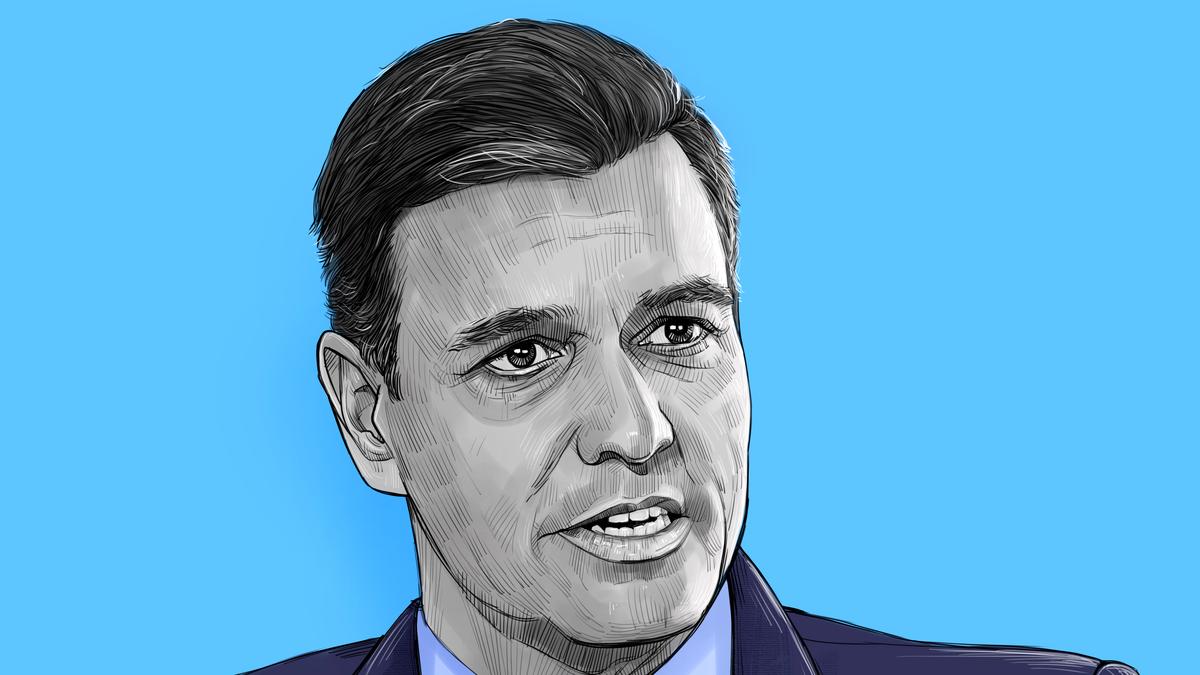
Spain’s Bold Stance on International Relations: A Closer Look at Prime Minister Pedro Sanchez’s Address
On March 4, 2026, Spain’s Prime Minister Pedro Sanchez took to the airwaves in a televised address that would reverberate throughout Europe and beyond. The backdrop of his speech was a tense international climate, particularly concerning the United States’ military intentions in the Middle East. Just days prior, Sanchez’s government had made a significant decision: Spain would not permit the U.S. to utilize its military bases for potential strikes against Iran. This move was met with an explosive reaction from then-President Donald Trump, who threatened to sever trade ties with Spain, declaring, “We’re going to cut off all trade with Spain. We don’t want anything to do with Spain.”
The Political Landscape in Spain
Sanchez, the leader of the Spanish Socialist Workers’ Party (PSOE), found himself at the center of a political storm. Conservative opposition leaders quickly seized the opportunity to criticize his government, accusing him of endangering Spain’s long-standing relationship with the United States for what they deemed “petty political gains.” This accusation was not merely a political jab; it tapped into deeper concerns about national security and economic stability in a country that has historically aligned itself closely with U.S. foreign policy.
A Defiant Response
In his 10-minute address, Sanchez did not shy away from the controversy. Instead, he doubled down on his position, framing the potential military action against Iran as a blatant violation of international law. This was a bold stance, especially considering that he was the only European head of government to publicly reject the war on principle. His words resonated not just within Spain but across Europe, where many leaders were grappling with the implications of U.S. foreign policy in the region.
The Principle of International Law
Sanchez’s emphasis on international law was particularly noteworthy. In a world where military interventions often occur with little regard for legal frameworks, his insistence on adhering to these principles struck a chord with many. He articulated a vision of a Europe that prioritizes diplomacy and dialogue over military action, urging for a collective European response to international crises that respects the sovereignty of nations.
The Broader Implications for Europe
Sanchez’s address also highlighted a growing rift within Europe regarding its relationship with the United States. As the geopolitical landscape shifts, many European leaders are beginning to question the extent of their reliance on U.S. military support. Sanchez’s stance could be seen as a call for a more independent European foreign policy, one that is not solely dictated by Washington’s interests.
Economic Concerns and Trade Relations
While Sanchez’s principled stand on international law was commendable, it did not come without risks. Trump’s threat to cut off trade with Spain raised alarms about the potential economic fallout. Spain, like many European nations, has significant trade ties with the U.S., and any disruption could have dire consequences for its economy. The opposition capitalized on this fear, warning that Sanchez’s defiance could lead to job losses and economic instability.
Public Reaction and Support
Despite the political backlash, Sanchez’s address garnered considerable support from various segments of the Spanish populace. Many citizens appreciated his courage to stand up against a powerful ally, viewing it as a necessary step toward asserting Spain’s sovereignty. Social media buzzed with discussions about the importance of principled leadership in an era where moral clarity often seems to be in short supply.
The Future of Spain’s Foreign Policy
As Sanchez navigates the turbulent waters of international relations, his government faces the challenge of balancing national interests with ethical considerations. The decision to reject U.S. military action in Iran may set a precedent for future foreign policy decisions, potentially reshaping Spain’s role on the global stage. The coming months will be crucial as Sanchez seeks to maintain diplomatic relations while adhering to his commitment to international law.
In summary, Prime Minister Pedro Sanchez’s address on March 4 was not just a response to immediate political pressures; it was a declaration of Spain’s intent to carve out a distinct and principled role in international affairs. As the world watches, the implications of his stance will unfold, influencing not only Spain’s future but also the broader dynamics of European and global politics.


