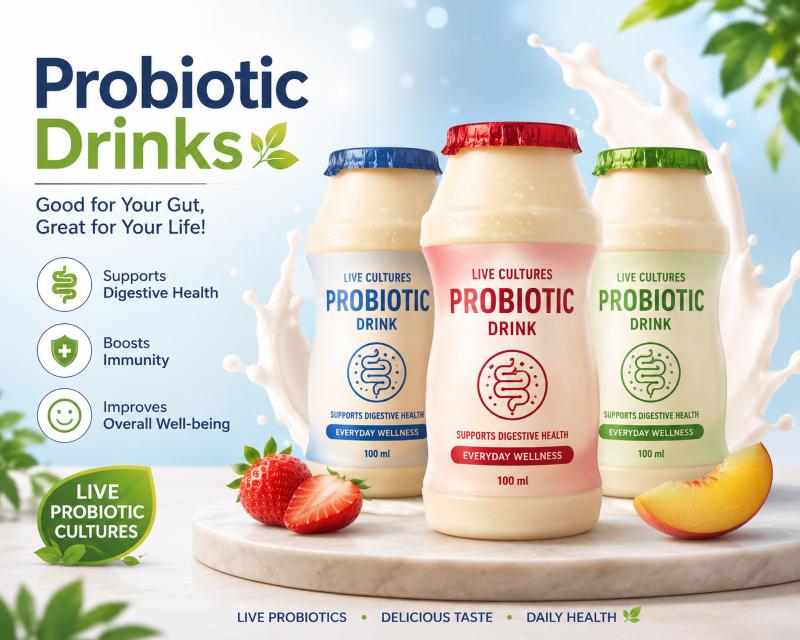
Exploring the Spain Probiotic Drinks Market: Trends, Innovations, and Growth Drivers
The Spain Probiotic Drinks Market is on an impressive trajectory, projected to grow from US$ 816.88 million in 2025 to US$ 1,423.34 million by 2033, reflecting a robust CAGR of 7.30% during the forecast period from 2026 to 2033. This growth is largely fueled by a surge in consumer awareness regarding gut health and overall wellness, alongside a rising demand for functional beverages that offer tangible health benefits.
The Rise of Probiotic Drinks
Probiotic drinks are rich in beneficial live microorganisms that contribute to improved digestive health, enhanced immunity, and metabolic balance. As consumers become more health-conscious, the preference for natural, clean-label, and low-sugar beverages is accelerating the expansion of the probiotic drinks market in Spain. The increasing inclination towards functional beverages is not just a trend; it reflects a broader lifestyle shift towards wellness and preventive healthcare.
Market Dynamics and Competitive Landscape
The competitive landscape of the Spain Probiotic Drinks Market is vibrant, featuring major players like Danone, Yakult, and Nestlé, alongside emerging local brands such as Komvida Kombucha and MUN Ferments. These companies are leveraging their strengths—Danone’s extensive probiotic dairy portfolio, Yakult’s established leadership in probiotic cultures, and Komvida’s innovative kombucha offerings—to enhance their market positions.
Continuous investments in research and development, product innovation, and clean-label formulations are pivotal in driving market growth. The focus on gut health research and the introduction of new product lines are essential strategies for these companies as they respond to the increasing consumer demand for functional beverages.
Innovations and New Product Launches
Innovation is at the heart of the Spain Probiotic Drinks Market. For instance, Danone has expanded its probiotic drinks portfolio with new yogurt-based and fermented beverage products under well-known brands like Actimel and Activia. These products are designed to support gut health and immunity, catering to the growing consumer demand for functional beverages.
Similarly, Yakult has introduced enhanced probiotic drink formulations tailored specifically for the Spanish market, emphasizing digestive health and microbiome balance. These innovations are backed by scientific research, reinforcing the credibility of the products in a health-conscious consumer landscape.
Research and Development Focus
Research and development play a crucial role in the evolution of probiotic drinks. Nestlé, for example, is focusing on improving strain stability and health benefits through advanced fermentation technologies. This commitment to R&D not only enhances product effectiveness but also extends shelf life, making these beverages more appealing to consumers.
Kerry Group is also making strides in this area, advancing research in probiotic ingredient systems and emphasizing clean-label and natural solutions. Such developments are essential for maintaining consumer trust and meeting the rising demand for transparency in food and beverage products.
Technological Advancements
The market is witnessing significant technological advancements, particularly in microencapsulation techniques that protect probiotic bacteria during processing and digestion. These innovations improve the viability and effectiveness of probiotics, ensuring that consumers receive the maximum health benefits from their beverages.
Moreover, advancements in fermentation methods are enhancing the taste, texture, and probiotic concentration of drinks. This not only improves consumer acceptance but also drives growth in the functional drinks segment, as taste remains a critical factor for beverage consumption.
Market Segmentation Insights
The Spain Probiotic Drinks Market can be segmented in various ways, providing insights into consumer preferences:
-
By Type: Drinkable yogurt (40%) leads the market, followed by kefir (20%), kombucha (20%), and tepache (10%). Drinkable yogurt’s dominance is attributed to its familiarity and wide retail availability.
-
By Ingredient: Lactobacillus (45%) is the most popular probiotic strain, known for its digestive health benefits, followed by Bifidobacterium (30%) and Streptococcus (15%).
-
By Application: Gastrointestinal health (25%) is the primary driver, with immunity support (20%) also gaining traction, especially in the post-pandemic landscape.
-
By Age Group: Adults (55%) dominate the market, with seniors (20%) increasingly adopting probiotic drinks for health benefits. The pediatric segment (15%) is also growing as parents focus on early gut health development.
-
By Distribution Channel: Supermarkets and hypermarkets (40%) lead the market, followed by pharmacies (25%) and online retailers (20%). The rise of e-commerce is particularly noteworthy, driven by changing consumer shopping habits.
Consumer Behavior and Market Insights
The growing consumer awareness of gut health, immunity, and functional nutrition is a key driver of the Spain probiotic drinks market. As consumers increasingly seek healthier, low-sugar alternatives to traditional soft drinks, the demand for fermented beverages like kombucha and kefir is on the rise.
This shift is supported by an expanding interest in microbiome science and preventive healthcare, which is expected to further accelerate market growth during the forecast period. The combination of health consciousness, innovative product offerings, and strong retail penetration positions the Spain Probiotic Drinks Market for continued success.
Final Thoughts
The Spain Probiotic Drinks Market is a dynamic and rapidly evolving sector, characterized by innovation, consumer awareness, and a strong competitive landscape. As companies continue to invest in research, development, and strategic partnerships, the market is poised for significant growth, catering to the increasing demand for functional beverages that promote health and wellness.