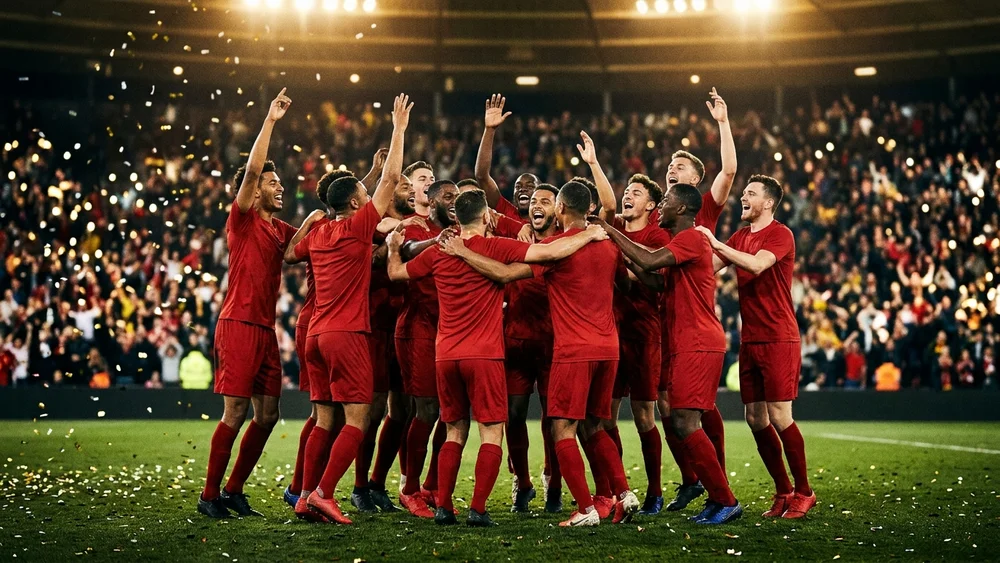
Spain’s recent triumphs in international football have sparked discussions about the potential for a new dynasty. With the national team clinching both the Euro 2024 and the World Cup, the question arises: are we witnessing the birth of a new footballing powerhouse? The narrative is compelling, especially with young talents like Lamine Yamal, who is only nineteen, and seasoned players like Rodri, who has now collected the game’s top prize.
A Hard-Fought Victory
Spain’s World Cup final against Argentina was not a spectacle that would be immortalized in a frame. A gritty 1-0 victory, settled by Ferran Torres in extra time, resembled a war of attrition more than a glorious coronation. Yet, the scoreline belies the reality of the match. Spain dominated with around twenty shots compared to Argentina’s mere two, showcasing their control over nearly every aspect of the game. This wasn’t mere luck; it was a testament to a team that understands its identity and plays to its strengths.
The Case for a Dynasty
What should concern rival teams is the youth and depth of this Spanish squad. Under the guidance of Luis de la Fuente, Spain has secured back-to-back major titles, and the core of the team is still developing. With Lamine Yamal at just nineteen years old, the potential for growth is immense. The fact that their best players are still years away from their peak raises the question of whether we are witnessing the early stages of a dynasty. When a team can achieve such success while still having room for improvement, the term “dynasty” shifts from hyperbole to a legitimate consideration.
Winning as a Collective
Spain’s success is not reliant on a single star player; rather, it is a collective effort. Rodri’s performance throughout the tournament was instrumental, earning him the player-of-the-tournament award. Meanwhile, Unai Simon’s stellar goalkeeping earned him the Golden Glove, reflecting the team’s defensive solidity. While Yamal provides the magic moments, the team functions seamlessly even when he is not at his best. This system-oriented approach is often more sustainable than relying on individual brilliance, which can be fleeting.
Echoes of the Past
When discussing Spain’s current team, it’s impossible not to draw parallels with the legendary squad from 2008 to 2012. That era saw Spain claim a European title, a World Cup, and another Euro, all while revolutionizing possession football. While today’s team is not a carbon copy, the similarities are striking. They control the ball, starve opponents of possession, and trust in their quality to prevail over the course of a match. In the final, their strategy appeared almost effortless, as if it were a natural law rather than a tactical plan.
Cautionary Tales
However, history serves as a cautionary tale. The previous golden generation of Spanish football burned brightly but faded quickly, with a steep decline from champions to also-rans. Cycles in football are inevitable; younger players often get lured away by the demands of club football, key players can suffer injuries, and the hunger that fuels the pursuit of a first title can wane when chasing a third or fourth. These factors pose real challenges for any team aiming to maintain dominance.
The Fragility of Success
There are valid reasons for skepticism regarding Spain’s future. Rodri is the heartbeat of the team, and his injury history serves as a reminder of how quickly a midfield can lose its rhythm. Tournament football is notoriously unpredictable; while Spain was the superior side in the final, a red card for Enzo Fernandez and a fortunate bounce in extra time played crucial roles in their victory. Such fine margins can swing in any direction, making sustained success a precarious endeavor.
A Bright Future Ahead
Despite these caveats, if one were to place a bet on which nation might dominate the next era of international football, Spain would be a compelling choice. The talent is undeniable, the tactical approach is tried and tested, and the age profile of the squad offers a unique advantage that many champions do not possess. As Argentina’s era draws to a close with Lionel Messi stepping away from the World Cup stage, Spain appears to be on the cusp of something significant. They seem less like a team that has reached the pinnacle and more like one that is just beginning its ascent.