The Jewish Hospital and Spanish Synagogue: A Tapestry of Resilience and Culture in Prague
A Historic Intersection
Nestled in the heart of Prague’s historic Jewish quarter, the Jewish Hospital and the Spanish Synagogue stand as remarkable testaments to a rich tapestry of architecture, culture, and resilience. These neighboring institutions are not merely physical structures; they embody a shared history that intertwines community care, spiritual life, and cultural exchange. As a scholar of family medicine and public health, my fascination with the intersection of medicine and the broader human experience has led me to explore this unique relationship between healing, culture, and history.
Architectural Marvel: The Spanish Synagogue
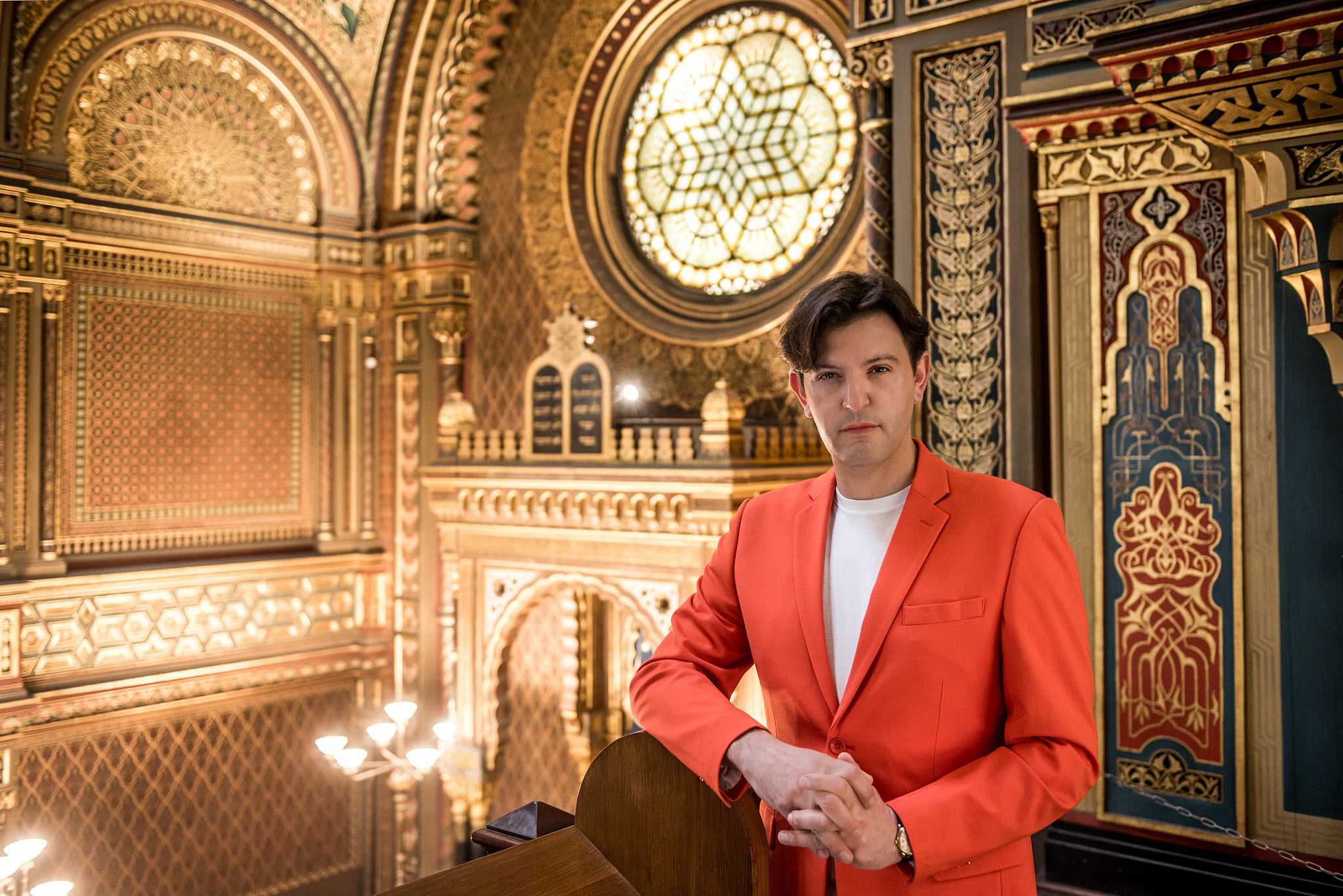
Completed in 1868, the Spanish Synagogue is a stunning example of Moorish Revival architecture, a style that draws heavily from the artistic traditions of the Islamic world. Its interior is a feast for the eyes, adorned with elaborate arabesques, gilded patterns, and intricate geometric motifs. These decorative elements resonate with the visual language developed in medieval Islamic Spain, particularly during the period of Al-Andalus, when Jews, Christians, and Muslims coexisted and influenced one another.
The synagogue’s richly patterned interior, filled with colorful ornamentation and elegant symmetry, illustrates how Jewish communities in Europe sometimes adopted Islamic artistic traditions to express their own identity. Rather than mere imitation, the use of Moorish design symbolizes a historical memory of coexistence, bridging Jewish heritage with broader Islamic artistic traditions.
The Jewish Hospital: A Beacon of Hope
Just a stone’s throw from the Spanish Synagogue lies the Jewish Hospital, established during a time of profound hardship. Following the Nazi occupation of Czechoslovakia in 1939, Jewish doctors were systematically removed from public hospitals, and Jewish patients were gradually excluded from the city’s healthcare system. In response, Jewish physicians banded together to create improvised medical services, ultimately converting nearby residential buildings into a hospital in 1940.
Despite operating under extremely limited resources, the hospital developed numerous departments, including surgery, internal medicine, dermatology, neurology, psychiatry, gynecology, and orthopedics. A small laboratory and X-ray facility were also established, allowing the hospital to function as a surprisingly comprehensive medical center under dire conditions.
An Educational Sanctuary
The hospital also served as an educational haven during a time when many Jewish students were expelled from universities. It provided a unique opportunity for these students to continue their medical training. Experienced physicians organized lectures, consultations, and practical instruction, effectively transforming the hospital into an informal medical school.
This educational aspect underscores the interconnected nature of Jewish communal life. Traditionally, synagogues served not only as places of worship but also as centers for education, charity, and community organization. The nearby hospital reflected these same values of compassion and communal responsibility, forming a network of support that nurtured both spiritual life and physical health.
Cultural Parallels in Architecture and Mission
The architectural style of the synagogue and the humanitarian mission of the hospital reveal deeper cultural parallels. Both institutions illustrate the long-standing connections between Jewish and Islamic civilizations. Historically, Jewish communities flourished in regions under Islamic rule, where intellectual exchange in fields such as medicine, philosophy, and science was common. The Moorish-inspired design of the synagogue quietly acknowledges this shared heritage of scholarship and artistic expression.
In the nineteenth century, many Reform-oriented Ashkenazi Jews looked with admiration toward the intellectual and cultural achievements of Sephardi Judaism in medieval Spain. While traditional Ashkenazi society had long emphasized religious study, the era of the Jewish Enlightenment (Haskalah) encouraged broader education and integration into European society. For these modernizing communities, the Islamic style of the synagogue symbolized not only artistic inspiration but also a historical memory of a Jewish culture that once thrived in dialogue with surrounding civilizations.
A Symbol of Solidarity During Adversity
The Second World War brought devastating disruption to this interconnected community. Deportations from Prague intensified between 1941 and 1943, and many of the hospital’s doctors, nurses, and patients were transported to ghettos and concentration camps. Despite the diminishing Jewish population, the hospital continued to operate in a reduced form, sustained by the dedication of the remaining medical staff who worked under constant threat.
Even in those dark years, the hospital stood as a symbol of solidarity and resilience. Its proximity to the Spanish Synagogue—a powerful architectural reminder of cultural coexistence—adds a profound dimension to its story. Together, these neighboring buildings represent the endurance of a community that maintained its traditions of learning, charity, and mutual care even under persecution.
Preserving a Legacy
Today, the Spanish Synagogue functions as part of the Jewish Museum in Prague, preserving the history of Jewish life in the city. The memory of the nearby Jewish hospital continues to highlight how architecture, culture, and humanitarian commitment once came together in this historic quarter of Prague.
The synagogue’s Arabic beauty and the hospital’s legacy of compassion tell a broader story—one of cultural exchange between Jewish and Islamic traditions, and of a community whose institutions, both spiritual and medical, worked hand in hand to sustain life and dignity in challenging times.