As Fuerteventura continues to attract investors, sustainability becomes a key focus in its tourism strategy.
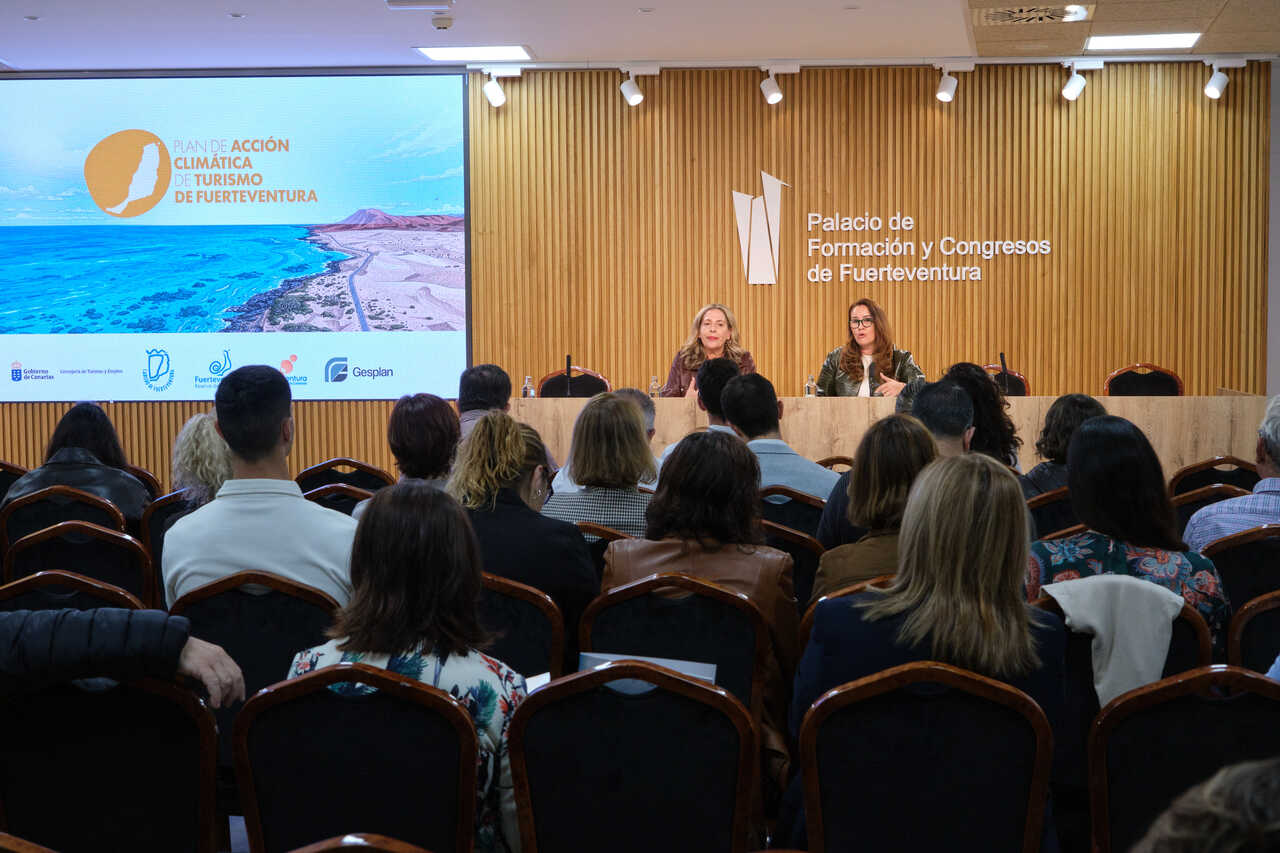
The Cabildo of Fuerteventura, through its Ministry of Tourism, recently hosted a participatory event at the Training and Congress Palace in Puerto del Rosario aimed at developing the island’s Climate Action Plan (CAP) for tourism. This initiative provided a platform for dialogue among institutions, the business community, social entities, and local citizens, all working together to create a decarbonization roadmap.
In her opening remarks, Lola García, President of the Cabildo, emphasized the significance of this initiative, stating, “We are not just presenting a document; we are defining the island model we aspire to build.” She underscored that climate change is a pressing issue that requires immediate action across various governmental sectors.
García highlighted several ongoing projects aimed at improving waste management, promoting renewable energy, enhancing sustainable mobility, and reviving traditional agricultural practices. She advocated for a “quality” tourism model that delivers greater value while exerting less pressure on the island’s resources. The CAP lays out specific goals and robust action points targeting the years 2030, 2040, and 2050, with immediate actionable steps.
Marlene Figueroa, the Tourism Minister, also addressed attendees, noting that tourism is integral to the local economy and must be aligned with sustainability efforts. She pointed out that the tourism sector on Fuerteventura generates over 222,000 tons of CO₂ annually, accounting for a significant portion of energy consumption and emissions. Figueroa stated, “This Plan establishes a clear roadmap towards a low-carbon tourism model that is not only an environmental obligation but also enhances the destination’s competitiveness and future resilience.”
The event commenced with presentations from Gesplan’s technical team. Project manager Adrián Pascual Espino contextualized the island’s tourism model alongside the overarching goals of the Climate Action Plan. Geographer Lorena Naranjo Almeida discussed specific strategies for decarbonizing tourism practices and enhancing the industry’s resilience.
During the meeting, four strategic pillars of the plan were outlined:
- Decarbonization: Aimed at reducing greenhouse gas emissions across the tourism value chain.
- Regeneration: Focused on protecting and adapting ecosystems and biodiversity.
- Governance: Establishing a framework for sustained public-private collaboration.
- Financing: Ensuring the viability and longevity of proposed actions.
The session concluded with practical workgroups in which sector representatives and technical staff validated measures through relevant local examples.
The Cabildo expressed gratitude for the active participation of attendees and the collaborative effort from the GESPLAN team and the Government of the Canary Islands. The event highlighted the importance of cooperation among governments, the private sector, and the community in tackling climate challenges and securing Fuerteventura’s future.
Image credit: www.lavozdefuerteventura.com
Source: www.lavozdefuerteventura.com.
Curated by Fuerteventura Times Real Estate Desk.