Introduction of Emergency Helicopter Service in Fuerteventura
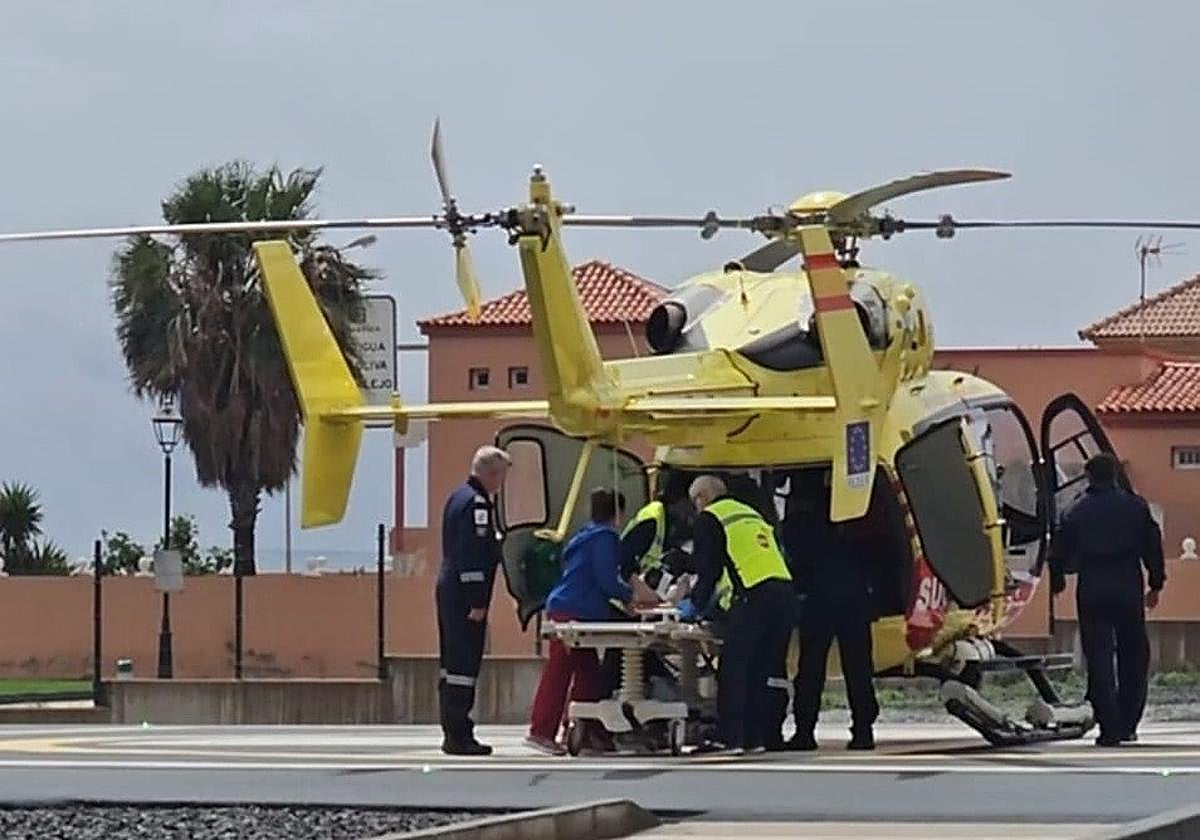
Just an hour after its official unveiling at the Fuerteventura Hospital helipad, the third emergency medical helicopter from the Canary Islands’ Emergency Service (SUC) swung into action. This helicopter, stationed on the island, immediately responded to a call for assistance from the southern region of Fuerteventura, marking a significant development in local healthcare services.
Immediate Response to a Medical Emergency
At 10:15 AM on Monday, the SUC’s health coordinator received an urgent call from a medical center in Jandía, located in the municipality of Pájara. A 68-year-old man required immediate transportation to the General Hospital of Fuerteventura due to a serious health concern that necessitated specialized medical attention. This situation underscores the critical need for prompt medical intervention in areas far from urban centers.
Historical Context of Healthcare Challenges
It’s important to note that Morro Jable, the main town on the Jandía peninsula, lies approximately 100 kilometers from the General Hospital. In 2016, a tragic incident further highlighted the urgency for improved emergency medical services when a 33-year-old woman died while waiting for a medicalized ambulance that never arrived. Since 2015, the southern region had lacked such critical services, amplifying calls for the re-establishment of urgent care facilities, including the long-awaited emergency helicopter.
A Decade-Long Wait for Essential Services
The tragic passing of the woman was a wake-up call for the community, prompting demands for better healthcare infrastructure, alongside the establishment of an oncology bunker. It took a decade of advocacy before the emergency helicopter finally became operational on March 23, 2026. In a fortuitous turn, the helicopter’s inaugural mission involved transporting a patient from Jandía, the very area that had long faced these urgent healthcare challenges.
Activation Amidst Other Emergencies
The medicalized ambulance stationed in southern Fuerteventura was occupied with another critical case when the call for the 68-year-old man’s transport came through. Consequently, the nurse coordinator in the SUC emergency room decided to activate the medical helicopter based at Fuerteventura Airport. This helicopter is the third to be incorporated into the service following a new contract designed to enhance coverage across all islands. Its strategic deployment particularly benefits eastern islands due to their geographical isolation.
The First Flight and Medical Crew
The airborne crew comprising a pilot and co-pilot quickly mobilized after receiving the emergency alert. The medical crew for this initial flight included Dr. Noelia Almeida, the coordinator for SUC in Las Palmas, and nurse Carlos Quintana, also from Las Palmas. They flew to the scene to provide real-time medical assistance to the patient en route to the hospital, where he was admitted in stable condition despite being critically ill.
A Rapid Second Activation
Later that same evening, the helicopter was activated once more at 9 PM. This time, the medical crew included Dr. Javier Ruiz and Nurse Laura Saavedra, alongside 14 other health professionals from the General Hospital of Fuerteventura. They undertook the transfer of a seriously ill patient from the Nuestra Señora de Los Reyes Hospital in El Hierro to the University Hospital Nuestra Señora de la Candelaria in Tenerife. Initially, the helicopter’s capabilities were outlined during its official presentation, where SUC’s General Director, Noemí González, emphasized its potential to significantly reduce response times during medical emergencies across the three islands in the province of Las Palmas.
Coordination and Flexibility of the SUC Service
The medical helicopters in the SUC fleet are activated based on emergencies as determined by health coordinators from the emergency room. This ensures a flexible response that transcends the helicopter’s base of operation—whether it’s Tenerife, Gran Canaria, or Fuerteventura—allowing for deployment based on availability and response time needs.
This recent introduction of the medical helicopter service is transforming healthcare access in Fuerteventura, embodying years of community efforts and advocacy. The new capabilities not only improve patient outcomes but also herald a new era of emergency medical response across the Canary Islands.