The Uneven Legacy of Francoism: A Glimpse into the Canary Islands’ Struggles with Historical Memory
Aarón León, a historian from Tenerife, has dedicated years to examining the repression that occurred in the Canary Islands during the Spanish Civil War and the Franco regime. His extensive research has encompassed pivotal periods in Spanish history, coordinating publications on the Second Republic, Francoism, and the transition to democracy in the archipelago. León emphasizes the uneven application of the law passed in 2007 concerning the removal of Francoist symbols, calling attention to the varied approaches across different municipalities in the Canary Islands.
Municipal Responses to the 2007 Law
León notes a stark contrast in how municipalities respond to the 2007 law aimed at addressing Francoist symbols. Take La Orotava in Tenerife, for example, where there has been a tangible application of the law, resulting in the removal of Francoist symbols from public buildings and the renaming of certain streets. In contrast, many other areas remain oblivious, continuing to display unconstitutional crests alongside streets named after figures like José Antonio Primo de Rivera and Calvo Sotelo. León highlights that while there may be agreements in place to remove such symbols, the follow-through often falls short due to administrative failures.
Changing Street Names: A Case Study
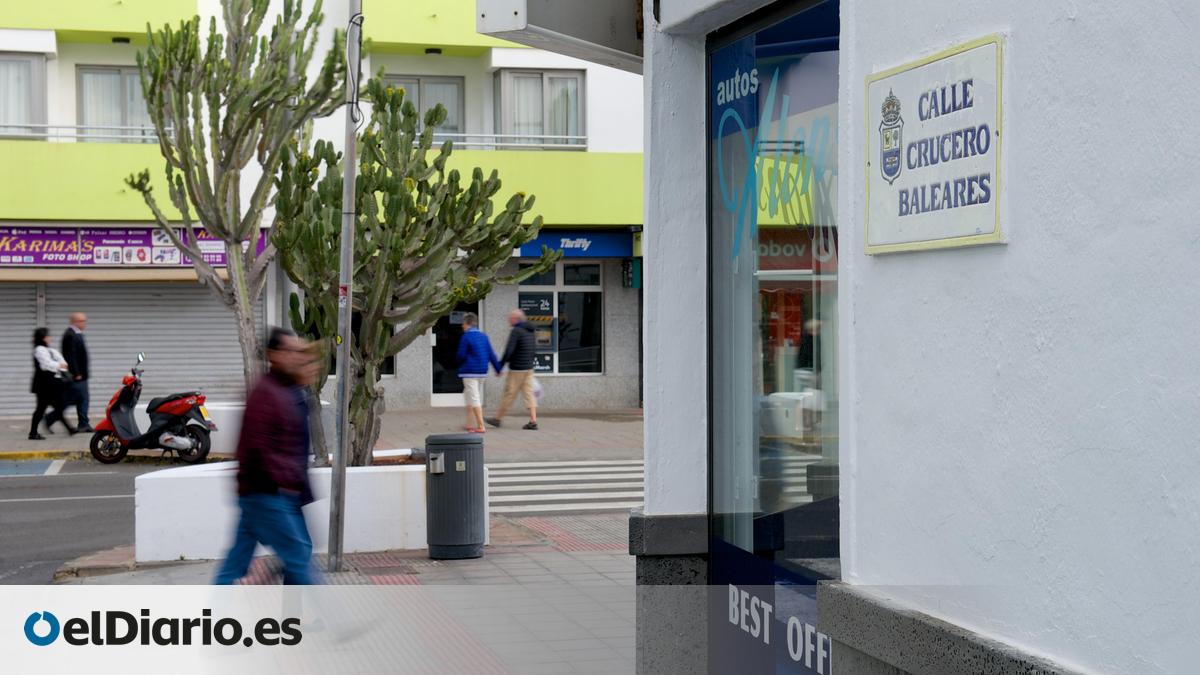
In early 2009, the then-mayor of La Oliva, Rosa Fernández (PSOE), began the process of renaming several streets that celebrated the Franco dictatorship. Streets named after high-ranking military figures, such as Almirante Carrero Blanco and General García Escámez, were rebranded to names like El Poril and Bajo del Mejillón. Nonetheless, some legacy names persist, such as Crucero Baleares and Acorazado España, both of which were vessels of the Francoist Navy.
León recalls the involvement of the Crucero Baleares in significant wartime actions, notably during the Battle of Málaga, where it bombarded civilians fleeing the conflict. This brutal event, known as La Desbandá, saw over 3,000 civilian casualties and underscored the ship’s contentious legacy.
The Call for Change
The Historical Memory Commissioner in Madrid has suggested removing the name Crucero Baleares from street maps in light of its infamous past. Yet, towns like Corralejo continue to retain names tied to this dark chapter in history, either due to ignorance or neglect. Similarly, the street named Acorazado España, a Francoist battleship, remains as a reminder of the unresolved past.
Aarón León points out that these names are in direct violation of the historical memory law. He insists that the application of the law should extend beyond mere acknowledgments and that local governments should actively work to replace such names with those honoring contributions to democracy and freedom.
The Struggle for Recognition
In the municipality of Antigua, an effort was made to purge the renamed streets of Francoist associations following the law’s enactment. However, some names, like General Moscardó—who played a significant role in the 1936 coup—still linger in the region. León argues that names lacking relevance to the islands should be replaced with more fitting tributes to individuals who have had a positive impact on society.
Recent changes in Antigua included renaming streets initially associated with Francoist figures to honor local heroes. Yet, confusion persists, as residents continue to receive mail addressed to the old street names. Taishet Fuentes, a councilman from the PSOE, cites this confusion as evidence of incomplete legal compliance regarding the names.
A Wider Context
The issue of historical memory and accountability has also extended to accusations of non-compliance against various mayors across Spain. In 2015, Puerto del Rosario faced scrutiny as part of a larger complaint against 38 municipalities for ignoring the Historical Memory Law—a charge that could evoke questions of civic responsibility toward historical burdens.
Despite some progress, symbols of Francoism have not been fully eradicated from public spaces. Streets like Ruiz de Alda in the capital still bear names tied to the origins of Spanish fascism, troubling historical legacies remain in the architectural landscape.
The Role of the Law
Eduardo Ranz, an attorney specializing in cases related to the Historical Memory Law, has initiated hundreds of procedures against municipalities failing to comply. He notes that it has been ten years since the law’s inception, leaving ample time for compliance. Ranz argues that selective adherence to laws by mayors bears resemblance to authoritarian governance rather than democratic practices, highlighting a disconnect between local governance and broader societal standards.
Concerning consequences, Ranz explains that failing to comply with the law does not have explicit sanctions or deadlines. Instead, residents may need to engage the legal system—if a judge rules against an obstinate mayor, the official could face charges of disobedience, potentially invoking prison time.
Unaddressed Historical Issues
One of the lesser-known aspects of Francoist repression is the agricultural colony established in Tefía in 1954, aimed at housing those deemed “lazy” and engaged in criminal behaviors, often targeting individuals based on their sexual orientation. León asserts that the societal recognition and reparations for those who suffered in Tefía remain dauntingly absent.
The historical narrative surrounding Tefía has recently come to light through creative mediums, such as the novel Viaje al centro de la infamia by Miguel Ángel Sosa Machín, which portrays the harsh realities faced by homosexuals interred there. This cultural exploration has opened new avenues for understanding the broader implications of Francoist repression.
In essence, the Canary Islands are grappling with a complex tapestry of historical memory, seeking to reconcile the legacies of Francoism with contemporary values of democracy and human rights. The fight for recognition, clarity, and justice continues to unfold across various municipalities, shaped by local histories and collective consciousness.