Unlocking Fuerteventura’s Entrepreneurial Spirit: The Rise of Eco-Tourism Startups
Eco-friendly initiatives are redefining the island’s tourism landscape, offering sustainable growth opportunities for local businesses.
Fuerteventura, renowned for its stunning landscapes and pristine beaches, is experiencing an entrepreneurial renaissance driven by eco-tourism startups. These businesses are not just capitalizing on the island’s natural beauty; they’re spearheading a movement that intertwines environmental responsibility with economic vitality. From guided nature tours that minimize ecological footprints to local artisan markets promoting sustainable crafts, these initiatives are changing the way both tourists and residents engage with the island.
The integration of eco-tourism into Fuerteventura’s business ecosystem has ignited fresh opportunities for local entrepreneurs. Startups focusing on sustainable practices are seen as committed guardians of the island’s unique biodiversity. This shift not only attracts environmentally-conscious travelers but also encourages existing businesses to adapt their practices. As these startups flourish, they pave the way for an economy that prioritizes longevity and sustainability, ensuring that Fuerteventura’s resplendent environments remain intact for future generations.
With an increasing global focus on sustainable travel, Fuerteventura’s emerging eco-tourism sector is positioned to capitalize on rising consumer preferences. By cultivating a relationship with both visitors and nature, these businesses are not only fostering economic growth but also reinforcing the island’s commitment to preserving its extraordinary natural assets. The path ahead for Fuerteventura appears increasingly green, as these innovative startups lead the charge toward a thriving, sustainable future.
Source: Gobierno de Canarias.
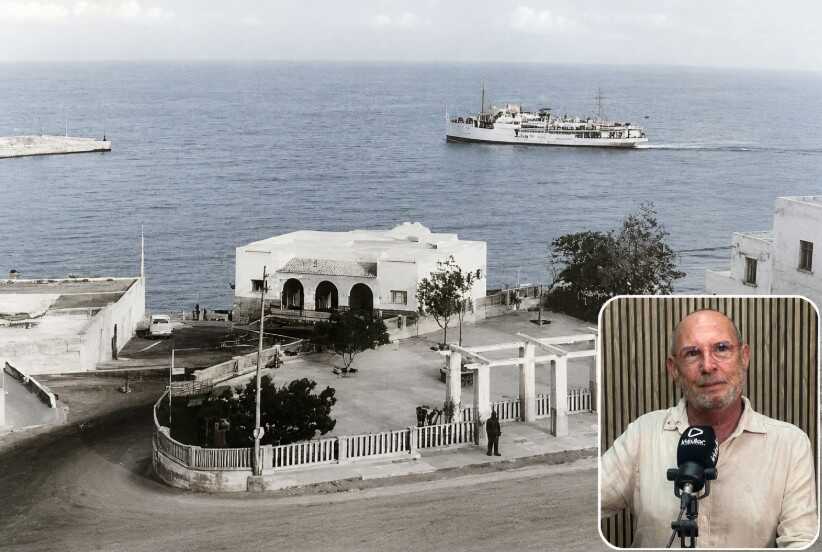
The reopening of the Tinguaro terrace, which had been closed for more than fifteen years, in the Plaza de España has caused surprise. While some residents of the capital applaud the initiative with a nostalgic look, there are groups like El Efequén that open the debate about the future of one of the most emblematic spaces in Puerto del Rosario. In an interview on the program La Voz de Fuerteventura, on Radio Insular, the president of the entity and curator of Heritage, Loren Castañeyra, showed his confusion when considering that the reopening is incompatible with the recovery of the public character of the square. An old demand from the group that had the impression that the City Council was advancing a proposal to remodel this historic enclave. The president of El Efequén insisted that the entity’s claim is not directed against any particular businessman, but rather against a way of using this plaza located in the heart of old Puerto Cabras. As he recalled, the land on which the Plaza de España sits was donated by an individual in the 1940s. A natural balcony overlooking the sea and the port that became a plaza thanks to a popular subscription. The neighbors, he explained, contributed money and construction materials. “So-and-so gave four bags of cement, the other gave I don’t know how much. It’s more from the town than anything,” he stressed. Plaza de España The old heart of Puerto de Cabras For decades the Plaza de España was the main meeting place for residents; most residents knew it simply as El Parque, an open space from which the port could be seen and where a good part of the daily life of the municipality took place. There families walked, children played, several generations of majoreros learned to ride bicycles and meetings and social events were held that, according to him, are part of the city’s collective memory. However, he asserted, this function of public space began to be lost when activity licenses were granted to private companies. “They are given a series of licenses so they can make a private terrace. It is a private business and it seems to me that it is a loss for what was the old town of Puerto de Cabras,” he insisted. More than fifteen years ago, the Tinguaro establishment closed its doors to the public, opening the possibility, demanded by El Efequén, of recovering the square. Recovering the historical image The association maintains that recovery would not require “imaginary recreations”, but rather restoring a perfectly documented configuration. There are abundant historical photographs that allow us to know precisely what this enclave was like during much of the 20th century. There is plenty of photographic documentation, he insisted, “beautiful, wonderful; you can see perfectly what it was like. You don’t have to do anything new; simply repeat what was there.” The association also proposes that the enclave recover the name of Plaza de Puerto de Cabras, considering that this name would reinforce the historical memory of the capital and would contribute to highlighting the old urban center. Waiting for a municipal response After learning about the opening of the new terrace, El Efequén hopes to know what the City Council’s position is regarding the future of the Plaza de España and if there continues to be any initiative for its remodeling. Meanwhile, the association assures that it will maintain its work of dissemination and defense of the historical heritage of Puerto del Rosario, convinced that the recovery of this space constitutes a question of identity, memory and citizen use of public space. It is also awaiting the upcoming final approval of the municipal heritage catalog to protect the area and, also, the claimed cornice. A space that must not only be protected but also preserved and valued. Among the proposals, “some sheet of water that allows us to understand the environment”, remembering that in the past the sea washed right up to the ledge itself.
Originally reported by www.lavozdefuerteventura.com, rewritten by the Fuerteventura Times AI Editorial Desk.