The Legal Struggles of Extraction Projects in Fuerteventura
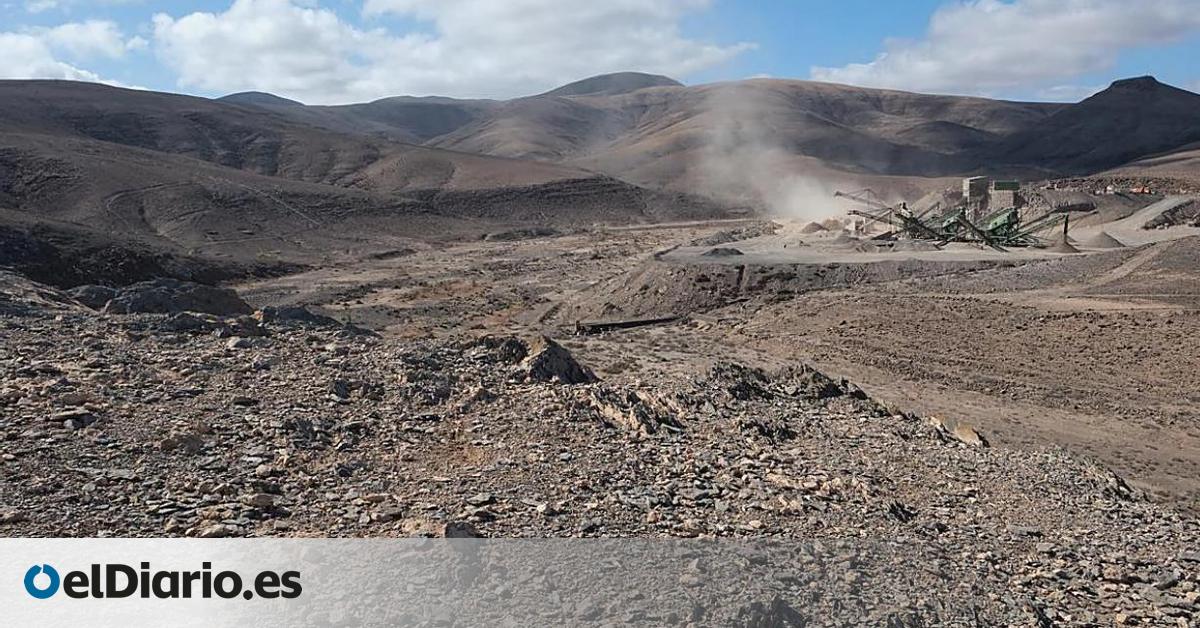
A striking legal gap has persisted for 21 years, enabling the company Transportes Pablo de León, based in Fuerteventura, to forcefully pursue a project for extracting aggregates in a Bird Protection Area (ZEPA). This area, known as ‘Llanos y Cuchillos de Antigua’ in the eastern part of the island, was established to protect the habitats of threatened and migratory species, such as the guirre, the hubara, the Canary stonechat, and the Saharan courser.
Protection Status Delayed
Although the Government of the Canary Islands proposed the inclusion of this site in the European network of protected areas back in 2001, a formal decree establishing its legal protection wasn’t approved until 2022. This considerable delay of over two decades allowed the company, which has been operating in the area since the late 20th century, to evade serious legal repercussions. Being accused by the prosecutor’s office of offenses against land use planning and environmental law, the company seized the moment to re-open the environmental assessment file for its basalt quarry project—the latest attempt to secure a license.
Current Environmental Assessment
Currently, the Canary Islands’ regional government’s Department of Ecological Transition and Energy is evaluating the potential impact of the industrial activity given the site’s ZEPA designation, which spans approximately 9,906 hectares. Officials have stated that it is impossible to determine the outcome of the Environmental Impact Declaration (DIA) at this stage, but it cannot be ignored that the bird protection profile asserts a significant limitation on prospective developments in the area.
The Company’s Defense
Transportes Pablo de León maintains that the ZEPA status merely imposes limitations rather than outright prohibitions. They argue that the environmental professionals in the Canary Islands Government have been dismissive, claiming their operations are “legalizable.” The company insists that justice has sided with them and is determined to expedite a conclusion to what they term a “terrible and hard process,” claiming that the founder, Pablo de León, suffered from undue stress that affected his health. They stress that the survival of the company is essential for the livelihoods of about 40 employees and their families.
Court Outcomes Favoring the Company
In recent judicial proceedings, the company emerged victorious on two occasions. In October 2024, they successfully reopened the environmental evaluation of their quarry proposal. Following that, in March 2025, they were acquitted of two charges—one for offenses against land planning and another for violations concerning the environment.
Prosecutorial Allegations
According to the local newspaper Diario de Fuerteventura, the prosecutor had requested a five-year fine for the company, suggesting the closure of their facilities for eight years and the dismantling of constructions due to alleged infringement from 2000 to 2017 in the Llano de las Goteras area. Aerial photographs provided by SEPRONA (Nature Protection Service of the Civil Guard) documented changes to the landscape resulting from resource extraction, leading to concerns about unauthorized activities.
Controversy Over Permits
The company had been operating with permits for a crushing and classification plant, concrete plant, and an asphalt plant, but they lacked mining permission and other necessary authorizations for specific resource extraction in the region. Environment professionals from the Canary Agency for Natural Protection contended that the company didn’t possess the required titles to operate and that their activities were occurring in a protected space.
Environmental Observations
During a 2018 site visit, a dense cloud of dust as a result of extraction was noted, disturbing not only vegetation but also rocky surfaces. However, no significant disturbances related to wildlife, particularly avian species, were reported. In investigations conducted by SEPRONA from 2017 to 2020, the inspectors found no current extraction activity; machinery was in operation, but it processed materials transported from another facility located in the northern part of Fuerteventura.
Legal Justification for Absence of ZEPA
The second criminal court in Puerto del Rosario found the company not guilty, stating that the ZEPA ‘Llanos y Cuchillos de Antigua’ had no legal standing between 2000 and 2017, primarily because it had not been officially declared or published. Without a recognized ZEPA, the land was classified as common rural territory, leading to the conclusion that aggregate extraction could be allowed if an environmentally favorable DIA was obtained.
Supreme Court Perspectives
Legal statutes from Spain’s Supreme Court indicate that for a territorial offense conviction, it must be established that the construction is entirely illegalizable. As extraction of aggregates on this land could be authorized with a positive DIA, non-permitted actions might only lead to administrative sanctions.
Conclusion of Judicial Proceedings
Moreover, regarding environmental offenses, the judge criticized the prosecution’s report as “generic and inconclusive.” A more detailed study assessing the circumstances pre- and post-establishment of the quarry was deemed necessary to determine how wildlife and plant life conditions might have been impacted. The company itself admitted during the trial to not have had prior permission for the quarry, prompting them to seek it officially in 2018. Yet, regional authorities halted the process, indicating the extraction posed negative impacts on the integrity of the protected area.
Ongoing Challenges
Despite the firm ruling favoring the company, legal proceedings continued as Transportes Pablo de León appealed against the regional government’s decision concerning the ZEPA. In a significant ruling, the Higher Court concluded that the government had leaned on a ZEPA status that was not formally recognized or proclaimed at the time of their decision.
Current Legal Standing
Ultimately, the company was ordered to cover the procedural costs, capped at 1,500 euros. They acknowledged to local reporters that they would not appeal, as their legal counsel deemed further action unlikely to alter the situation. The final determination on the basalt quarry’s fate now lies with the environmental agency of the Canary Islands Government.
This case epitomizes the ongoing tug-of-war between commercial interests and environmental protections, raising questions about the implications of delayed legal frameworks and the challenges of maintaining ecological integrity amid industrial pursuits.