Vandalism in Urbanization Los Lagos: A Growing Concern
In recent weeks, the Los Lagos Urbanization area in El Cotillo has been shaken by a series of vandalism incidents. Graffiti has appeared on various structures, with significant damage inflicted on signage intended to regulate public behavior. The actions have raised concerns not only about public property preservation but also about community responsibility.
Targeted Signs
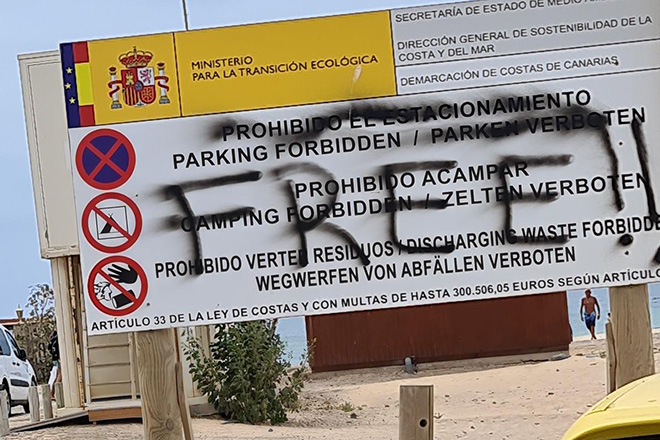
The specific targets of this vandalism have been signs prohibiting camping and parking in the Maritime Terrestrial Public Domain. These regulations are crucial for maintaining the integrity of natural spaces and ensuring that beaches remain accessible and enjoyable for everyone. Unfortunately, the signs—meant to inform and protect—have been marred by illegible messages and paint, aimed at challenging the status quo.
One prominent sign, installed by the Ministry for Ecological Transition, stated clearly that parking and camping are prohibited in the area. However, it now bears the word “Free” emblazoned in large letters, reflecting a sentiment that runs counter to the intentions behind these regulations. Such alterations not only undermine the authority of the established rules but also encourage a mindset that disrespects communal spaces.
Damage to Vertical Signals
In addition to the defaced signage, several vertical signs that explicitly prohibit parking and circulation have been knocked down. These actions indicate a growing disregard for the rules aimed at preserving the area for public use. Such vandalism can create confusion among residents and visitors alike, potentially leading to unregulated behavior that compromises the environment.
Context of Camping Regulations
The backdrop to this vandalism includes a decree from the Canary Islands Government regarding “new normality” measures following the COVID-19 pandemic. This decree specifies that camping is only permissible in designated areas, such as campsites, and limits the number of occupants to twenty people. Furthermore, safety distance measures must be observed, highlighting the ongoing concern for public health amidst the crisis.
The local municipality of La Oliva clarified that the traditional areas where beach camping was allowed do not meet the requirements set forth by this new legislation. Thus, camping on the beaches of La Oliva will not be permitted this summer—a decision applicable to all of the Canary Islands.
Community Response
Following the announcement of these restrictions, local authorities emphasized the importance of community involvement and adherence to the rules. The La Oliva Town Hall is not only committed to enforcing the current regulations but is also taking proactive steps to draft an administrative file that will better regulate camping activities by the next holiday season.
To foster a sense of responsibility, the municipality has called for individual accountability in respecting these guidelines. It’s an appeal that resonates in communities where social cohesion and the well-being of the environment must go hand in hand.
A Call for Respect
As incidents of vandalism continue to surface in El Cotillo, both locals and visitors are urged to reflect on their actions and the impact they have on the community. The appeal from local authorities serves as a reminder that our shared spaces hinge not just on rules, but on mutual respect and a commitment to preserving the natural beauty that draws people to this area in the first place.
In fostering such a spirit of responsibility, it is hoped that the Urbanization Los Lagos can return to being a space of enjoyment and relaxation for all, unmarked by the blemishes of thoughtless acts.