The Rising Tide of Anti-Tourism Sentiment in Spain
Last summer, Spain found itself at the center of a growing wave of protests, fueled by the overwhelming influx of tourists that many residents felt was disrupting their daily lives. With over 90 million foreign visitors flocking to the country in 2024, projections from consultancy firm Braintrust suggest that this number could skyrocket to 115 million by 2040. This surge has ignited a passionate response from locals, who are increasingly vocal about the strain tourism places on their communities.
The Protests: A Response to Overcrowding
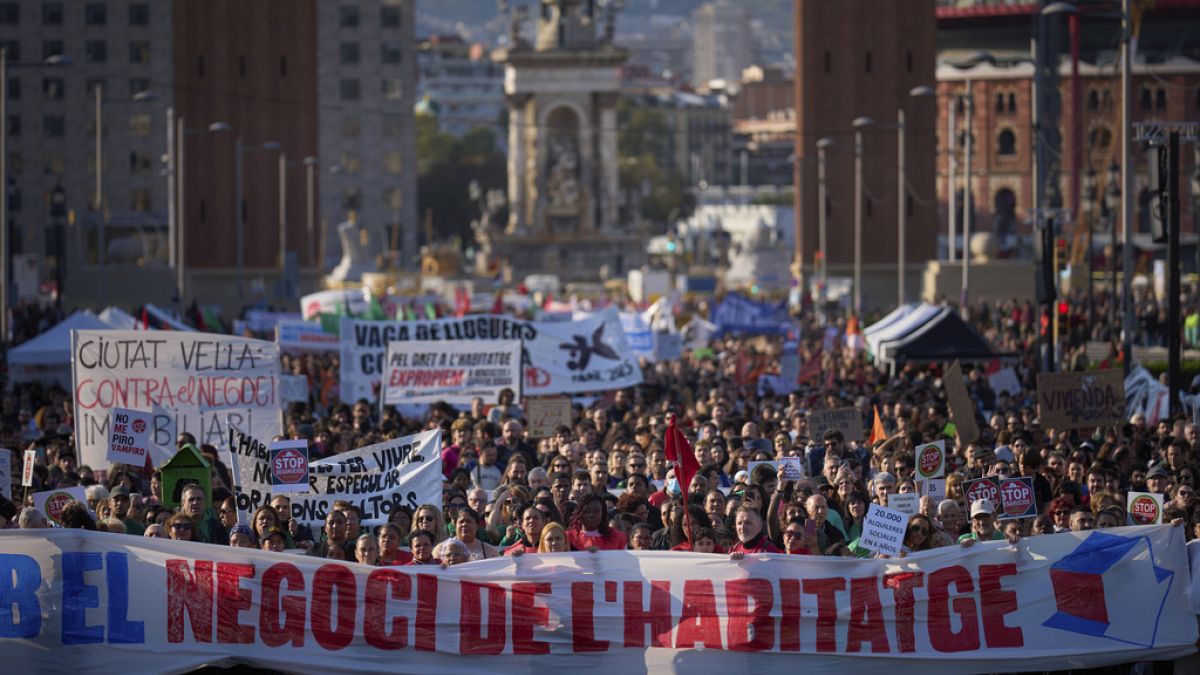
In response to what they perceive as inadequate government measures to manage the tourist influx, residents across Spain have taken to the streets. Hunger strikes, anti-tourism graffiti in popular tourist spots, and even playful water gun antics aimed at tourists have become common sights. As the Easter holidays approach, the anti-tourism sentiment is once again bubbling to the surface, with protests intensifying. On April 5, tens of thousands of Spaniards marched in cities nationwide, expressing their frustration over soaring housing costs and the lack of effective solutions.
The Housing Crisis: A Direct Consequence of Tourism
One of the most pressing issues driving the protests is the spiraling cost of housing. As more properties are converted into short-term rentals for tourists, locals find themselves priced out of their own neighborhoods. In Tenerife, for example, demonstrators organized a hunger strike against new hotel developments, with some residents reporting they had been forced to sleep in their cars or even caves due to unaffordable housing. Ivan Cerdena Molina, a protest organizer, articulated the frustration felt by many: “We have nothing against individual tourists, but the industry is growing and using up so many resources, and the island cannot cope.”
The Impact on Major Cities
Cities like Barcelona and Madrid are also grappling with the consequences of mass tourism. In June of last year, Barcelona’s city council announced a plan to eliminate tourist flat licenses by 2028, a move aimed at curbing the proliferation of short-term rentals. The city has not granted new licenses since 2014, maintaining a cap of around 10,000 units. Meanwhile, Spain is considering a 100% tax on properties purchased by non-EU residents, a measure intended to protect the housing market from foreign buyers, who currently account for about 15% of home sales.
The Protests Intensify Ahead of Easter
Despite the government’s attempts to address these issues, resentment continues to simmer. Protests ahead of the Easter holiday have already seen significant turnout, with estimates of participation varying widely. In Madrid, official figures reported 15,000 marchers, while organizers claimed the number was closer to 150,000. In Barcelona, the city hall reported 12,000 participants, while protest leaders asserted that over 100,000 took to the streets. Chants of "Get Airbnb out of our neighborhoods" echoed through the crowds, highlighting the growing discontent with short-term rental platforms.
Local Voices: The Call for Change
In Majorca, demonstrators rallied under the slogan "Let’s end the housing business," demanding solutions to the housing crisis. Activists have pointed fingers at the "greed and avarice" of hoteliers, politicians, and real estate investors, blaming them for the deterioration of local ecosystems and the gentrification of neighborhoods. In a poignant letter prior to a protest, they implored tourists not to visit, labeling them as “the source of our problems.”
The Broader Context: Economic Strain on Workers
The impact of mass tourism extends beyond housing issues. In the Canary Islands, hospitality workers are threatening strikes over pay disputes, as many struggle to make ends meet amid rising living costs. According to Spain’s National Statistics Institute, 33.8% of residents in the Canary Islands are at risk of poverty or social exclusion, the highest rate in the country after Andalucía. Trade unions are advocating for wage increases to help alleviate the financial burden on workers.
Escalating Tensions and Future Actions
Recent unrest in Tenerife has seen activists vandalizing rental cars and threatening to escalate their actions to target airports. The situation is becoming increasingly volatile, with a summit planned next month in Barcelona, where 15 activist groups from Spain, Portugal, Italy, and France will convene to strategize against unsustainable tourism practices.
The Movement Against Excessive Tourism
The Majorca-based movement Menys Turisme, Més Vida (Less Tourism, More Life) is at the forefront of the fight against the adverse effects of excessive tourism. They argue that unchecked tourism exacerbates property speculation, displaces local residents, and inflates living costs. As the summer season approaches, the movement has vowed to intensify its efforts, signaling that the struggle against mass tourism in Spain is far from over.
In this complex landscape, the voices of residents are becoming increasingly crucial as they seek to reclaim their communities and advocate for a more sustainable approach to tourism that respects both the environment and the needs of local populations.