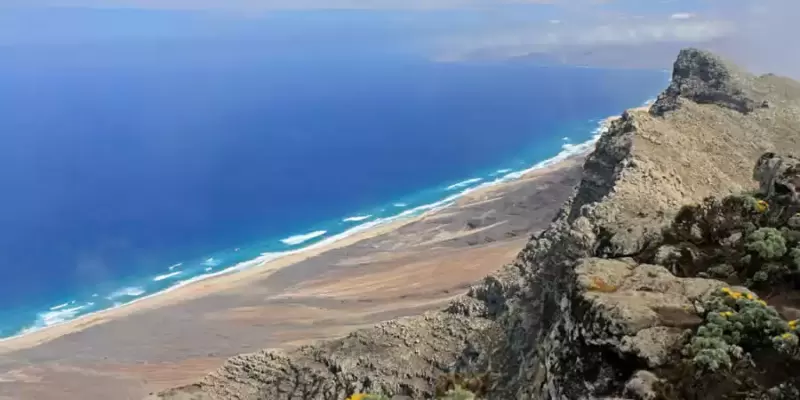
El proyecto del Parque Natural de Jandía se rechaza por su impacto en un espacio protegido y su incompatibilidad con el planeamiento
The Canarian government’s decision to reject the Costa Calma I Wind Farm project in Fuerteventura has sent ripples through the local community and environmental circles. This proposed wind farm, which was to be built in the Jandía Natural Park, aimed to produce 18 megawatts of renewable energy. However, it has faced significant opposition and was ultimately deemed incompatible with the island’s territorial model and environmental regulations.
Rejection by the Canary Government
The Directorate General of Energy for the Government of the Canary Islands has formally dismissed the authorization for the wind farm. This decision came following strong objections from the local council, known as the Cabildo of Fuerteventura, and the municipality of Pájara, where the project was planned. The president of the Cabildo, Lola García, praised this decision, declaring it a crucial step in halting a project that she believes fundamentally conflicts with the island’s territorial planning and respect for governance in land use.
The Impact on Protected Areas
One of the fundamental reasons for the project’s rejection lies in its location. The proposed wind farm would have been situated in a protected area, raising alarms among conservationists and local authorities alike. Technical reports highlighted that the installation implicated actions that are strictly prohibited under current environmental laws, specifically mentioning the need for the construction of new roads to facilitate the wind farm’s operations. Such actions could jeopardize the ecological integrity of the Jandía Natural Park, an area known for its rich biodiversity and unique landscapes.
Balancing Renewable Energy Development and Environmental Conservation
The area of land earmarked for the wind farm is recognized not only for its natural beauty but also for its ecological significance. Local authorities, while acknowledging the need for renewable energy investments, emphasize that such initiatives must align with environmental values and existing legal frameworks. The territorial planning department insists that the transition towards renewable energy sources—such as wind—needs to be carefully balanced against the imperative to protect the natural environment.
Efforts are being made to articulate that renewable energy is essential in combating climate change. However, it must not come at the cost of damaging protected ecological sectors. The local administrations are calling for a thoughtful approach that considers both energy transition and environmental preservation.
Community Response and Future Implications
Reactions to the decision have varied across the community. Many local residents and environmental groups celebrate the decision, viewing it as a necessary protection of their natural heritage. On the other hand, some advocate for a comprehensive approach to renewable energy development that respects the environment while also addressing the community’s energy needs.
This situation has sparked wider discussions about how best to pursue sustainable energy solutions in harmony with nature. Various stakeholders, including environmentalists, local residents, and energy developers, have started to deliberate on potential alternative projects that align better with conservation principles.
The case of the Costa Calma I Wind Farm serves as a reminder of the complexities involved in energy development—wherevaiding the ecological can often lead to significant social and environmental consequences. As the region contours its path forward on renewable energy, it faces the ongoing challenge of ensuring that environmental stewardship is not only respected but prioritized.