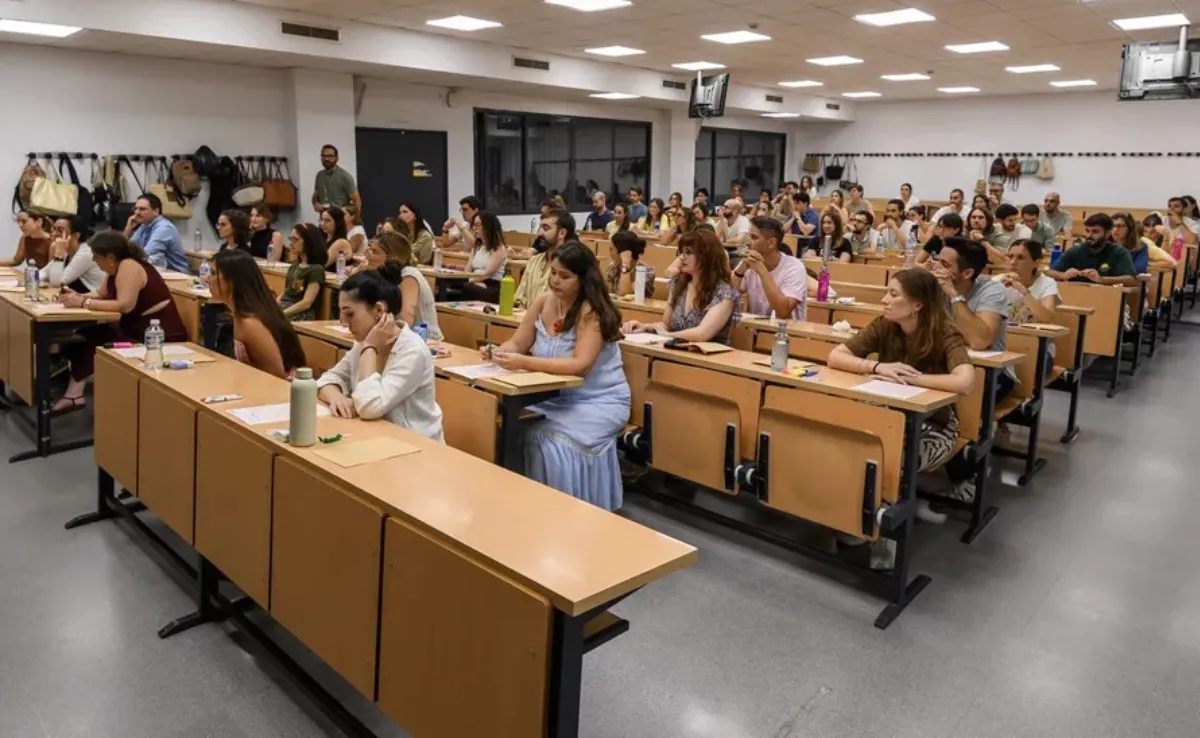
The youth of Gran Canaria are facing a significant challenge: they are not a priority for the island council. This reality is starkly illustrated by the recent refusal of the governing coalition of Nueva Canarias (NC) and the Spanish Socialist Workers’ Party (PSOE), led by Antonio Morales, to increase the budget for scholarships aimed at local families and young people.
Failed Scholarship Motion
During a recent full council meeting, the Popular Party (PP) proposed an urgent motion to establish practical training scholarships for university students and those in vocational training. This initiative aimed to provide young people with paid internships in public institutions, foundations, and private entities for a month and a half, from July 15 to August 31. The goal was to allow them to gain valuable work experience related to their studies, alleviating the need for many to take unrelated temporary jobs during the summer just to earn extra income. Unfortunately, this initiative was dismissed by the coalition partners, leaving many young people without the support they desperately need.
A Successful Model in Fuerteventura
Interestingly, a similar scholarship program has been thriving in Fuerteventura for the past 20 years. Each year, this initiative selects 110 students—55 from each category—offering financial support of €2,092 for university students and €1,360 for vocational students. Adargoma Hernández, a PSOE councillor, manages this successful initiative and has even shared insights with Olaia Morán, the education councillor in Gran Canaria. However, instead of adopting this proven model, the Gran Canaria government responded with a lengthy list of unrelated programs to justify their refusal to support local youth.
Government Inaction
The education department’s budget is alarmingly low for an institution of this size, which is frankly disheartening. However, there is hope that following this council meeting, the island government—facing electoral deadlines—might reconsider and launch this scholarship initiative in 2027, similar to the ‘Bono Consumo Gran Canaria’ scheme aimed at boosting local small businesses.
Moreover, the government also opposed a proposal for language immersion scholarships, which have been available in Tenerife for years. So far, only 63 young Gran Canarians have benefited from council aid to study abroad—an opportunity often inaccessible to those whose families cannot afford it.
Comparing Fiscal Commitments
The disparity in financial commitments between Tenerife and Gran Canaria towards scholarships is staggering. Tenerife allocates €12 million for various educational initiatives, while Gran Canaria dedicates a mere €1.93 million—less than 0.2% of Gran Canaria’s total budget of €1,055 million. To be effective, the scholarship budget should ideally be around €10 million. For context:
- Tenerife allocates €12 million for educational initiatives, including university, language immersion, vocational training, and support for students with special educational needs.
- Fuerteventura allocates more than double what Gran Canaria dedicates to youth scholarships, funding school projects with €4,000 each, totaling over €4.6 million for this purpose.
While the government in Tenerife takes scholarship funding seriously, the youth of Gran Canaria are sadly left wanting.
Morales’ Priorities
This situation highlights the lack of importance Morales places on scholarships and assistance for families with children and young people in Gran Canaria. Additionally, the closed Youth Space 14-30, formerly the State Library on Tomás Morales, has remained shut for years due to a lack of reforms. The renovation of the Tamadaba camp has also stalled due to unsuccessful tenders, as have the refurbishment works at the Osorio estate—locations particularly relevant to young Gran Canarians.
Instead, the Morales administration seems to focus exclusively on discretionary grants to entities currently under investigation for alleged misconduct. It is perplexing that the government prioritizes funding projects outside its borders while child poverty exceeds 40% in the local community, where many residents require assistance with rent or housing acquisition.
Lack of Commitment to Local Youth
Unfortunately, these significant issues are not priorities for what is self-identified as a progressive government, which appears more concerned with propaganda videos and clientelism to maintain power. Despite this, the Popular Group remains committed to proposing measures to improve the lives of Gran Canarians, particularly the youth, who represent the present and future of the region. The Cabildo of Gran Canaria should focus on ensuring that young people receive adequate training aligned with the job market and create opportunities to prevent them from having to pursue careers abroad to progress.
Regrettably, the Morales government seems preoccupied with other matters, to the detriment of our youth.