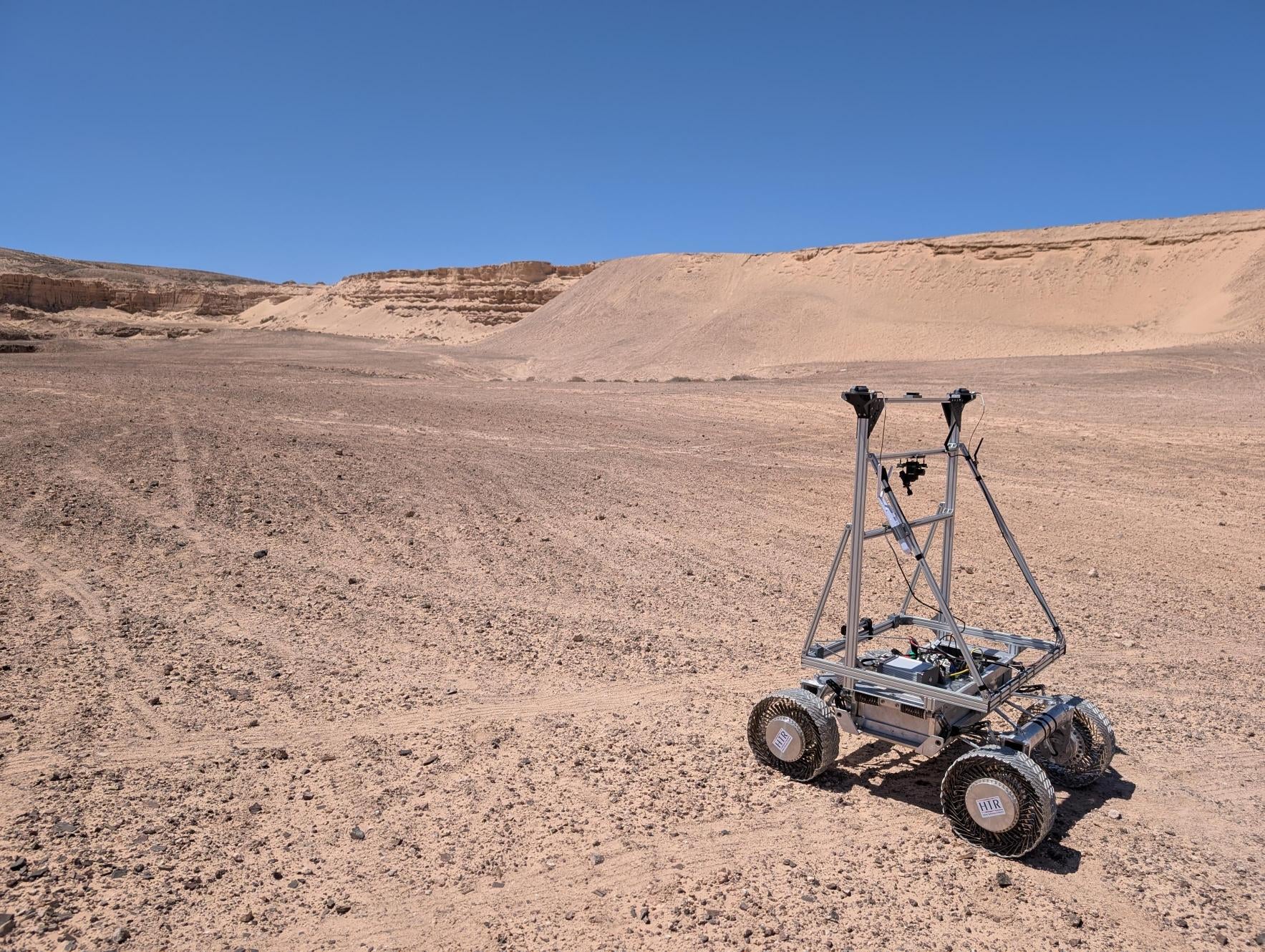
LUPIN: Pioneering Lunar Navigation Technology Tested in Fuerteventura
In the small village of Lajares, situated within the municipality of La Oliva in Fuerteventura, researchers and engineers have been working tirelessly on a groundbreaking project known as LUPIN (Enabling High-Performance PNT in the Lunar Environment). This innovative initiative launched by the European Space Agency (ESA) aims to create a prototype navigation system that could provide lunar rovers and astronauts with precise location data, akin to how Google Maps operates on Earth.
Testing Environment and Methodology
From April 27 to May 8, 2025, a series of field tests were conducted to simulate various lunar conditions. These included nighttime operations to assess how the navigation system would perform under minimal lighting—essentially mimicking the unpredictable and challenging environment of the moon. The multinational technology company GMV, under ESA’s mandate, orchestrated this experiment, marking a significant step towards ensuring lunar navigation reliability.
Mariella Graziano, the Director of Strategy and Business Development for Science, Exploration, and Transport at GMV, alongside Steven Kay, the project leader for LUPIN, provided insights into the tests. They revealed that the team successfully gathered over seven kilometers of data, analyzing the rover’s performance at varying speeds—from a conventional 0.2 meters per second to the anticipated future speed of 1.0 meters per second. This data is critical for refining the navigation technology as it aims to meet the demands of future lunar missions.
A Leap Towards Lunar Navigation
The significance of LUPIN cannot be understated. Unlike the Earth, the moon lacks an extensive infrastructure of satellite positioning systems such as GPS. As a result, rovers and spacecraft traditionally rely on internal computations and telemetry data sent from Earth, making real-time navigation both challenging and less efficient. The prototype developed through the LUPIN project seeks to bridge this gap by enabling rovers and astronauts to determine their positions more accurately using a system that mimics GPS functionality.
According to GMV, the project aims to develop a Positioning, Navigation, and Timing (PNT) system that integrates both existing technologies and future advancements. This includes the Lunar Communication Navigation System (CNS), which would facilitate the reception of satellite signals in lunar orbit—offering coverage for key areas of interest like the lunar south pole, the far side of the moon, and areas with permanent shadow.
Technical Challenges and Innovations
The development of the lunar navigation system involves tackling various technical challenges. Graziano emphasized the company’s commitment to pushing the boundaries of technology to make future lunar missions viable. An array of techniques is being explored, including new positioning methods and innovative time synchronization strategies to enhance navigational capabilities on the lunar surface.
The testing environment in Fuerteventura was strategically chosen due to its similarities to the moon’s harsher terrains, making it an ideal location for the series of tests. The testing initiatives align with other aerospace projects conducted in the region, showcasing Fuerteventura’s growing prominence in this field. For example, upcoming projects include monitoring migratory patterns over the Atlantic with high-altitude unmanned aerial vehicles, emphasizing the island’s expanding role within aerospace innovation.
Eyes on the Future
The success of LUPIN’s tests in Lajares heralds a new era in lunar exploration, providing astronauts and robotic rovers with a reliable tool for navigation. As future missions to the moon increasingly become a reality, the advancements brought about by LUPIN could prove indispensable.
The ESA continues to prioritize projects like LUPIN under its Innovation and Support Programme for Navigation, reflecting its dedication to developing state-of-the-art technologies for lunar exploration. By ensuring that astronauts and rovers have access to precise navigation tools, humanity inches closer to unlocking the mysteries of the moon, paving the way for sustained exploration and possibly even colonization.
Through these developments, the world watches in anticipation as engineers and scientists venture farther than ever before, armed with sophisticated technologies that aim to broaden our reach beyond our home planet. Whether it’s the navigation aid offered by LUPIN or future projects launching from Fuerteventura, humanity is on the precipice of making its mark on the lunar surface.