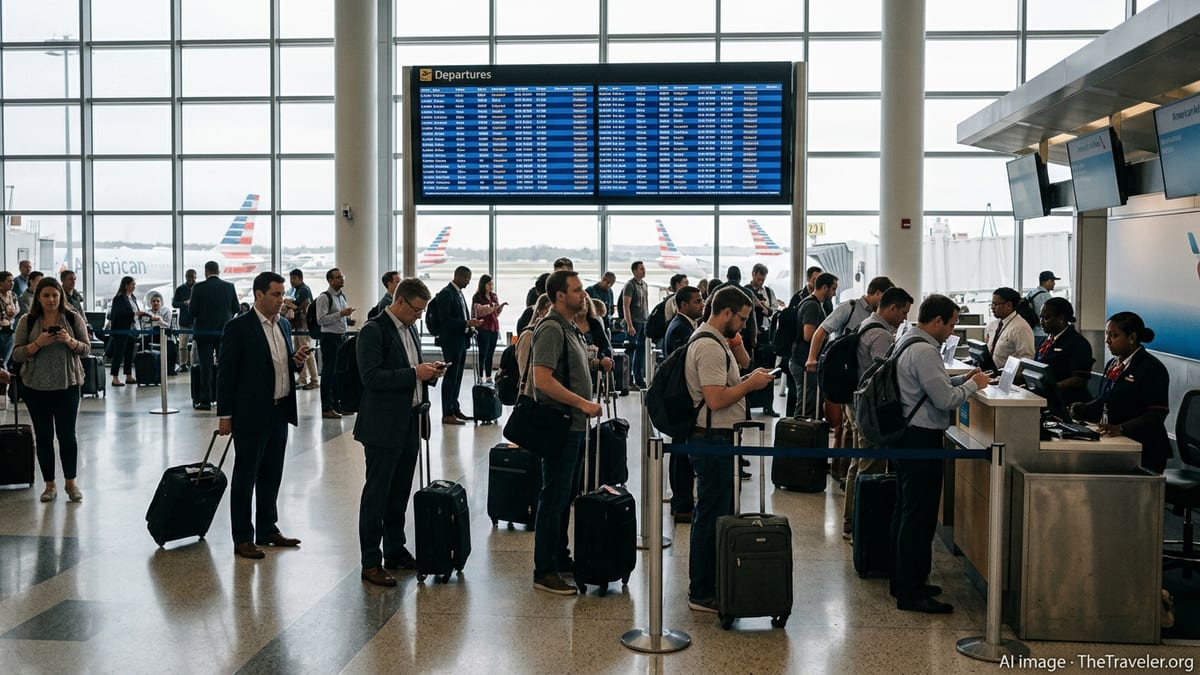
Disruptions in Air Travel: Cancellations Affecting Passengers Between Spain, Israel, and the U.S.
Passengers flying between Spain, Israel, and the United States faced fresh disruptions this week as cancellations affecting Iberia, American Airlines, and El Al services through Madrid and Barcelona left travelers scrambling for alternative routes. The situation has created a ripple effect, complicating travel plans for many.
Four Key Flights Pulled Amid Shifting Schedules
Recent reports indicate that at least four flights linking Tel Aviv with Spain and North American gateways, including Chicago, were pulled from sale or canceled at short notice. This disruption primarily affected Iberia-operated services and codeshare flights marketed by American Airlines and El Al, which typically funnel passengers through Madrid Barajas and Barcelona El Prat.
The most visible impact has been on itineraries connecting Tel Aviv with Spain via Iberia’s Madrid and Barcelona hubs. When an Iberia leg is removed from the timetable or downgraded to a smaller aircraft, the corresponding American or El Al codes can disappear as well. This effectively cancels several marketed flights, even if only one physical aircraft is involved.
For passengers holding tickets that combine Tel Aviv, Chicago, and other long-haul destinations with intra-European segments through Spain, this has meant last-minute rebookings, downgrades, and outright cancellations. With spring traffic already heavy across European hubs, spare seats have been limited, leaving some travelers temporarily stranded in Madrid and Barcelona while they wait for new options.
Middle East Conflict Continues to Disrupt Tel Aviv Links
The backdrop to the latest disruption is the ongoing regional conflict that has reshaped airspace and capacity into and out of Tel Aviv since late winter 2026. Publicly available airline updates show that several carriers have extended or deepened suspensions of Tel Aviv service, while others, including El Al and select European partners, continue to operate reduced but strategically important links.
Iberia has published a special advisory outlining a commercial agreement with El Al that runs from mid-April to late October 2026. This agreement enables passengers holding Iberia tickets to be rebooked on El Al services on a wide range of routes to and from Tel Aviv. This arrangement is designed to provide Spain-based and connecting customers an alternative if Iberia or its partners are forced to trim capacity on direct flights to Israel or reroute traffic through other European hubs.
Broader industry reporting indicates that tens of thousands of flights have already been canceled worldwide since late February, with European and Middle Eastern hubs absorbing much of the shock. For travelers, this has translated into an uneven patchwork of schedules in and out of Israel, where routes may be available one week and reduced or suspended the next.
American Airlines and Iberia Codeshares Complicate Rebooking
The tight integration between American Airlines and Iberia within the oneworld alliance, normally a benefit for frequent flyers, has contributed to confusion as schedules shift. Many itineraries between the United States and Israel rely on a combination of American long-haul services to European gateways and Iberia-operated segments to and from Spain, all sold under multiple codeshare flight numbers.
Travel forums and passenger accounts describe cases where an Iberia-operated leg through Madrid was retimed or downgraded, prompting automatic rebookings that no longer aligned with separate American Airlines transatlantic flights. In some situations, travelers reached Madrid only to discover that their onward American flight had closed or that the connection was no longer valid, requiring overnight stays and manual rebooking at busy airport desks.
Similar stories have emerged from Barcelona, where American-marketed tickets using Iberia or partner metal have been affected when a European segment was removed from the schedule. For passengers, it can appear as though an American or El Al flight has been canceled entirely, even when the underlying Iberia flight continues with different timings or under a different marketing code.
Iberia and El Al Offer Limited Relief Options
In response to sustained disruption on routes touching Israel, Iberia has outlined a series of flexibility measures on its customer information pages. Passengers whose flights are canceled are generally permitted to request a date change or a refund through online self-service tools, with additional options sometimes available for those connecting from affected regions or whose journeys involve multiple oneworld partners.
The commercial agreement with El Al is a central element of this strategy for 2026. Under the arrangement, Iberia ticket holders on certain routes can be rebooked into the lowest available cabin class on El Al flights to and from Tel Aviv. This helps preserve journeys that would otherwise be broken by cancellations or capacity cuts.
El Al has continued to operate a skeleton but strategically focused network out of Tel Aviv, including additional special services on some long-haul routes aimed at accommodating travelers whose flights on foreign carriers have been canceled. However, both airlines remain constrained by external factors such as crew duty limitations, aircraft availability, and shifting security guidance.
Passenger Rights and What Stranded Travelers Can Do
The latest cancellations affecting Iberia, American Airlines, and El Al come amid a broader spike in operational disruption across Europe and North America this spring. Industry data indicates that hundreds of daily cancellations in the United States are driven by severe weather and air traffic control constraints, with American among the carriers registering some of the highest numbers of scrubbed flights.
In Europe, tracking services show that Barcelona and Madrid have recently ranked among the continent’s more disrupted airports, with high volumes of delayed and canceled flights across multiple carriers. On days when weather, congestion, and knock-on crew issues intersect, even a relatively small number of cancellations tied to Tel Aviv or long-haul connections can leave several hundred passengers sleeping in terminals or waiting in long customer service lines.
Air passenger rights frameworks in both the European Union and the United States provide some protection for those affected. Travelers whose flights are canceled are typically entitled to a choice between rerouting at the earliest opportunity or a refund of the unused portion of their ticket. In many cases, airlines are also expected to provide meals, refreshments, and hotel accommodation when passengers are stranded overnight.
For travelers booked on complex itineraries linking Tel Aviv, Spain, and North America, experts recommend closely monitoring booking tools and flight status pages in the days before departure. Confirming minimum connection times through Madrid and Barcelona and acting quickly to contact the marketing carrier if any segment shows as canceled can help reduce the risk of becoming stranded if further cancellations hit the busy Spain-Israel-U.S. corridor.