The Deteriorating Wonder: The Sperm Whale Skeleton in Jandía
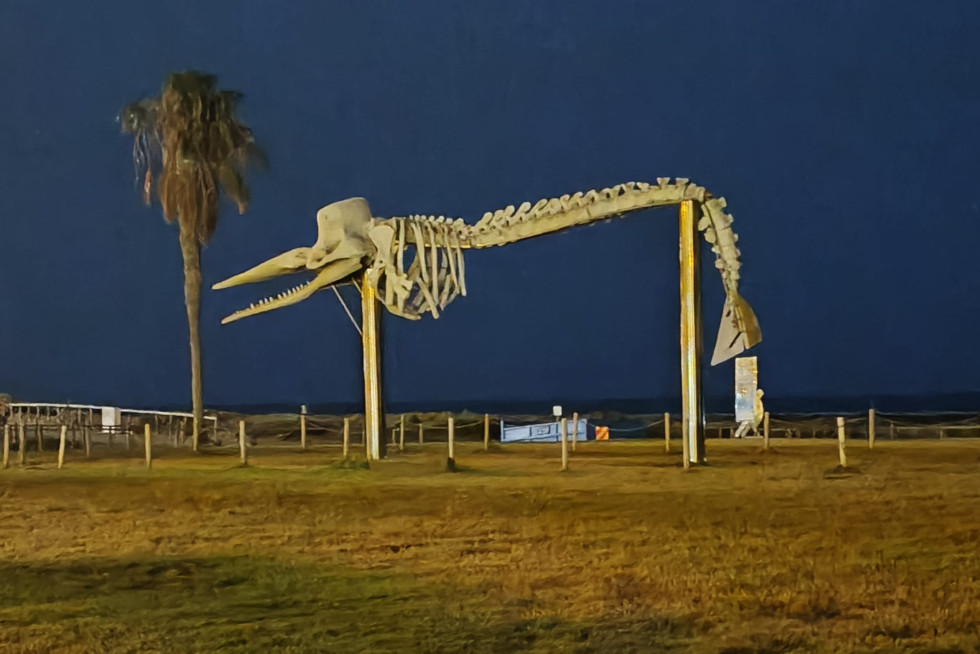
In the picturesque municipality of Pájara on the island of Fuerteventura, a significant cultural and ecological artifact is facing the threat of irreversible damage. The sperm whale skeleton, measuring an impressive 14.5 meters in length, sits prominently along the Avenida del Saladar in Jandía. Recently, concerns have been raised regarding its condition, particularly following the destruction caused by a recent windstorm that affected its tail region.
A Reflection of Nature’s Majesty
Installed in September 2017, this giant skeleton was not just a decorative piece; it was part of a broader initiative spearheaded by the Cabildo of Fuerteventura and the Biosphere Reserve. The idea behind this project was to recover cetacean remains that had washed ashore after a series of tragic stranding events. These occurrences were primarily linked to military maneuvers, which led to the unfortunate entrapment of 14 beaked whales between the islands of Lanzarote and Fuerteventura.
This skeleton stands as a poignant reminder of the delicate relationship between nature and humanity, and it emphasizes the importance of respecting marine ecosystems. The historical context behind its acquisition further amplifies its significance, as it played a critical role in instigating a ban on underwater sonar usage in Canary waters, thanks to compelling scientific justification.
Part of a Larger Collection
The sperm whale skeleton in Jandía is part of a curated trail of cetacean remains scattered across various locations, including Las Salinas del Carmen, El Cotillo, Gran Tarajal, and the Isla de Lobos. This network of exhibits not only serves an educational purpose but also enriches the cultural landscape of the region, offering visitors a chance to connect with the marine environment in a meaningful way.
For years, the skeleton has adorned one of the main tourist routes in the municipality, contributing to the aesthetic appeal of Jandía while raising awareness about marine biology and the consequences of human activity on oceanic life.
A Call to Action
Miguel Ángel Graffigna, the local councilor for Nueva Canarias, has taken a stand to voice his concerns regarding the neglect observed toward the skeleton. He notes that no substantial action has been taken by the local authorities, including the Biosphere Reserve, the Cabildo of Fuerteventura, or the Ayuntamiento of Pájara, to address the current state of the skeleton. His plea for urgent intervention highlights a critical point: without immediate action, this symbol of natural history could succumb to further decay.
“Despite its prominent location and the educational significance it holds, the lack of attention is disheartening,” Graffigna remarked. He emphasizes the need for collaborative efforts to ensure the preservation of this unique artifact, underscoring that its deterioration not only affects its physical state but may also detract from the natural beauty and cultural heritage of Jandía.
The Broader Implications
The ongoing situation with the sperm whale skeleton not only raises questions about conservation efforts in the Canary Islands but also serves as a lens through which we can examine our responsibilities toward marine life. With the rise of climate change and increasing human activity in marine habitats, the protection of such modest yet monumental artifacts could lead to broader discussions on marine conservation measures.
Moreover, the challenge of preserving cultural and natural resources in tourism-heavy areas brings to light the importance of sustainable practices that respect wildlife while providing educational experiences for visitors. Graffigna’s voice is an essential part of this dialogue, urging all stakeholders to recognize the value that such natural monuments hold—not just for their visual appeal but also as vital links to our ecological heritage.
As the winds howl and the weather changes, the future of the sperm whale skeleton in Jandía lies in the hands of local leaders and citizens alike. Only through active engagement and community effort can we safeguard this emblem of the ocean and its narratives for generations to come.