Archaeological Discoveries on Lobos Island: Evidence of Roman Occupation
Recent excavation work on the tiny yet historically rich Lobos Island has unveiled new archaeological structures that provide intriguing evidence of Roman occupation. This discovery is part of the ninth excavation campaign at the site, led by a multidisciplinary team of researchers committed to unraveling the island’s storied past.
Recent Excavation Findings
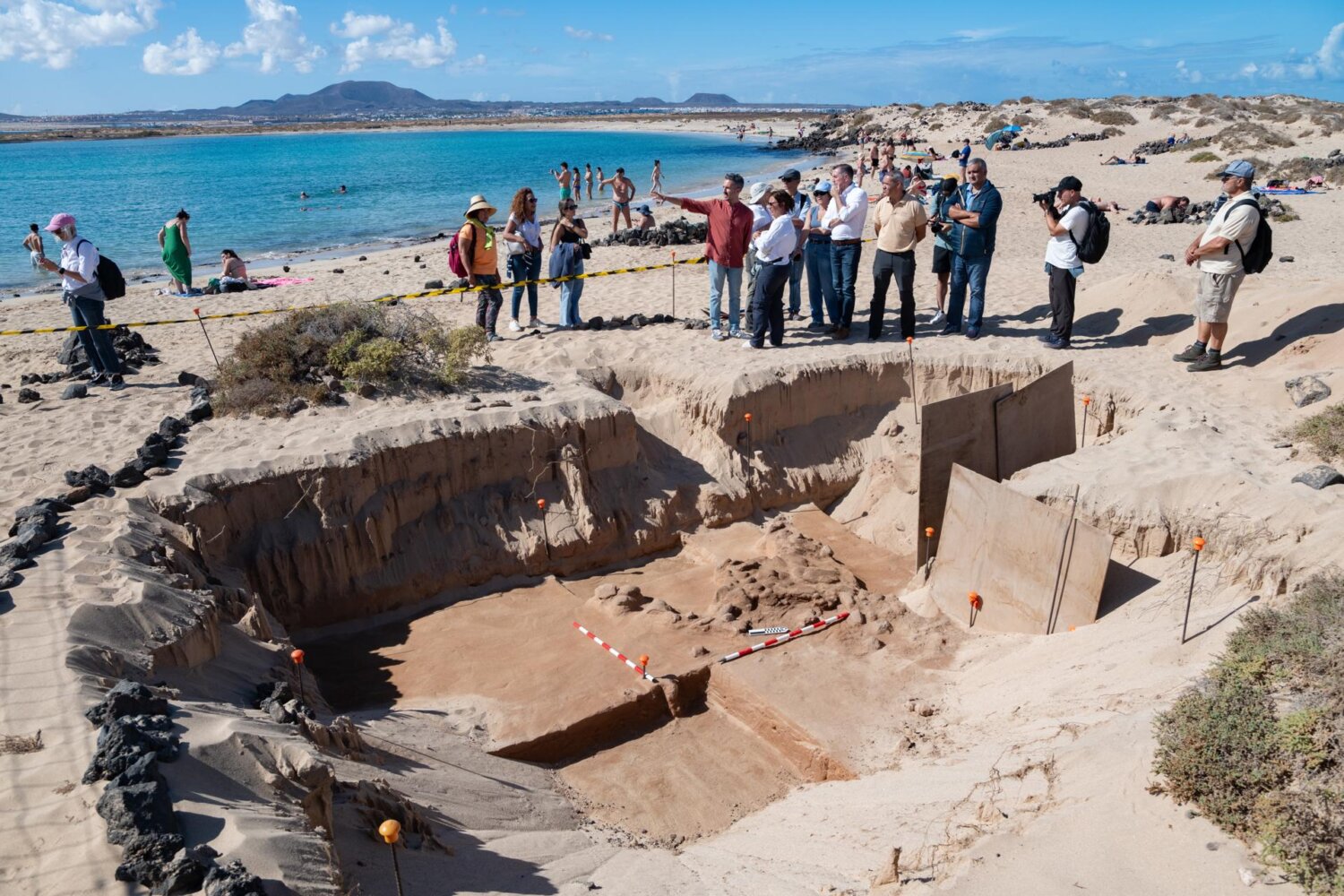
The archaeological work, which commenced on November 4th, 2024, has revealed new structures of interest located to the north of the primary excavation site. These findings not only confirm additional evidence of Roman activity on the island but also open new avenues for research. The news was unveiled during a visit by local officials, including Rayco León, the insular councilor for cultural heritage, and Miguel Ángel Clavijo, the Director General of Cultural Heritage for the Government of the Canary Islands.
Partnership and Continuity
The ongoing excavations on Lobos Island are made possible through a collaborative effort involving the Cabildo of Fuerteventura, the Tenerife Museum and Centers Autonomous Organization, and the University of La Laguna. This partnership emphasizes the need to preserve and advance archaeological knowledge in the region, wherein the campaign is set to continue until November 22.
Insights into Canary Islands’ History
In discussing the importance of the archaeological work, Rayco León articulated that the site of Lobos serves as a fundamental piece in piecing together the history of the Canary Islands. “It continues to stimulate discussion and knowledge, which is essential for understanding our past,” he stated. His optimism about the potential tourist and educational impact of these excavations highlights their cultural significance to Fuerteventura.
Research Opportunities and Discoveries
Lobos Island has been especially noteworthy due to its ability to yield unexpected findings. During last year’s excavation, for instance, researchers used ground-penetrating radar to identify previously unknown fertile areas, significantly expanding the scope of their research by nearly 400 square meters. This opens up exciting opportunities for further investigation and learning about the island’s ecological and agricultural history.
Excavation Details and New Structures
The latest results indicate that within a 32 square meter excavation area, researchers found compelling evidence of new archaeological structures, further cementing the site’s historical significance.
Mercedes del Arco, one of the lead archaeologists, remarked on the continuous surprises the site yields. The new prospecting suggests a previously unrecognized tiled floor, with hypotheses indicating that these structures could potentially extend throughout the island. The anticipation surrounding these possibilities underscores the importance of sustained excavation efforts in unlocking additional layers of history.
The Purple Dye Workshop
The site has been notably classified as a purple dye workshop, which historically utilized the pigment derived from the sea snail cañailla—a highly valued resource since ancient times. Dates established through radiocarbon dating and the analysis of artifacts found on-site indicate that Lobos could well mark the western boundary of the Roman Empire in the central-eastern Atlantic.
This discovery contributes to our understanding of Roman influence in the Canary Islands and the intricate networks of trade and resource extraction during that era.
Educational Initiatives
As the excavation progresses, it’s clear that the findings are not just of archaeological interest but also possess educational value. Exhibits at the Fuerteventura Archaeological Museum are expected to bring these stories to life, allowing visitors to engage with and learn about the island’s rich historical tapestry.
Through these concerted efforts, the documentation and preservation of Lobos Island’s archaeological treasures stand as a testament to the island’s enduring legacy and the significance of research in illuminating our shared history.