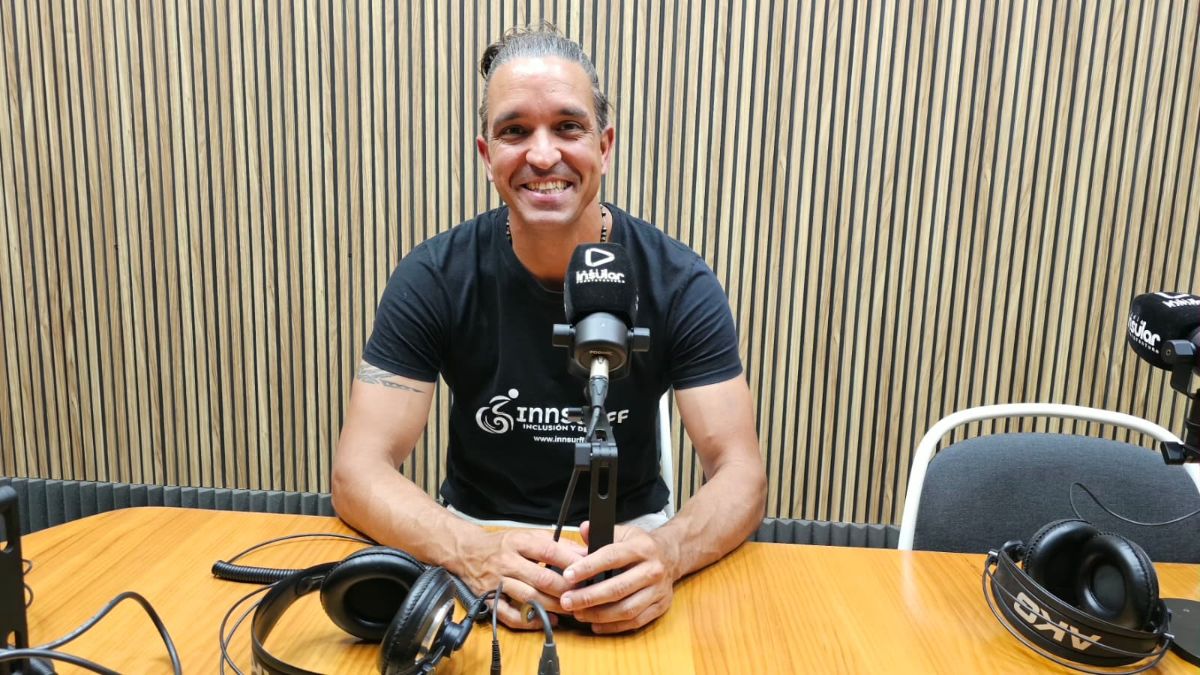
At the heart of inclusive sports is a compelling vision: to create activities that invite participation from everyone, regardless of ability or disability. This mission was emphasized by Martín, the president of INNSURF, who passionately stated, “What we want to do is create a network where anyone can come to participate in an activity.” This speaks volumes about the fundamental philosophy driving their initiatives, highlighting the need for sports and recreational activities that embrace rather than segregate.
The Importance of Inclusion in Sports
The principle of designing activities that engage every participant is pivotal. Martín pointed out the difficulty in crafting experiences that are “motivating and can involve everyone”. Activities should not just accommodate individuals; they must inspire them. By focusing on inclusion, the aim is to foster a sense of community and shared experience. This approach not only enriches the lives of participants but also strengthens the bonds among them.
Normalizing Activities and Breaking Barriers
Mártin has openly critiqued segregated activities targeted at specific groups, asserting that while they may seem beneficial, they also inadvertently contribute to further separation. He insisted, “If we create special activities for persons or specific groups, at the end of the day it’s a form of segregation.” The goal of INNSURF is to develop activities so inclusive that “my grandfather, my child, and my brother can all participate together.” This vision of intergenerational and diverse involvement not only enriches the experience but also emphasizes the universality of joy in sports.
Engaging Through Playful Sports Initiatives
Centered around the idea of playful sporting initiation, the activities designed by INNSURF are characterized by their relaxed approach, devoid of heavy regulations or rigid competitive structures. Their key offerings—including surf, football, paddle surfing, and surf skating—are accessible, ensuring that everyone can join in the fun. This informal structure allows individuals to engage, learn, and enjoy the process without the pressure of performance or exclusion.
Institutional Challenges and Social Reality
One striking example of the challenges faced in promoting inclusivity in sports was during the attempt to establish an inclusive football team. The effort hit a roadblock with the Canarian Football Federation, due to their regulations that mandate gender separation starting from the age of 14 in the cadete category. Martín voiced his frustration over this limitation, arguing for an evolution in sports legislation to reflect contemporary social realities: “Sports need to open up a bit to the reality we live in.” The participants expressed their desire not just to train but also to compete, showcasing a thirst for engagement that transcends institutional barriers.
Systemic Barriers to Equal Participation
This situation exemplifies a deeper issue within the sports ecosystem. As Martín expressed, “The system we live in does not allow everyone to participate equally.” These systemic barriers represent a significant hurdle for organizations like INNSURF that strive to create inclusive environments. It highlights the necessity of promoting a dialogue about inclusivity and equality in sports, fundamentally shifting the perceptions that govern these activities.
Through these initiatives, INNSURF not only aims to provide access to recreational sports but also to advocate for a more inclusive and nuanced understanding of participation that recognizes and values the complexities of individual needs and identities.