Unpacking the Recent Debate on the Roman Purple Workshop in Lobos
Recently, an intriguing interview with Professor Antonio Tejera Gaspar was published in the culture section of a local newspaper, sparking significant discussion within the archaeological community. In this interview, Professor Tejera questioned the categorization of the Roman purple workshop located on the islet of Lobos, which has been the subject of thorough research over the past decade. As long-standing members of the excavation team, we feel compelled to address these comments, particularly concerning our findings and interpretations of this crucial archaeological site.
The Walther of Research and Collaboration
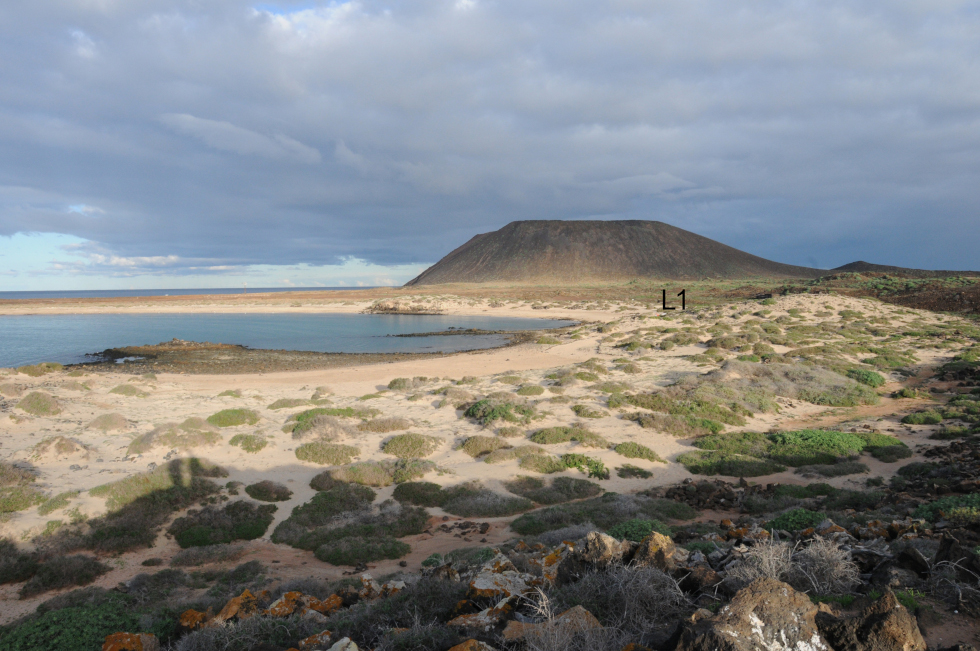
The Lobos site, dubbed Lobos 1, is positioned on La Calera beach and has garnered recognition as a genuine Roman purple workshop. It features specialized murex shell heaps, indicative of purple dye production, as well as essential tools and structures for processing. We’ve employed a multidisciplinary approach, disseminating our results through scientific monographs, international conferences, and academic discussions. This is not merely a single narrative; it’s backed by years of rigorous research evaluated by peer-reviewed standards.
Identifying the Signs
A key point of contention lies in the professor’s assertion that there are “no evident signs” of Roman presence at the Lobos site. This statement overlooks the extensive archaeological literature and the academic discourse that has established clear diagnostic criteria for Roman ceramics and other artifacts. Specifically, the pottery we’ve unearthed aligns perfectly with those used during Roman times, including amphorae, mortaria, and other vessel types commonly associated with Roman culinary and logistical practices.
The Importance of Hands-On Engagement
Moreover, Professor Tejera seems to have overlooked one vital aspect of responsible academic conduct: familiarity with the tangible evidence. Throughout the study period, there has been a striking lack of engagement from him with the team members actively excavating on Lobos. For a scholar, actively examining the artifacts and materials should be a fundamental step in forming an informed opinion.
Addressing Misconceptions
If the evidence is not well understood, one might wonder why there’s a need to publicly assert that it’s absent. Such declarations can mislead the public and undermine the efforts of both the archaeological team and the institutions supporting our research. Thus, without first-hand knowledge, the ethical path may often be silence, or at least a retreat from making unsubstantiated claims.
Robust Evidence from the Field
Our findings at Lobos 1 present irrefutable evidence of a Roman workshop dedicated to purple production. The shell mounds, combined with specialized tools like stone anvils and lead cauldrons, indicate a well-established operation. Ceramics typically associated with Roman culture have been unearthed, reinforcing our assertion that Lobos was indeed a site of significant historical activity.
The Need for Fact-based Dialogue
As educators and researchers, our role is to educate and inform based on established evidence rather than personal interpretation. It’s essential to differentiate between opinions and facts. The artifacts retrieved from Lobos speak volumes of a well-organized purple dyeing enterprise, supported by scientific methods such as residue analysis and faunal studies, which corroborate our understanding of the site’s historical significance.
Acknowledge the Experts
The comments made by Professor Tejera also fail to recognize the broader archaeological community’s insights. Collaborating with specialists focusing on purple dye production could have provided him with a more nuanced understanding. Instead of relying on arbitrary classifications of local technicians, it may be prudent to engage with seasoned archaeologists whose work in the field has brought profound insights into the socio-economic dynamics of ancient settlements.
Addressing Environmental Considerations
When discussing the sustainability of the Lobos operation, concerns have been raised regarding water resources essential for purple processing. Our extensive research highlights that there were water sources available on the islet and logistical arrangements would have made it feasible for Roman operators to cultivate their needs. Engaging critically with this logistics adds depth to our understanding of Lobos, enabling a broader conversation about the ancient resource management practices.
Envisioning the Bigger Picture
Finally, it’s worth considering the perspective of scholars like Professor Darío Bernal, who acknowledges that the archaeological presence on Lobos may represent only a fraction of Roman activity within the archipelago. This perspective opens the door for a broader inquiry into the interactions between ancient Rome and the Canary Islands, emphasizing the complexity and significance of these early interactions.
Emphasizing Responsible Scholarship
It is crucial for academics to engage deeply in research before making sweeping claims that could serve either to undermine or misrepresent decades of scholarly work. In the world of archaeology, a responsible approach hinges on collaboration, exploration, and the respect for our discipline’s rich history and potential future contributions.
Highlighting Ongoing Research Efforts
As we continue our work at the Lobos site, we remain committed to uncovering the nuances of this Roman purple workshop and its role within the broader context of ancient trade networks. The meticulous research undertaken over the past decade not only enriches our understanding of the site but also contributes to the evolving narrative of historical interactions across the Mediterranean.
Through ongoing dialogue and research efforts, we aim to clarify the significance of Lobos and broaden the public’s understanding of our collective archaeological heritage.