Madrid’s Housing Crisis: A Growing Concern
Rising Costs and Public Outcry
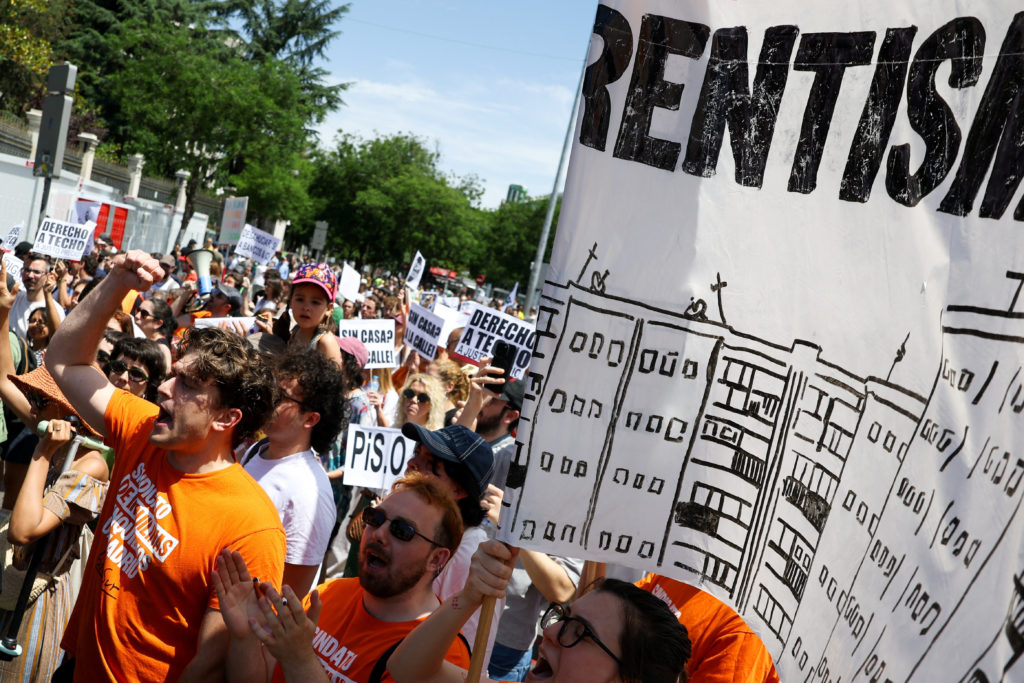
On a recent Sunday, the streets of central Madrid were filled with thousands of protesters rallying against the skyrocketing housing costs that have left many Spaniards struggling to find affordable homes. Despite a booming economy, particularly in urban centers like Madrid and Barcelona, the housing market has become increasingly inaccessible. The demonstrators voiced their frustrations, chanting slogans and waving banners that underscored their right to housing. One particularly poignant banner read, “We want neighbors, not tourists,” highlighting the tension between local residents and the influx of tourists that has exacerbated the housing crisis.
Political Implications for the Sánchez Government
The housing crisis poses a significant challenge for Socialist Prime Minister Pedro Sánchez, especially as the nation approaches elections in 2027. With a strong cultural emphasis on homeownership and limited public housing options, many Spaniards are feeling the pinch. Analysts attribute the rising rents to increased demand driven by tourism and immigration, which have both surged in recent years. This situation has made homeownership a distant dream for many, particularly young people and families.
Voices from the Ground
Among the protesters was Estrella Baudu, a 28-year-old teacher who currently lives with her grandmother. She articulated the struggles faced by young people in Spain, stating, “The situation for many young people like me is quite complicated, and it is very difficult to find a rental home due to the prices and low salaries.” Her experience reflects a broader trend where young professionals are forced to rely on family support due to the unaffordability of the housing market.
Government Initiatives and Public Skepticism
In response to the mounting pressure, the Spanish government recently unveiled a comprehensive plan worth €7 billion (approximately $8.23 billion) aimed at constructing more public housing over the next four years. This initiative also includes support for young renters and homebuyers, who are among the hardest hit by soaring costs. However, skepticism remains among the public. Fernando de los Santos, a 36-year-old university professor, expressed his doubts, saying, “The government may say it is taking measures, but the reality for those of us who rent is that we are receiving notices from our landlords who want to evict us. The only thing they offer us are abusive price increases.”
Legislative Challenges and Public Discontent
Adding to the government’s woes, a proposed decree to extend temporary rent freezes failed to pass through Parliament, leaving the Sánchez administration vulnerable to further discontent related to housing. Over the past few years, protests have erupted across Spain, with citizens demanding stronger regulations on tourist rentals that have proliferated in city centers. The influx of international visitors—97 million last year—has intensified competition for housing, driving prices even higher.
Statistical Insights into the Crisis
According to the EU statistics agency Eurostat, housing costs in Spain rose nearly 13% year-on-year by the end of 2025. The Bank of Spain has estimated that the country is short of approximately 700,000 homes, highlighting a significant gap between demand and the pace of new construction. This shortfall exacerbates the already dire situation, making it increasingly difficult for average citizens to secure affordable housing.
A Call for Action
The ongoing protests in Madrid are not just a reflection of individual grievances but a collective call for systemic change. As the housing crisis continues to unfold, the voices of those affected are becoming louder, demanding that the government take meaningful action to address the challenges of affordability and accessibility in the housing market. The future of housing in Spain remains uncertain, but the determination of its citizens to advocate for their rights is clear.