Spain can rapidly expand renewable energy, but the study shows this is only sustainable if overall material and energy demand is reduced.
Spain is on the brink of a significant transformation as it aims to transition to a low-carbon economy. This ambitious shift hinges on the rapid expansion of renewable technologies, including wind, solar, and electric vehicles. However, the success of these technologies is intricately tied to the availability of specific materials, such as cobalt, lithium, and nickel. Alarmingly, the demand for these materials already constitutes a substantial portion of Spain’s total resource consumption.
To understand the implications of this transition, researchers conducted a comprehensive analysis of Spain’s material needs up to 2050 under various decarbonization pathways. They enhanced the MEDEAS-Spain model, incorporating sector-specific material intensities and improving the tracking of material stocks and flows. This upgrade allowed for a more thorough assessment of over forty materials essential for decarbonization.
The study evaluated three distinct scenarios: Spain’s official energy and climate plan (PNIEC-LTDS), a scenario where economic demand stabilizes after 2025 (CappedEcon), and a Sufficiency scenario that aims to reduce consumption in a manner consistent with maintaining decent living standards. Each scenario presents a unique perspective on how Spain can navigate its energy transition while managing material demands.
Interestingly, while low-carbon technologies inherently require significant quantities of materials, the majority of material demand arises from broader economic activities unrelated to decarbonization. For instance, the PNIEC-LTDS scenario, characterized by high economic growth, predicts a staggering 51% increase in material footprint between 2025 and 2050. In stark contrast, the Sufficiency scenario proposes a reduction of over 50% in material footprint while achieving a remarkable 93% decrease in greenhouse gas emissions.
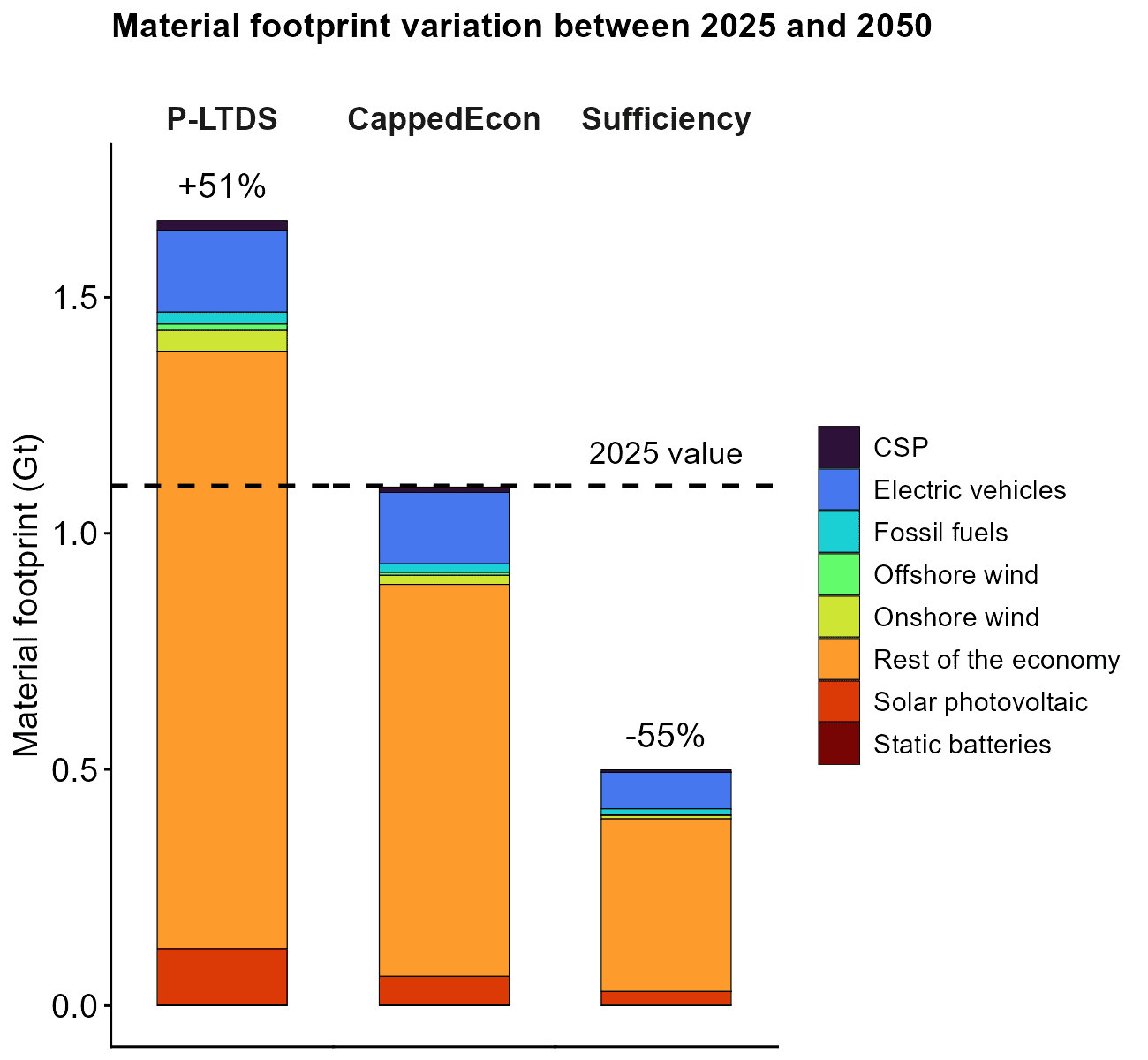
The findings of this study underscore a critical point: the rapid expansion of renewable energy is only environmentally sustainable if there is a concurrent reduction in overall material and energy demand. Pathways that focus on green growth tend to escalate material use, while sufficiency-based approaches that advocate for post-growth strategies can facilitate deep decarbonization with significantly lower resource pressure. Ultimately, the sustainability of Spain’s energy transition is closely linked to consumption levels and the choices made at every level of society.
Do you want to learn more about this topic?
Africa’s critical minerals can power the global low-carbon transition N S Ouedraogo and J M M Kilolo (2024)


