The Coastal Tension of Tourism and Conservation: A Case Study between El Cotillo and Corralejo
In the beautifully rugged northern region of Fuerteventura lies a unique area where the idyllic landscapes clash with the realities of mass tourism and conservation efforts. Between El Cotillo and Corralejo, this protected landscape has emerged as a critical focal point for examining the tension between attracting visitors and preserving natural environments.
Understanding the Impact of Tourism
A noteworthy study conducted by researchers from the University of Las Palmas de Gran Canaria and published in the Journal of Outdoor Recreation and Tourism highlights the challenges faced by 24 natural beaches in this coastal belt. The study emphasizes the pressing need for organized parking solutions to prevent the over-concentration of vehicles on easily accessible beaches.
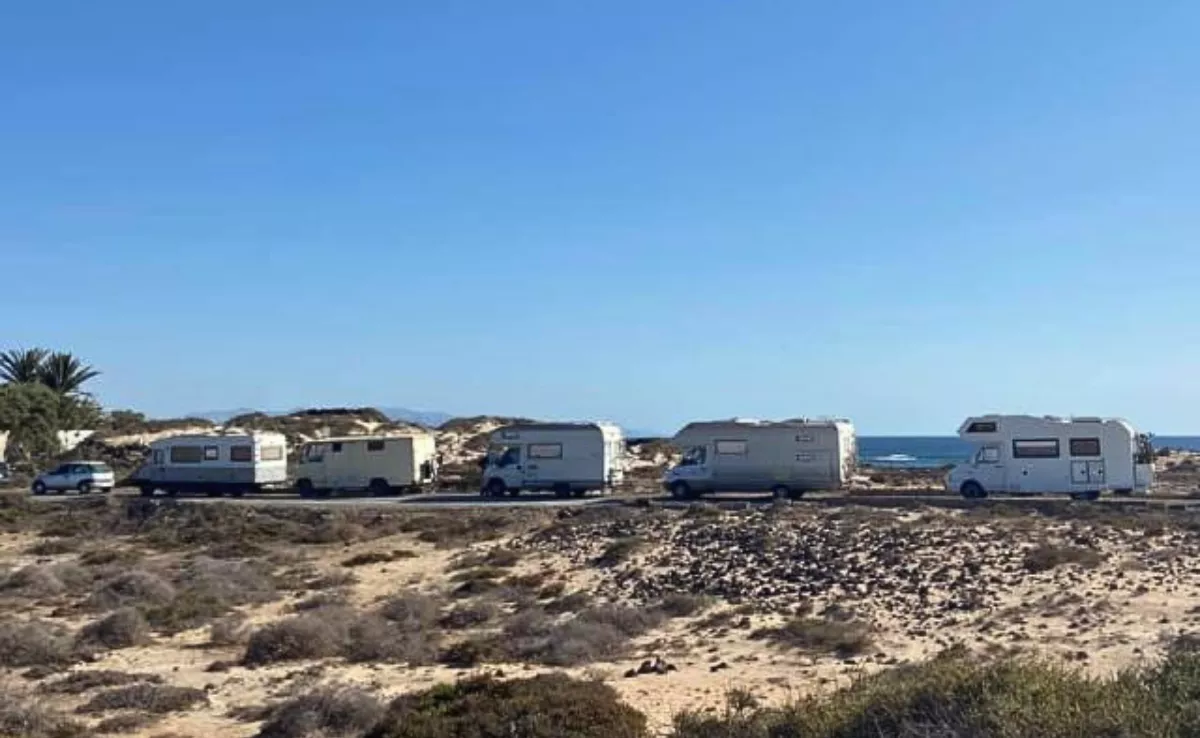
The current state of affairs reveals that the lack of defined parking spaces results in a skewed distribution of cars, overwhelming certain areas while leaving others untouched. This not only contributes to vehicular congestion but also damages natural habitats as vehicles often park indiscriminately on ecologically valuable land. Furthermore, the absence of well-marked pathways encourages visitors to wander off established trails, adversely impacting local flora and fauna.
The Protected Beaches of La Oliva
The 24 beaches examined are situated within the municipality of La Oliva, part of the Special Protection Area (ZEPA) known as Costa Norte de Fuerteventura. This area has been designated as environmentally significant due to its unique habitats, including dune systems, lava fields, secluded coves, and crucial nesting grounds for species like the endemic Hubara Canarian bird.
The urgency of the study is further accentuated by the environmental degradation caused by illegal urban development in nearby regions, specifically the controversial Casas de Majanicho project, which disrupts 140 hectares of pristine land, of which 15.5 hectares fall within the ZEPA boundaries.
Rising Tourist Numbers and Increased Pressure
Tourism statistics reveal a staggering growth in visitor numbers to Fuerteventura—jumping from over 2 million in 2022 to nearly 2.5 million by 2024, representing an increase of 22.8% in just two years. This surge is felt acutely in areas like Corralejo, El Cotillo, and Lajares.
In Corralejo alone, with a resident population of 18,704, the area witnessed roughly 405,852 tourist arrivals in 2024—equating to approximately 22 visitors for every local. Meanwhile, El Cotillo, home to only 1,474 residents, showcases an extreme example of “structural overtourism,” with around 126 tourist beds for every 100 inhabitants.
Calculating Beach Capacity: A Complex Task
To thoroughly understand the carrying capacity of these beaches, researchers adopted a multi-faceted approach rather than simply assessing maximum physical space. They began by evaluating the physical capacity before adjusting figures to account for natural factors such as wind—crucial for surfing and other water sports—rainfall variability, bird sensitivity, and overall beach characteristics.
The research yields remarkable findings. While the initial physical capacity of the 24 beaches is assessed at 7,761 individuals, the effective capacity drops dramatically to just 557 users. Based on this reduced capacity, the study proposes a structured parking plan providing only 159 parking spaces across all analyzed beaches.
Varied Pressures Among Beaches
It’s essential to recognize that different beaches cannot handle the same volume of visitors. For example, a broad sandy beach can accommodate tourists better than a small, rocky cove that may be more vulnerable to environmental disturbances or home to sensitive bird populations. Therefore, the study does not propose a one-size-fits-all solution when distributing parking, instead offering tailored recommendations based on each beach’s unique characteristics.
Higher capacity beaches identified include El Hierro, El Río, Punta Gorda II, and Bajada del Mejillón. In contrast, smaller, more delicate coves like Caleta de María Díaz, Los Charcos, or Caleta del Marrejo are designated for much lower visitor numbers.
Parking as an Environmental Management Tool
Ultimately, the study’s recommendations do not advocate for the mere expansion of parking lots but suggest a careful evaluation of how many spaces can exist without exceeding the limit of what the environment can bear. Researchers underscore that the number of parking spots should not hinge solely on anticipated visitor numbers but rather align with the ecological capacity of each beach to maintain its natural integrity.
By categorizing the coastline into specific sectors and recommending a total of 159 parking spaces, this approach aims to manage visitor access effectively, decrease congestion in vulnerable areas, and mitigate informal land use.
Understanding the balance between tourism and conservation in this scenic part of Fuerteventura is vital for protecting its breathtaking natural treasures while accommodating the increasing thirst for exploration among travelers.