Celebrating Santa Barbara’s Role in American Independence
As we gather to celebrate the 250th anniversary of the Declaration of Independence this Fourth of July, communities across the nation will reflect on their connections to the birth of the United States. One such community, Santa Barbara, has a remarkable story that intertwines with this pivotal moment in history.
A Forgotten Chapter
Long before California became part of the United States, while the Revolutionary War was still unfolding thousands of miles away, the people living on this distant Spanish frontier played a significant role in an international effort that helped make American independence possible. This story, largely forgotten for over two centuries, has recently been rediscovered through remarkable original documents preserved in California archives.
The International Context
In 1776, Santa Barbara and all of Alta California were part of the Spanish Empire, far removed from the political and military events unfolding along the Atlantic coast. However, the struggle for independence was never solely an American story; it became an international conflict that drew the world’s great powers into war. Spain entered the conflict against Great Britain in 1779 as an ally of France and a supporter of the American cause, significantly impacting the outcome of the war.
Spain’s Contributions to the American Cause
Although Spain was not a formal ally of the Continental Congress, its military campaigns, financial assistance, and logistical support helped to tie down British forces throughout North America, the Caribbean, and the Gulf Coast. Historians widely recognize that Spain’s efforts weakened Britain’s military position and became a crucial factor in the eventual American victory.
The Donativo Project
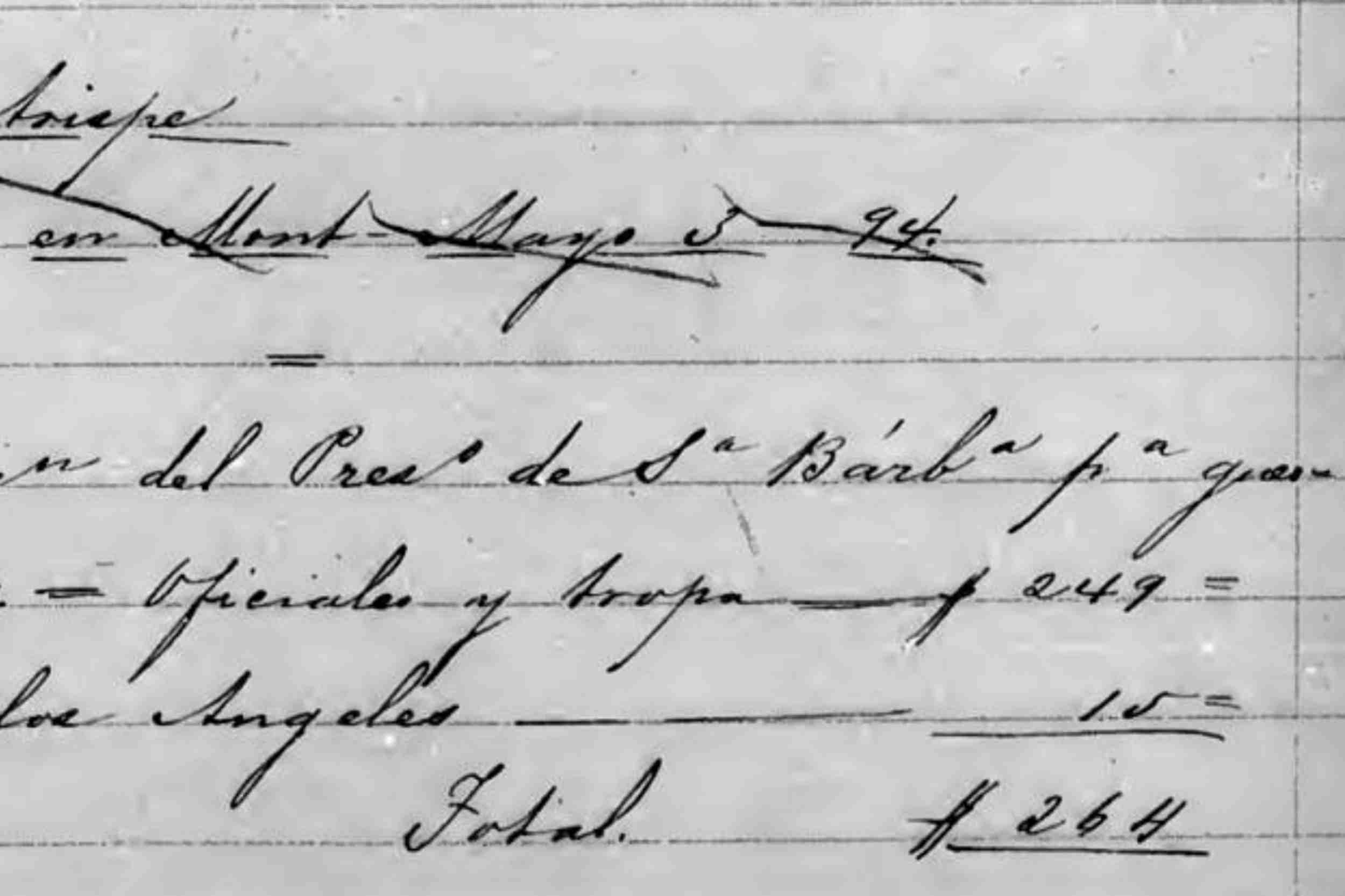
Santa Barbara’s connection to this international effort is preserved in one of California’s most remarkable collections of original historical documents: the Donativo Project. The Donativo was a special financial contribution requested by King Carlos III of Spain to help finance Spain’s war against Great Britain. The original records, housed in the Bancroft Library at UC Berkeley, document hundreds of contributions made by soldiers, settlers, missionaries, Native Californians, and residents living throughout Alta California.
Contributions from Santa Barbara’s Early Families
Among the contributors were many of Santa Barbara’s earliest families, including members of the Cota, Ortega, Lugo, Carrillo, Pacheco, and Rodríguez families, whose descendants continue to live throughout California today. In 1782, the very year El Presidio de Santa Bárbara was founded, subjects throughout the Spanish Empire were asked to contribute financially to Spain’s military campaign.
Community Participation
Throughout Alta California, soldiers and their families, settlers, and residents generally donated two pesos each, while members of Native communities, including the Chumash people of the Santa Barbara region, commonly contributed one peso. The Santa Barbara presidio became one of the principal collection points for these contributions, showcasing a community united in support of a greater cause.
Documenting the Contributions
The contributions collected within the Santa Barbara Presidio District were forwarded to the Viceroyalty of New Spain in Mexico City and ultimately to King Carlos III. The original Donativo ledger preserves these contributions in remarkable detail, recording 249 pesos from the officers and troops of the Santa Barbara presidio and an additional 15 pesos from Pueblo de Nuestra Señora la Reina de Los Ángeles, totaling 264 pesos.
Significance of the Contributions
In 1782, this represented a substantial sum with significant purchasing power for military supplies and support. More important than the amount itself is what it represents: ordinary people living in Santa Barbara willingly participated in a global conflict whose outcome would ultimately help shape the birth of the United States.
A Legacy of Participation
These original records remind us that Santa Barbara’s earliest residents were not isolated observers of history. They became active participants in an international campaign that helped weaken Great Britain during the Revolutionary War and strengthened the cause of American independence. Their contributions form one of the least-known yet most meaningful connections between Santa Barbara, California, and the founding of the United States.
Recognition of Contributions
The significance of these remarkable records continues to grow today. After decades of careful historical research in the Bancroft Library archives, documented Donativo contributors from Spanish California have been recognized for their qualifying patriotic service associated with Spain’s support of the American Revolution. As a result, descendants of many of these early California families may now qualify for membership in both the Daughters of the American Revolution and the National Society of the Sons of the American Revolution.
A Broader Perspective on History
This recognition represents far more than genealogy; it acknowledges that California’s earliest settlers, soldiers, missionaries, and Native communities participated in events that helped shape the birth of the United States. Their names, preserved in the original Donativo records, demonstrate that the story of American independence extends well beyond the original 13 colonies and includes the Spanish frontier of North America.
Santa Barbara’s Place in History
As our nation commemorates 250 years of independence, it is fitting to remember that America’s founding was not solely the achievement of 13 colonies along the Atlantic coast. It was also the product of an international coalition that stretched across Europe, the Caribbean, New Spain, and the distant frontier of Alta California. For Santa Barbara, that history carries special meaning.
The Enduring Legacy
The very year the presidio was established, its soldiers, settlers, families, missionaries, and members of the Chumash community became part of a larger international effort that helped make American independence possible. Their names, carefully preserved for nearly 2½ centuries in the handwritten Donativo ledgers housed at the Bancroft Library, continue to tell a remarkable story.
As Americans celebrate this historic anniversary, Santa Barbara can proudly claim its rightful place in our nation’s founding story—not as a distant observer, but as a community whose earliest residents contributed to the international effort that helped secure American independence. This legacy is worthy of remembrance, not only for Santa Barbara but for the nation as it begins its next 250 years.