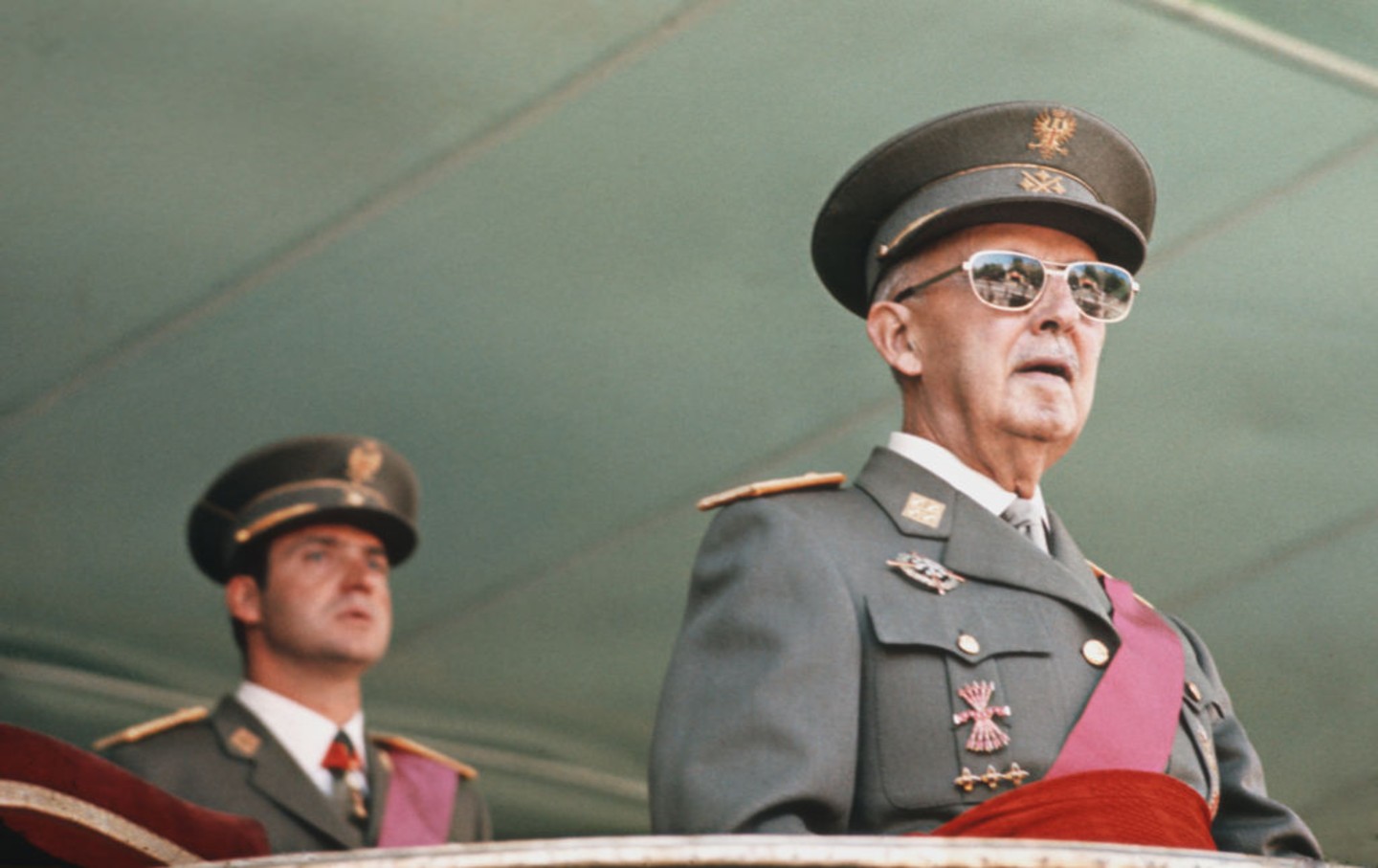
Revisiting Franco’s Spain: Two New Perspectives on a Dark Era
In the landscape of modern Spanish history, the legacy of Francisco Franco looms large, casting shadows that still affect the nation today. Two recent publications, El Generalísimo: A Biography of Francisco Franco by Giles Tremlett and Ni una, ni grande, ni libre: La dictadura franquista by Nicolás Sesma, delve into the complexities of Franco’s rule and its enduring impact on Spain. These works not only explore the dictator’s life but also challenge the narratives that have emerged in the decades since his death.
The Man Behind the Dictatorship
Giles Tremlett’s El Generalísimo offers a detailed biography of Franco, portraying him as a “cold-blooded militaristic authoritarian.” Tremlett argues that Franco’s rise to power was not merely a product of his military prowess but also a result of his relentless ambition and a series of fortunate circumstances. The biography paints a picture of a man who was both a product of his time and a manipulator of it, using his military background and political acumen to navigate the turbulent waters of 20th-century Spain.
Born in 1892 in Ferrol, a town steeped in naval tradition, Franco’s early life was marked by a strict upbringing and a desire to follow in his family’s military footsteps. His ambitions were initially thwarted by Spain’s defeat in the Spanish-American War, leading him to join the army instead of the navy. This shift would ultimately set the stage for his meteoric rise through the ranks, culminating in his leadership during the Spanish Civil War.
The Spanish Civil War: A Turning Point
The Spanish Civil War (1936-1939) was a pivotal moment in Franco’s life and in the history of Spain. Tremlett details how Franco, initially reluctant to join the coup against the Republican government, eventually became its leader. His victory was not solely due to his military strategy but also to the support he received from Nazi Germany and Fascist Italy. This alliance, however, would later complicate Franco’s legacy, as he sought to distance himself from the Axis powers during World War II.
Franco’s regime was characterized by brutal repression, with an estimated 140,000 executions and widespread imprisonment of political dissidents. Tremlett’s analysis highlights how Franco’s coldness and strategic hesitance allowed him to maintain control while simultaneously purging his enemies. This duality—of being both a ruthless leader and a cautious strategist—defines Franco’s complex character.
The Legacy of Francoism
While Tremlett’s biography focuses on Franco as an individual, Nicolás Sesma’s Ni una, ni grande, ni libre examines the broader implications of Francoism on Spanish society. Sesma argues that the dictatorship was not merely a reflection of Franco’s personal ideologies but a complex system that shaped the cultural and political landscape of Spain for decades. He challenges the notion that Francoism laid the groundwork for democracy, asserting that it was a regime built on repression and falsehoods.
Sesma’s work is particularly timely, as recent polls indicate a troubling resurgence of admiration for Franco among certain segments of the Spanish population. Over 21% of Spaniards believe that the Franco years were “good or very good,” a sentiment echoed by some prominent political figures. This nostalgia for Franco’s rule raises questions about how history is remembered and taught in contemporary Spain.
The Role of Memory and Historical Revisionism
Both authors grapple with the theme of memory and how it shapes public perception of Franco’s legacy. Tremlett notes that the amnesty laws passed in the late 1970s effectively shielded Francoist perpetrators from prosecution, allowing many to escape accountability for their actions. This legal framework has contributed to a culture of silence surrounding the atrocities committed during the dictatorship.
Sesma’s analysis goes further, debunking myths propagated by Franco’s regime, including the idea that it was a stabilizing force in Spanish history. He argues that the dictatorship’s slogan, España: una, grande, libre, was a facade that masked the reality of a nation that was neither united nor free. By exposing these myths, Sesma aims to foster a more nuanced understanding of Spain’s past, one that acknowledges the complexities of Francoism without romanticizing it.
The Contemporary Relevance of Franco’s Legacy
As Spain grapples with its historical narrative, the resurgence of far-right sentiments and admiration for Franco poses significant challenges. Tremlett and Sesma’s works serve as crucial reminders of the dangers of historical amnesia. They highlight the importance of confronting the past to ensure that the lessons learned are not forgotten.
In a world where authoritarianism is on the rise, understanding the intricacies of Franco’s rule and its implications for modern Spain is more important than ever. Both authors provide valuable insights into how history shapes identity and the ongoing struggle for justice and reconciliation in a society still haunted by its dictatorial past.