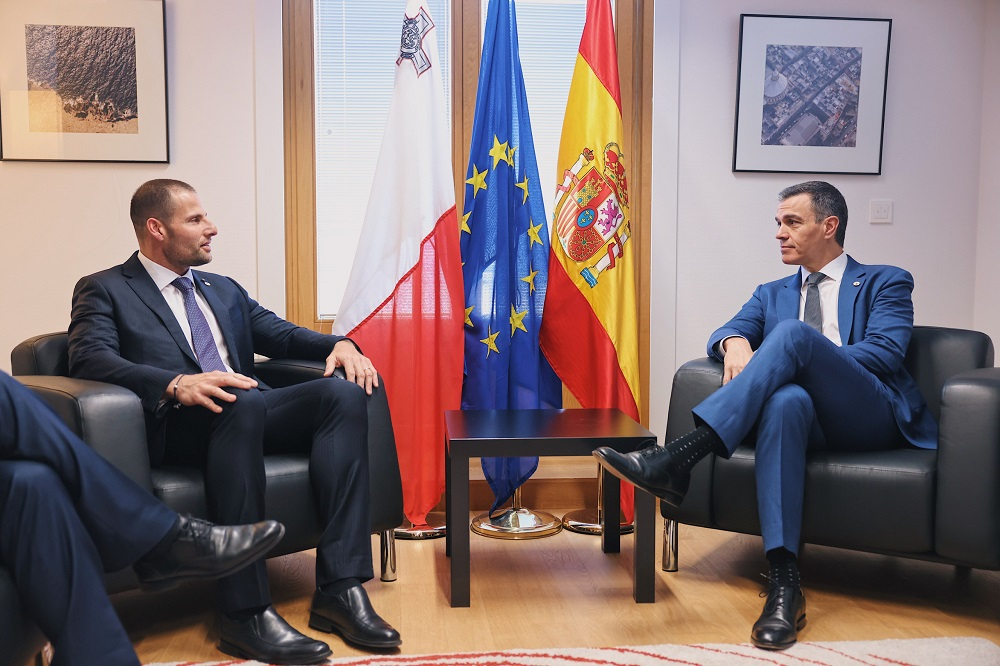
Malta’s Choice at the EU Meeting: Standing with Spain Amid the Ceuta Crisis
Malta finds itself at a critical juncture as EU interior ministers convene to discuss the ongoing migration crisis in Ceuta. The situation has escalated into a complex political battleground, with Spain, led by Prime Minister Pedro Sánchez, facing unwarranted vilification from parts of Europe’s political establishment. This is not just a matter of national interest for Spain; it poses a significant challenge to the very fabric of European solidarity.
The Crisis Unfolds
The Ceuta crisis has seen a mass influx of migrants, which some political factions have weaponized against the Sánchez government. This is unprecedented in the history of the European Union, where a member state under siege is being portrayed as the villain. Instead of uniting to support Spain in a time of need, certain countries, notably Italy, have chosen to blame Spain for jeopardizing Europe’s external borders.
Misinformation at Play
At the heart of this vilification lies a series of falsehoods. One of the most glaring misconceptions is the belief that the tens of thousands of migrants who entered Ceuta suddenly gained unfettered access to the rest of Europe. In reality, Ceuta and Melilla are governed by special Schengen rules that impose strict identity and document checks for anyone traveling from these enclaves to mainland Spain or other Schengen countries. The European Commission has confirmed this, yet the narrative persists, echoing the kind of misinformation often seen in authoritarian regimes.
The Role of Spain’s Regularisation Programme
Another point of contention is Spain’s recent regularisation programme, which has been mischaracterized as a “pull factor” for migrants. This scheme only applies to individuals who were already in Spain before January 2026, requiring proof of at least five months of continuous residence. To suggest that this programme is responsible for the surge in migration is to ignore the facts and further fuel the political ammunition against Spain.
The Online Mobilisation and Its Consequences
The mass crossing into Ceuta was not a spontaneous event but rather preceded by a significant online mobilization, driven by misinformation and false claims surrounding a Spanish court ruling. Over 50,000 people entered Ceuta in a remarkably short time, with most being returned to Morocco shortly after. Spanish authorities have attributed this mobilization to misinformation and the influence of criminal networks, raising questions about the role of Moroccan authorities in allowing the border to open.
Geopolitical Underpinnings
The implications of this crisis extend beyond immediate humanitarian concerns. Spain has been working to rebuild relations with Algeria, particularly in energy cooperation, while Morocco has a history of using migration as leverage in its disputes with Spain. The 2021 Ceuta crisis was explicitly described in the European Parliament as a situation where Morocco eased border controls, allowing thousands to enter. This pattern suggests that migration can be weaponized, creating a precarious situation for Spain and, by extension, the EU.
The Political Landscape
The response from European political figures, particularly from the right, has been disheartening. Instead of fostering solidarity with Spain during this extraordinary border emergency, the crisis has been used as an opportunity to attack Sánchez’s migration policies. The far-right has seized upon the images and narratives, and unfortunately, mainstream conservatives have joined in the fray, further complicating the situation.
Malta’s Position
Malta has a unique opportunity to stand in solidarity with Spain. The island nation has consistently supported the Palestinian cause and opposed forced displacement, aligning itself with Spain’s stance on humanitarian issues. By supporting Sánchez, Malta can reinforce its commitment to European values and solidarity.
The Risks of Outsourcing Migration Control
One of the broader lessons from this crisis is the danger of outsourcing migration control to third countries. When a neighboring government can manipulate border policies to create political turmoil within the EU, migrants become bargaining chips, and the EU becomes vulnerable to blackmail. This is not a demonstration of European solidarity; it is its antithesis.
A Call for Accountability
Malta should make it clear that it will not participate in the scapegoating of Spain. While legitimate questions about the Ceuta crisis must be addressed, those responsible for exploiting migrants should be held accountable, not Spain. The legacy of leaders like Dom Mintoff reminds us that Malta should not turn a blind eye to the pressures faced by fellow Mediterranean nations.
In this moment of crisis, Malta has the chance to affirm its values and stand with Spain, reinforcing the principles of solidarity and cooperation that are essential for a united Europe.