A Legal Void in Fuerteventura: The Controversy Surrounding Transportes Pablo de León
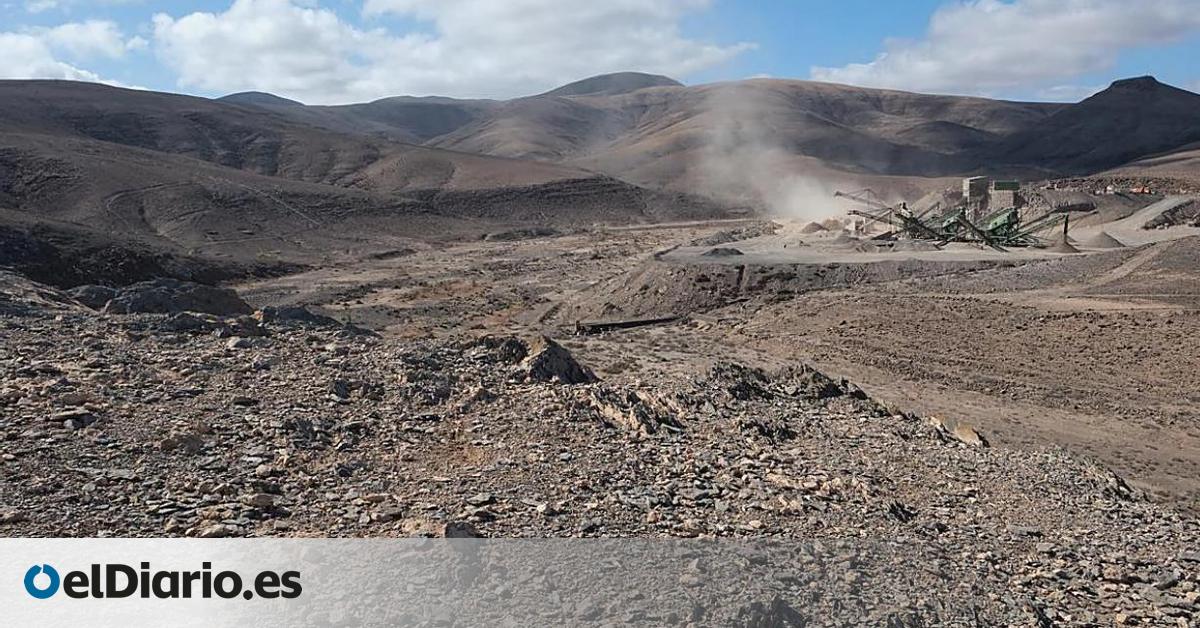
Transportes Pablo de León, a company based in Fuerteventura, has found itself at the center of an ongoing legal battle, primarily due to a 21-year legal void that has allowed it to continue its operations in a sensitive environmental zone. Specifically, the company is engaged in the extraction of aggregates within the “Llanos y cuchillos de Antigua” Special Protection Area for Birds (ZEPA), a designated zone meant to safeguard the habitats of endangered and migratory species, including the Canary bustard (hubara), the Canary stonechat, and the Saharan courser.
The Genesis of the ZEPA Controversy
Despite the Government of the Canary Islands proposing the inclusion of this area in the network of protected spaces back in 2001, it wasn’t until 2022 that a legal framework was finally established. A decree validated the ZEPA, along with all other protected spaces in the archipelago. This significant delay of over 20 years has allowed Transportes Pablo de León to continue its operations with diminished legal repercussions. They had been accused by the Public Prosecutor of violating land-use and environmental regulations yet managed to sidestep substantial penalties by relaunching the environmental assessment for a basalt quarry.
Assessing the Environmental Impact
Currently, the Regional Ministry of Ecological Transition and Energy is conducting an analysis to determine the potential effects of the company’s industrial activity on the “Llanos y cuchillos de Antigua” ZEPA, which spans approximately 9,906 hectares. While officials have noted that they cannot predict the outcome of the Environmental Impact Declaration (EIA)—whether it will be supportive of or against the project—they emphasize the necessity of recognizing the area’s bird protection status.
The Company’s Perspective
Transportes Pablo de León asserts that the ZEPA does not outright prohibit activities but merely limits them. According to the company, environmental officials are overly cautious, often expressing objections without sufficient grounds. They argue that recent legal decisions have validated their claims for the legalization of operations, including the quarry. The company emphasizes the importance of maintaining its business for the livelihoods of about 40 workers and their families, highlighting that the legal disputes have greatly affected the firm’s founder, Pablo de León, leading to severe personal and professional strain.
Legal Battles and Winning Streaks
Despite previous accusations and legal hurdles, the company has achieved notable victories in court. Their recent wins included reopening the environmental assessment for their quarry proposal and being absolved of two serious charges: one for violating land-use laws and another for breaching environmental legislation. The Public Prosecutor had sought a five-year fine, coupled with a multi-year closure of their facilities and the potential demolition of constructions deemed illegal.
The Question of Legal Authorization
A revealing report by SEPRONA (the Civil Guard’s Nature Protection Service) documented terrain modifications linked to the company’s extraction activities from 2000 to 2017. While Transportes Pablo de León did have authorization for a crushing plant and other operations, they lacked the necessary mining permissions for aggregate exploitation and water catchments. This was underscored by testimonies from environmental protection officials who confirmed that the company did not possess the requisite legal titles for its operations in the protected area.
Environmental Concerns and Observations
Further investigations have raised concerns regarding dust emissions from the quarry operations, with reports indicating significant dust clouds affecting local vegetation and rock formations. However, it was noted that there were no immediate signs of adverse effects on the wildlife, particularly the avian population. Between 2017 and 2020, SEPRONA agents reported minimal evidence of recent extraction activities, finding that the company’s machinery primarily processed materials brought in from other locations.
Judicial Findings from the Puerto del Rosario Court
The Puerto del Rosario Court’s ruling emphasized that the ZEPA “Llanos y cuchillos de Antigua” did not have any legal existence from 2000 to 2017 due to the absence of governmental approval publication. Consequently, the soil was classified as common rustic land, permitting some forms of extraction under certain conditions. The ruling also specified that to convict for a territorial crime, all constructions must be completely un-authorizable.
Environmental Impact Report Evaluation
Regarding the environmental violation claims, the court deemed the accusations vague, arguing that a comprehensive study assessing the quarry’s effects on the local fauna and flora was essential but lacking. It concluded there was no concrete evidence of environmental harm, which complicated efforts to enforce penalties against the company.
Applications for Permission and Subsequent Rejections
The company acknowledged in court that it did not initially possess a permit for the quarry, yet initiated an application in 2018. However, the Regional Government halted the process in early 2020, citing concerns about the detrimental effects on the protected area. They argued that the ongoing analysis indicated potential harm to the natural integrity of the site.
In response, the company appealed, leading the Higher Court of Justice of the Canary Islands to overturn the government’s decision, urging them to reopen the file while taking into account the non-declaration of the ZEPA at that time.
The Path Forward
In late 2024, after a year of legal back-and-forth, the Higher Court upheld the new regulations establishing the ZEPA network throughout the archipelago, validating the protections in place amidst ongoing disputes. The court reaffirmed the importance of formally recognizing these zones to ensure ecological conservation and balance against development pressures.
Final Thoughts
The saga of Transportes Pablo de León highlights the complex interplay between environmental protection and economic development. As the legal battles continue, the future of both the company and the essential wildlife residing within the “Llanos y cuchillos de Antigua” hangs in the balance, making it a vivid case study in environmental policy, corporate interests, and legal intricacies.