Rising Tensions in El Cotillo: A Struggle Between Tourism and Local Identity
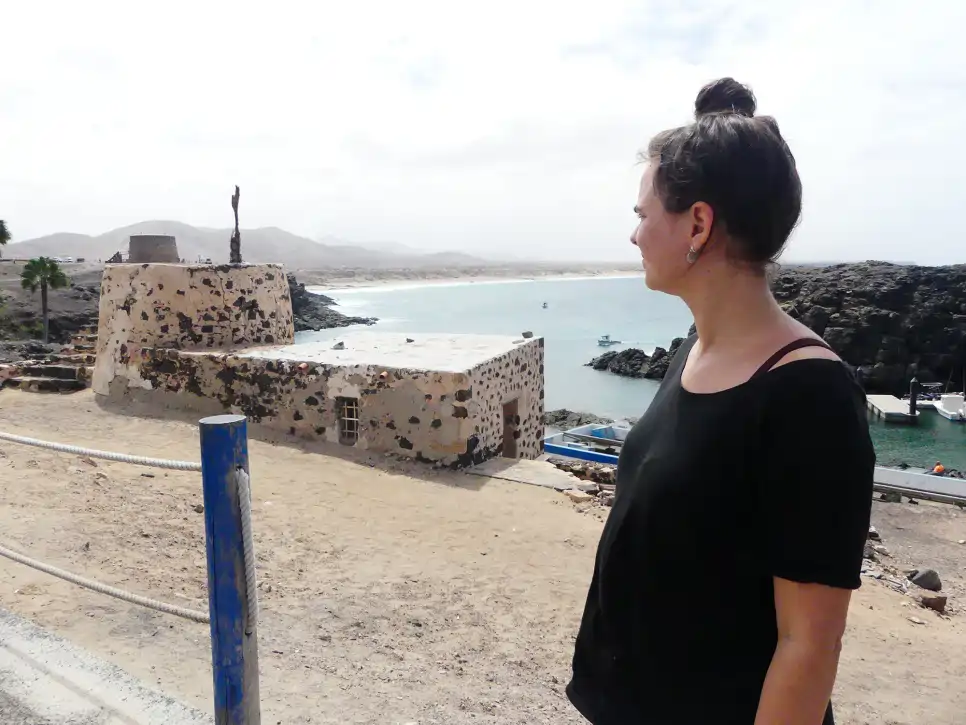
In recent weeks, El Cotillo, a picturesque fishing village in the municipality of La Oliva, has become a flashpoint for heated discussions around tourism and its impact on local communities. A video posted by Drago Canarias, a nationalistic and ecological party founded by former Podemos deputy Alberto Rodríguez, has garnered over 300,000 views. This viral video sheds light on the concern over tourist overcrowding in El Cotillo, which boasts more than 2,500 tourist accommodations yet houses only 1,730 permanent residents.
Accusations and Responses
The spokesperson for Drago Canarias, Aceysele Chacón, did not hold back in her critique of the La Oliva council. She accused them of promoting uncontrolled urban development, highlighting the absence of a General Planning Plan as a critical concern. Chacón specifically called out Isaí Blanco, the mayor of La Oliva, labeling him as an “agent of real estate” in what she insinuated might be a case of conflicting interests. However, she stopped short of providing further details on these alleged conflicts.
In countering these allegations, Mayor Blanco published an opinion piece and shared a video, reaffirming his dedication to protecting the territory and dismissing the personal attacks as “rumors” and “theater.” He asserted that his decisions as mayor are documented in official records and meetings, emphasizing the tangible outcomes of his governance.
A Snapshot of Governance Actions
Blanco pointed to a series of actions taken by the local government that he claims illustrate their commitment to responsible development. Among these, he noted the suspension of 500 housing projects between El Cotillo and El Roque, as well as interventions against issues like quad biking and the Dreamland project—a controversial amusement venture.
In his published article, titled “El Cotillo, the Truth, and Short-Legged Lies,” Blanco expressed his concern about online discourse filled with misinformation. He underscored that constructive criticism is always welcome when it is rooted in facts. “Lies have short legs,” he reminded the public, emphasizing the importance of factual basis in political discussions.
The Cultural Heritage of El Cotillo
Blanco painted a vivid picture of El Cotillo, describing it as a community with a rich history and a strong sense of identity. He insisted that the local government respects this identity and is not simply concerned with economic growth. The mayor acknowledged the immense tourism pressure on the island but asserted that dialogues about economic models must be rooted in serious consideration—not sensationalism.
“This community does not need unchecked growth; it must preserve its identity and prioritize its residents,” he argued, encouraging honest and data-driven discussions about tourism’s implications.
The Local Response to Criticism
Despite the heated exchanges, Blanco maintains that accusations suggesting he has any real estate interests are unfounded. He clarified that he sold his real estate business five years ago to focus entirely on his role as mayor, asserting that everyone in La Oliva is aware of this fact.
The mayor welcomes any serious debate about tourism models in the area, inviting those with genuine concerns to engage in constructive dialogue. He laid out the foundation for this discussion, alluding to two years of work on a General Planning Plan designed to ensure sustainable growth while safeguarding the village’s charm.
Navigating Between Fact and Fiction
Blanco’s opinion piece serves as a defense against what he perceives as the fabrications circulating on social media. Highlighting the role of social media in shaping narratives, he lamented the passive consumption of sensationalist content that can distort reality. His hope is for the community to differentiate between sincere concern and opportunistic outrage.
Ultimately, the tensions surrounding El Cotillo encapsulate broader themes of community identity, tourism’s sometimes adverse effects, and the responsibilities of local governance. As the dialogue continues, residents, officials, and stakeholders alike will be crucial in determining the future trajectory of this charming fishing village.