Unveiling Roman History in the Canary Islands: The Enigma of Lobos
A Glimpse into the Upcoming Conference
On November 6th at 19:30, the Asociación Raíz del Pueblo in La Oliva will host a captivating conference featuring Dr. Carmina del Arco Aguilar, a leading archaeologist. Her talk, titled “¿Qué hacen los Romanos en el Islote de Lobos?” (What are the Romans doing on the Islet of Lobos?), aims to shed light on the intriguing findings regarding Roman presence in the Canary Islands—an area traditionally viewed as peripheral to the classical world.
The Roman Mystery of the Canaries
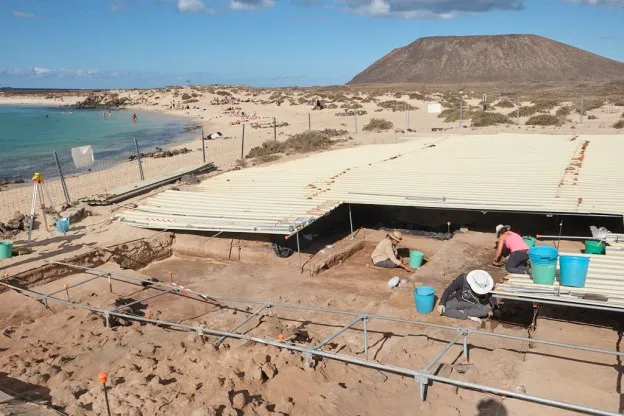
For centuries, the notion of Roman influence in the Canary Islands has remained shrouded in mystery. Archaeological efforts since 2012, particularly on the islet of Lobos, have begun to unravel this enigma. Dr. del Arco Aguilar and her team have conducted meticulous excavations, revealing tangible material evidence that suggests that these islands were integral to Roman trade and production routes.
Lobos I: A Key Archaeological Site
Lobos I, the principal archaeological site on the islet, serves as a robust testament to the Roman era’s presence in the archipelago. Findings indicate that the Romanized inhabitants of Lobos primarily hailed from regions like Cádiz and the Bajo Guadalquivir, which have deep-rooted traditions tied to maritime commerce and the exploitation of marine resources. Understanding these connections provides a more nuanced perspective on ancient interactions within the Mediterranean and Atlantic realms.
Insights into Roman Production Techniques
The archaeological discoveries on Lobos I highlight the site’s role as a specialized production center, likely dedicated to crafting garum, the famous Roman fish sauce, alongside other fish-derived products. Structures unearthed, such as processing pools and work areas, paint a vivid picture of the industrious activities that occurred in this remote location. The pulse of production is evident, allowing us to envision the day-to-day lives of workers who frequented Lobos.
The Strategic Importance of the Canaries
One of the more fascinating revelations from these studies is the perception of the Canary Islands as the southern frontier of the Roman Empire. This geographic positioning allowed for economic interactions with Atlantic and African routes, enhancing Rome’s capacity to exploit new resources. Artifacts such as imported ceramics, fishing implements, and food remnants indicate that these areas were not simply incidental; rather, they were strategically significant for expanding Roman economic influence.
Reevaluating Ancient Settlement Patterns
The findings at Lobos I, coupled with similar discoveries in Lanzarote and Fuerteventura, challenge the long-held views of ancient settlement patterns in the Canary Islands. The archaeological evidence reveals complex human interactions and movements that were previously underestimated. The implications of these studies urge us to reconsider how we understand the historical narrative surrounding the settlement and interaction of diverse populations in this region.
Engaging with History
Dr. Carmina del Arco Aguilar’s upcoming presentation is a unique opportunity for everyone, especially those with a fascination for history, to delve deeper into the Roman era’s impact on the Canary Islands. Her insights promise to illuminate not just the findings of her team’s work but also the broader implications these discoveries hold for our understanding of ancient maritime cultures.
By participating in this enlightening event, attendees can enrich their knowledge of the strategic importance of the Canary Islands and gain a greater appreciation for the continent’s rich and multifaceted history. This conference serves as an invitation to explore the remnants of the past and how they continue to resonate today.