The Allure of the Canary Islands: A Historical Exploration
With the dawn of the Enlightenment and the rise of scientific inquiry in the 18th century, a wave of scholars and travelers from Europe set out to uncover the natural wonders that lay beyond their familiar landscapes. Among the numerous destinations they flocked to, the Canary Islands emerged as a preferred locale. Situated relatively close yet replete with biodiversity, unique geological formations, and a society quite distinct from the bustling urban centers of London, Paris, or Berlin, the archipelago beckoned adventurous souls.
A Flourishing Era for Exploration
The 19th century witnessed a significant advancement in transportation, leading to a marked increase in renowned visitors—geologists, botanists, physicists, and adventurous writers like the esteemed Olivia Stone. These explorers arrived equipped with the latest photographic equipment and art supplies, ready to document their experiences and findings. Through their lenses and sketches, they contributed to a treasure trove of literary, visual, and cultural heritage that continues to surprise us today. A notable example is the recently released book by Oscar Simony titled 1890: Lanzarote y los islotes. Lanzarote und die islotes, published by Ediciones Remotas.
Notable Explorers and Their Contributions
Among the treasure trove of experiences recorded during this era, several figures stand out. George Glas, a Scottish writer, offered valuable insights in the 18th century; Charles Darwin marveled at the majestic Teide; René Vernau, a French anthropologist, conducted thorough historical inquiries; and Alexander von Humboldt’s explorations took him to La Graciosa. The artistic depictions by sisters Ella and Florence Du Cane are also noteworthy, capturing the essence of their journeys. Many lesser-known discoveries and testimonies from this period await those willing to unravel their stories.
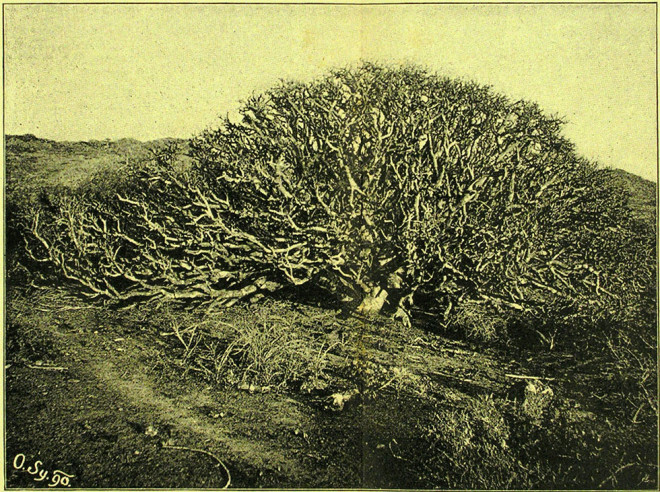
Image caption: Tabaiba dulce of five meters wide and two meters high on a sandy spot near the eastern coast of Isla de Lobos.
Institutions Preserving the Legacy
Various institutions play a crucial role in bringing these works and stories to light. The Fundación Canaria Orotava de Historia de la Ciencia (Fundoro) has long spearheaded editorial, exhibition, and digital initiatives focused on the naturalists and female scientists who visited the Canary Islands. The Museo Canario is similarly dedicated to preserving this heritage. It was here that researcher Carlos Reyes uncovered a German copy of a presentation by Oscar Simony, delivered to the Association for the Dissemination of Scientific Knowledge in Vienna in 1892, titled Las islas canarias y especialmente Lanzarote y sus islotes.
The collaboration between CACT (Centros de Arte, Cultura y Turismo) and Ediciones Remotas has further enhanced this venture. Their partnership led to the publication of a bilingual version of Simony’s work, making it accessible to a wider audience. Additional photographs, previously housed at the Museum of Natural History in Vienna, were also included, showcasing an expanded visual catalog of Simony’s explorations.
Oscar Simony: The Austrian Naturalist
Born in imperial Vienna in 1852, Oscar Simony was the son of an aristocrat and a notable geographer. Fueled by a scientific curiosity, he specialized in Mathematics and Physics but also immersed himself in natural sciences. Simony’s passion led him to embark on three significant journeys to the Canary Islands in the late 19th century, where he studied all the islands and islets.
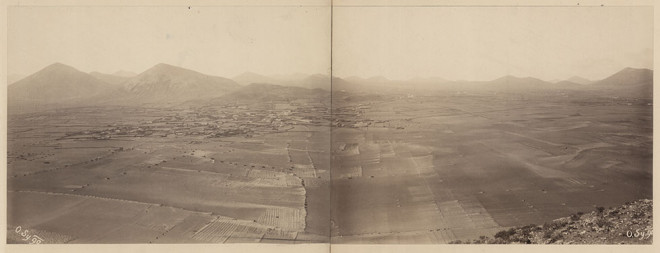
Image caption: Panoramic view of San Bartolomé taken in 1890.
Discoveries and Findings
Simony’s expeditions were not merely scientific; they were a blend of adventure and exploration. His name is associated with significant discoveries, including the blind crab endemic to Jameos del Agua and the giant lizard of El Hierro, now scientifically named Gallotia simonyi. Not only did his journeys yield substantial biological findings, but they also left a rich cultural legacy, including fossils and artifacts from the island’s earliest inhabitants. Tragically, Simony ended his life in 1915 after suffering a stroke, leaving behind a rich scientific legacy.
A Journey Through Time
In 1890: Lanzarote y los islotes. Lanzarote und die islotes, Simony chronicles not just the geology, flora, and fauna of Lanzarote and its neighboring isles, but also provides a social commentary about the local populations of his era. His observations about Arrecife, for example, highlight societal contrasts—depicting both “wealthy merchants” and “the poor who begged for water as if it were alms.”
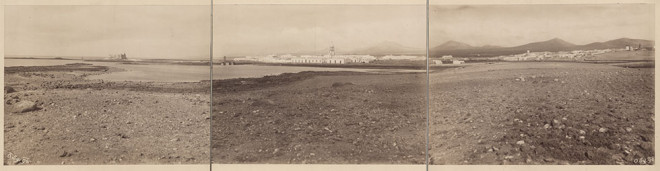
Image caption: A panoramic view of Arrecife taken in 1890.
As Simony explores Fuerteventura, he draws parallels with Lanzarote while providing details about locations like Puerto Cabras. His nuanced descriptions paint a vivid picture of the landscape, noting that the “Eastern insular landscape presents as predominantly desert-like,” particularly during the summer months.
A Wealth of Images
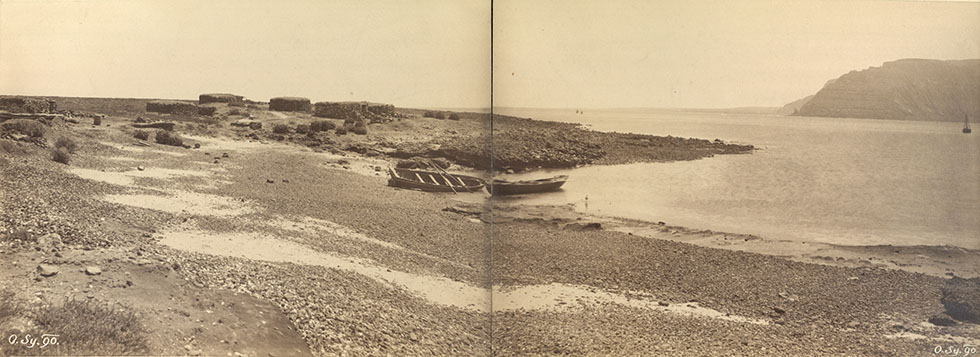
This newly released bilingual version not only revives Simony’s invaluable observations but also introduces readers to over 25 previously unseen photographs. Taken between 1888 and 1890, these images—captured using a novel albumin printing technique—offer some of the earliest known visual documentation of the islands.
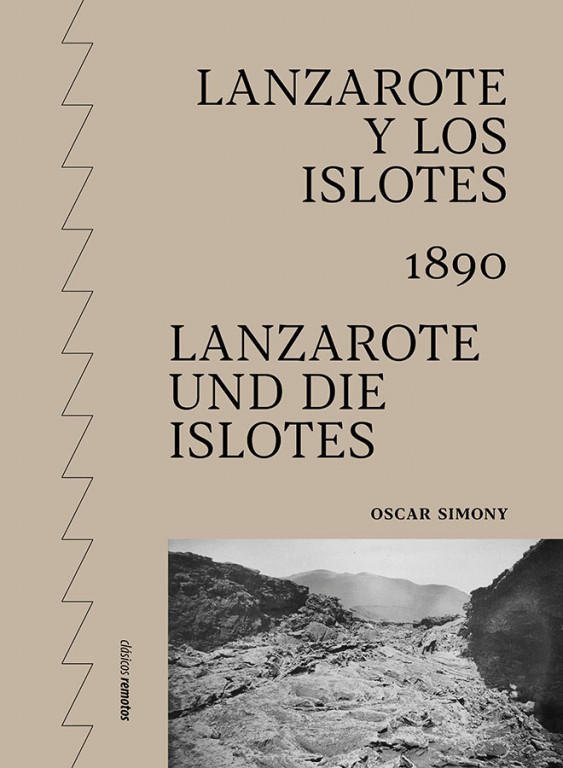
Image caption: Cover of the new book by Oscar Simony published by Ediciones Remotas.
The unveiling of this book, scheduled for December 11 at the Islote de Fermina, will include notable figures such as Ana Carrasco, Marcial Martín, and Rubén Acosta from Ediciones Remotas, further emphasizing the importance of Simony’s contributions to our understanding of the Canary Islands.
The rich tapestry of exploration during this era reveals not only the natural beauty of the Canary Islands but also the vibrant stories linked to those who sought to understand and document its wonders.