Discovering Isla de Lobos: A Hidden Gem of Nature and History
Just a couple of kilometers north of Fuerteventura, lies the compact and silent volcanic islet known as Isla de Lobos. Despite its small size, this island is steeped in ancient stories, traces of past marauders, and a nature that forced its preservation more than four decades ago. Amid a myriad of untouched landscapes and inviting waters, Isla de Lobos offers a retreat where time slows down and nature reigns supreme.
An Enclave of Natural Beauty
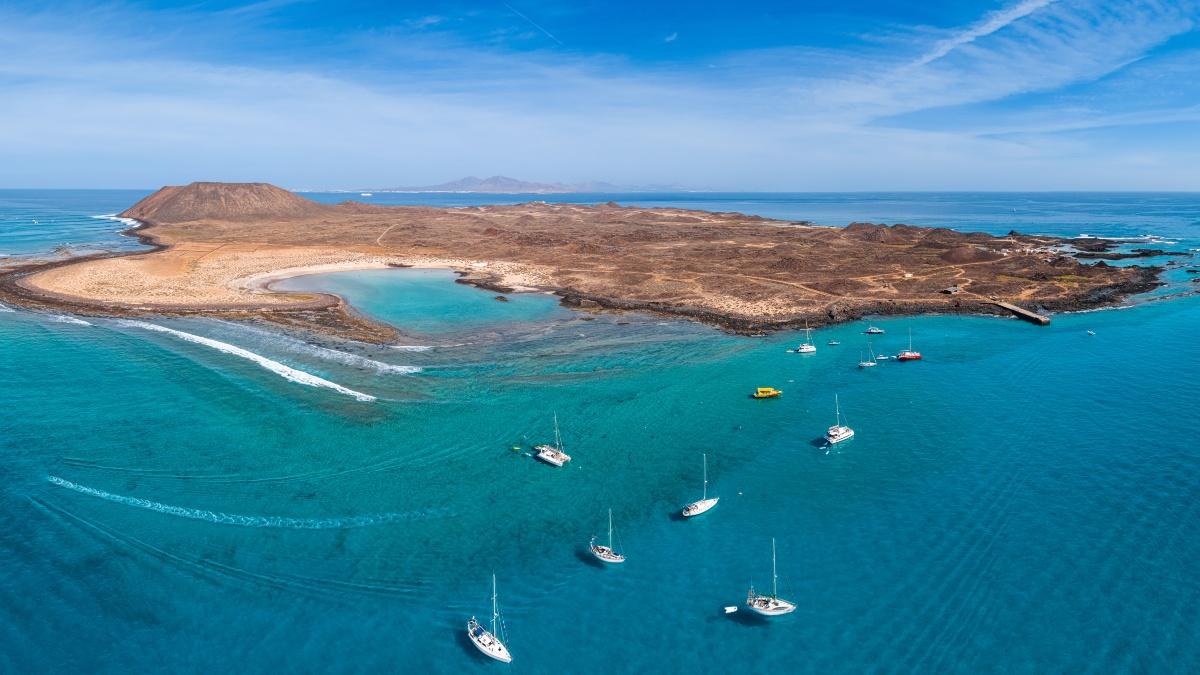
Covering just 4.7 square kilometers, Isla de Lobos presents a striking profile on the horizon between Corralejo and Lanzarote. Today, access to this small paradise is regulated through permits and quotas to prevent overcrowding. From an aerial view, it blends seamlessly into the curvature of Fuerteventura, appearing as a charming accent upon its shores. Visitors come to enjoy its pristine beaches, crystal-clear waters, and the tranquility that envelops the islet.
The Island’s Unique Status
Interestingly, Isla de Lobos has only one permanent resident, technically making it uninhabited. It was declared a protected area in 1982, integrated into the Dunas de Corralejo and Isla de Lobos Natural Park, marking a pivotal step in safeguarding its delicate ecosystem. The preservation efforts reflect the island’s ecological significance, emphasizing the urgent need to maintain its natural state amidst human encroachment.
The Origin of Its Name
The name “Lobos” is quite telling, drawing from the large colonies of monk seals that once populated its bays. Commonly referred to as sea wolves, these fascinating creatures gathered in significant numbers, consuming nearly all the fish available to local fishermen. This prompted a campaign against them, progressively diminishing their population until they disappeared entirely.
Despite an unsuccessful attempt at repopulation, Isla de Lobos was designated as a natural park, banning construction and tourism development. Today, a sculpture commemorates these ancient inhabitants, and while monk seals are no longer present, conservation efforts are exploring potential habitats for their return.
Historical Significance
Isla de Lobos boasts a rich human history that predates its marine residents. Research from the University of La Laguna indicates that around 2,000 years ago, it served as a seasonal Roman settlement dedicated to harvesting purple dye from marine snails—a valuable commodity in ancient times.
Later, the island provided refuge for pirates and sailors who took advantage of its uninhabited status to establish a supply point, rest stop, and ship repair dock. These historical layers add depth to the island’s narrative, showcasing a mix of human survival and the allure of the sea.
Flora and Fauna
Beyond its historical and ecological significance, Isla de Lobos is home to a unique array of plant and animal life. Over a hundred species of plants have adapted to the coastal salinity, including the endemic everlasting flower of Lobos. Birdlife thrives here as well, with colonies of seabirds like shearwaters and seagulls finding safe breeding grounds among the lagoons and cliffs.
Isla de Lobos is not just a small island; it’s a vivid tapestry of tales and natural magnificence. Its lush ecosystems, archaeological wonders, and commitment to conservation serve as a testament to how landscapes can tell stories of both nature and humanity intertwined.
Whether you seek solace in its serene environment or an adventure steeped in historical significance, Isla de Lobos remains a treasure waiting to be explored.