New Developments for Corralejo Port: A Positive Step Forward
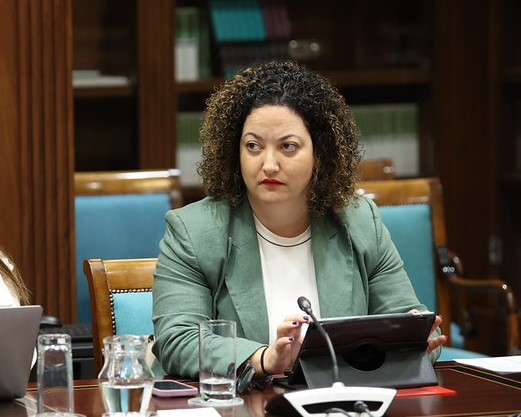
In a recent session of the Commission on Public Works, Transport, and Housing within the Parliament of the Canary Islands, Jana González Alonso, a member of the Canarian Nationalist Group (CCa), highlighted significant updates surrounding the new project for the Corralejo port in Fuerteventura. Her intervention underlined the government’s commitment to refining the port’s design to address past deficiencies.
A Shift from Previous Proposals
González’s remarks focused on how the new proposal stands in sharp contrast to the previous plan known as the Pact of the Flowers. This earlier proposal faced criticism for its operational inadequacies and potential threats to environmental integrity. “The government’s innovative redesign enhances safety, operational functionality, and environmental conservation,” she stated, pointing out the contrast with the earlier administration’s plans, which included the PSOE, NC, Podemos, and ASG parties.
Strategic Placement and Environmental Concerns
Among the key features of the new port design is its placement. The plan proposes to locate the new dock outside the Natura 2000 Network and adherently within areas designated for port-related uses. This strategic positioning is essential for mitigating environmental impacts. The proposed changes have received endorsement from the Ministry for Ecological Transition and Demographic Challenge, reinforcing the government’s commitment to balancing infrastructure needs with ecological preservation.
By considerably reducing the occupied area for the new port infrastructure, the design aims to meet the actual maritime traffic demands without compromising the region’s rich ecological features.
Impact on Marine Life
González underscored the project’s potential to lessen impacts on local marine biodiversity, including species like cetaceans, turtles, and seabirds. She conveyed that the updated proposal significantly decreases the environmental footprint compared to the former plan. The forecasted consequences of the project on marine biodiversity and protected areas would indeed be “considerably lower,” marking a pivotal shift in approach.
“This expansion project was not only excessive but also incompatible with the marine biodiversity of the area,” González asserted, reinforcing her stance with data from the Ministry of Ecological Transition and Demographic Challenge.
Criticism of the Previous Administration
Reflecting on the past, González recounted how the 2021 proposal under the Pact of the Flowers would have adversely affected protected natural values within the region. The former design posed risks to vital protected marine areas belonging to the Natura 2000 Network, such as the Important Community Area (LIC), “Maritime Space of Eastern and Southern Lanzarote – Fuerteventura“, and special conservation zones like the Corralejo Seagrass Beds and Marine Space of Bocayna.
This retrospective analysis emphasizes the importance of sustainable development in regions with high environmental stakes. The prior proposal lacked sufficient compensatory measures to mitigate its impacts, a point echoed by the Ministry’s findings.
Local Concerns and Advocacy
The negative implications of the earlier proposal were vocalized by local representation, notably the Local Political Council of the Majorera Assembly – Canarian Coalition Fuerteventura, which urged the need for a port design that aligns with the area’s ecological significance. This call to action was not made in isolation; both the La Oliva Town Hall and the Fuerteventura Cabildo have consistently called for adjustments reflective of local environmental priorities.
Throughout the current legislative session, the government has responded proactively to these calls, demonstrating an adaptive approach to the port’s redesign that considers the genuine needs of Corralejo and the island.
Moving Forward with Community Input
Encouraging further partnership between governmental bodies, González urged Pablo Rodríguez, the Minister of Public Works, Housing, and Mobility of the Canary Islands, to maintain collaboration with local government entities to finalize and expedite the construction project. The vision for Corralejo’s future inclusion in regional maritime logistics relies heavily on transparent, community-oriented practices.
Government’s Assurance on Sustainability
In response to concerns raised, Minister Rodríguez reaffirmed that meticulous work was undertaken to craft a design that enhances the port’s operability while minimizing environmental impacts. This process involved engaging with the Ministry to explore various options until the most viable configuration was identified, effectively addressing ecological demands across multiple evaluation parameters.
Through these developments, the Corralejo port project is poised to achieve a balance between essential infrastructural needs and the urgent necessity for environmental stewardship, reflecting a commitment to sustainable development in the Canary Islands.