Revisiting the Ancient Tide of History: The Purple Workshop of Lobos Island
In a remarkable exploration of cultural heritage, Episodios Insulares on Canarias Radio revisits the intriguing phenomenon surrounding the Purple Workshop on Lobos Island, located off the coast of Fuerteventura. This year marks a decade since the discovery of what many believe might be a Roman workshop dedicated to the extraction of purple dye—a hue once more precious than gold. However, this assertion is not without its controversies, as specialists have divergent views on the site’s true nature and significance.
Broadcast and Availability
Canary Islands residents and enthusiasts of history can tune in every Wednesday at 21:30 hours on Canarias Radio for a deep dive into this fascinating subject. For those unable to catch the live broadcast, a rediffusion is available on Sundays at 20:30 hours. Additionally, episodes can be accessed as podcasts, making them available for on-demand listening.
A Decade of Discovery
Central to this decade-long exploration is Carmen del Arco, a distinguished professor of Prehistory at the University of La Laguna (ULL) who has spearheaded all excavation campaigns on Lobos since the momentous discovery. The site reveals remnants that could potentially demonstrate Roman activity in the area, specifically focusing on the prized purple dye, derived from mollusks in the waters surrounding the island. This discovery not only shines a light on Lobos’ historical significance but also opens dialogues about its importance during the Roman Empire’s expansion.
Examining the Evidence
The archaeological remnants found throughout the landscapes of Lobos have sparked fierce debate among scholars. While some, like Professor del Arco, view the findings as tangible evidence of Roman production techniques, others remain skeptical. For instance, José Juan Jiménez, an archaeologist from the Museo Arqueológico de Tenerife, challenges the notion that a viable purple dye factory existed on the island at all. He argues that such an operation would have likely been economically unfeasible and criticizes the preserved stone remnants, stating they lack the architectural characteristics typical of Roman industrial sites.
Differentiating Early Settlers
The complexities of this historical debate are further deepened by a call for distinction among the populations of Lobos. Jiménez emphasizes the need to differentiate between the indigenous inhabitants and those who arrived from North Africa. This distinction could yield insights into both socio-economic structures and the cultural interactions that took place in this port of call during Roman times.
Cultural Significance of Purple Dye
Purple dye, notably extracted from the Murex snail, was historically considered a luxury item. Worn by elites and used in ceremonial garments, its production was a significant industry in the ancient world. The connection of Lobos Island to this lucrative trade bolsters the argument for Roman presence and the economic motivations that might have driven their activities.
Visual Remnants and Public Engagement
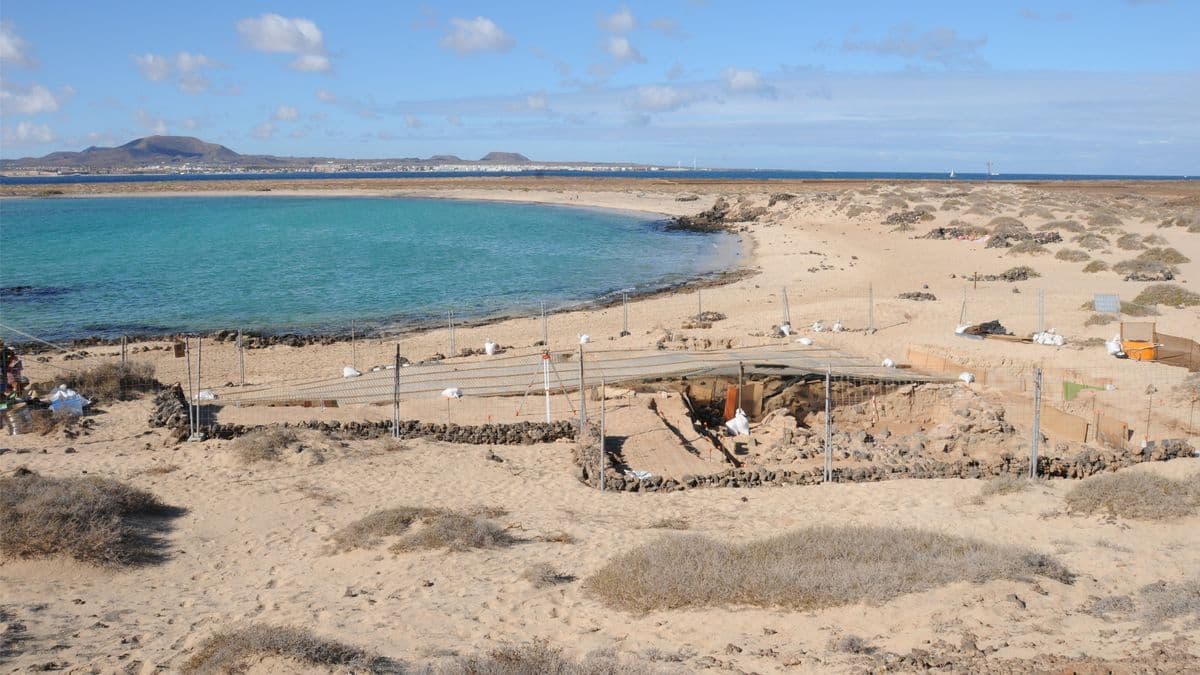
The remnants of the potential Purple Workshop capture the imaginations of both archaeologists and history enthusiasts. A striking photographic example highlights these archaeological remains, beautifully illustrating the historical depth of the site. As studies continue, these visuals serve not just as evidence but as a catalyst for public interest in the rich tapestry of the Canary Islands’ history.
Continuing Dialogues
As research and discussions on the Purple Workshop advance, the differing opinions among specialists indicate a dynamic field of study, one fraught with the excitement of discovery and the challenges of interpretation. The debates unraveling from Lobos Island illustrate not only the complexities of archaeology but also the broader implications of our understanding of ancient civilizations and their interaction with the environment.
For those interested in delving into the depths of these discussions, interviews and additional commentary from figures like José Juan Jiménez offer further insights. As the narrative surrounding the Purple Workshop continues to evolve, it undeniably captivates, bringing to life the ancient histories that dwell beneath the waves of the Canary Islands.