Protecting the Natural Treasures of Fuerteventura: The Cardón de Jandía and the Hubara Canaria
As we celebrate World Biodiversity Day, it’s essential to recognize the natural wonders of Fuerteventura, including two of its most cherished symbols: the Cardón de Jandía and the Hubara Canaria.

The Cardón de Jandía: A Botanical Marvel
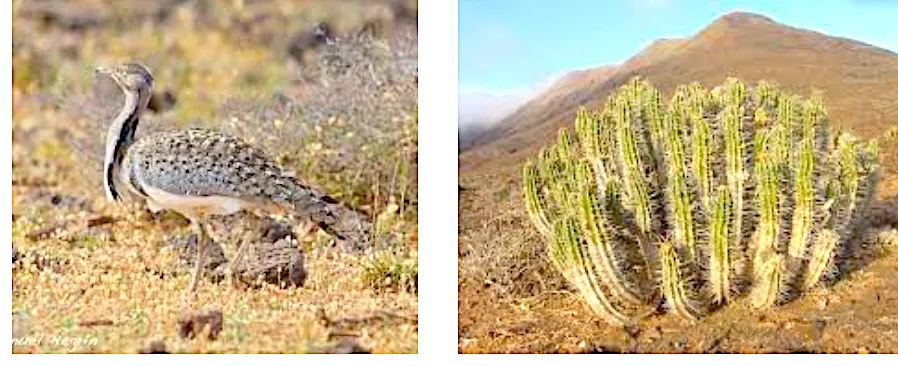
The Cardón de Jandía stands tall as a unique endemic plant of Fuerteventura and has become an emblematic representation of the island’s rich flora. Once on the brink of extinction due to over-collection by enthusiasts eager to decorate their private gardens, this species is now under significant protection, earning the pride of local inhabitants.
Growing amidst rocky terrain and volcanic sands, the Cardón de Jandía thrives in xerophytic scrub areas at elevations between 50 and 300 meters, showcasing its resilience against harsh conditions.

Typically, flowering occurs from May to June, with small inflorescences adorning the tips of its spiny branches. These flowers exhibit a mesmerizing mix of yellowish-green and reddish hues, making this succulent shrub visually striking.
Reaching heights of up to 1 meter, its ribbed stems feature between eight and fourteen ridges lined with pairs of long, straight thorns clustered at the top. This characteristic gives the Cardón de Jandía a distinctive, cactus-like appearance while highlighting its adaptation to environmental challenges.
The Hubara Canaria: A Flamboyant Avian Icon
The Hubara Canaria presents itself as another vital emblem of Fuerteventura, representing the island’s richness in biodiversity through its striking presence. This large bird, characterized by long legs and a small head, boasts a robust stature, reinforcing its identity as the island’s animal symbol.
Measuring between 55 and 65 centimeters in length, with a wingspan ranging from 135 to 170 centimeters, the Hubara Canaria features a sandy back and white underparts complemented by distinctive black feather lines along the neck. The males, during the breeding season, display striking nuptial plumage, characterized by pronounced black and white feather bands and a narrow white crest atop their heads.

With an omnivorous diet, these birds predominantly consume insects like ants and beetles, alongside fruits, alfalfa, mollusks, lizards, and flowers, particularly those from aulagas. Their feeding habits reflect their adaptability to the local ecosystem, which is complemented by their habitat preferences.
Exclusively roaming in steppic environments, the Hubara Canaria can frequently be found in sandy plains, rocky terrains, and often near road edges or cultivated fields. This adaptability makes them a common sight for those traversing their natural abode.
Currently included in the Special Protection Regimen for Wild Species, following their classification as endangered, the Hubara Canaria underscores the importance of conservation efforts in preserving Fuerteventura’s unique wildlife.
As stewards of the environment, it is our responsibility to continue safeguarding these natural treasures that not only embody the richness of our island but also represent a commitment to ecological preservation for generations to come.