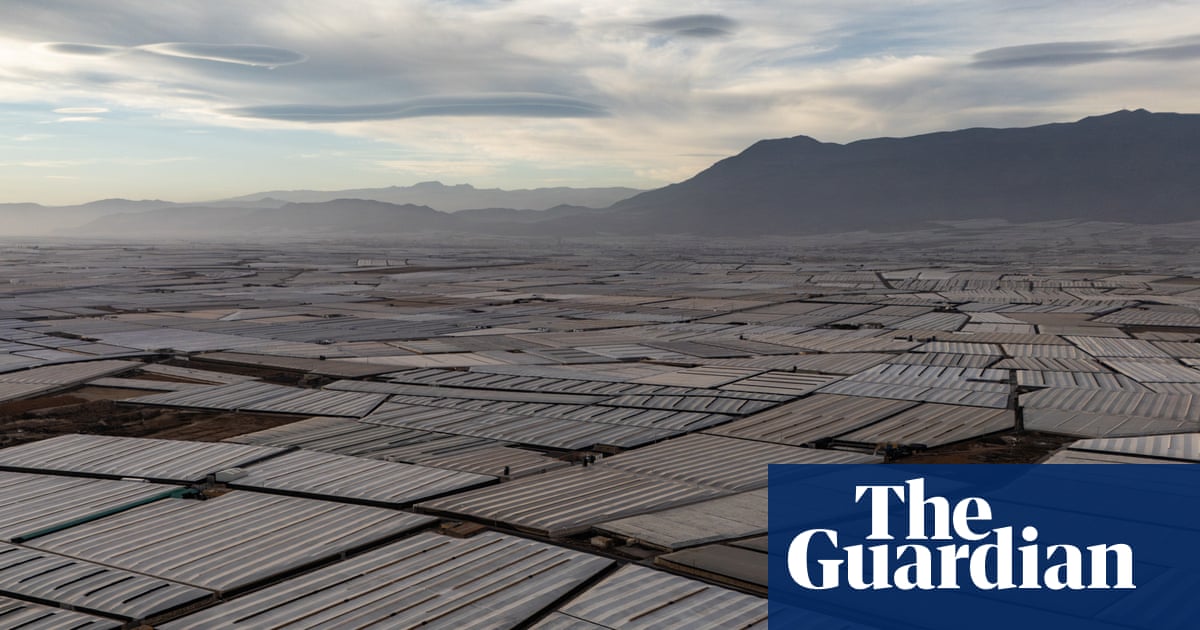
Europe’s Vegetable Garden: The ‘Sea of Plastic’ in Andalusia
A Glimpse from Space
If you were to zoom in on Google Maps, just west of Almería in southern Spain, you would encounter a striking sight: a vast expanse of white that resembles a glacier. This is no icy formation; it is the highest concentration of greenhouses in the world, covering over 30,000 hectares (approximately 74,131 acres). This geometric labyrinth, often referred to as the ‘sea of plastic,’ produces an astonishing 3.5 million tons of vegetables annually, enough to feed half a billion people and generating a turnover exceeding 3 billion euros.
The Heart of Production
At the core of this agricultural marvel lies the Hortamar cooperative in Roquetas de Mar, founded in 1977. With over 240 members, this fruit and vegetable producers’ organization supplies markets across Europe, the US, and Canada. Workers diligently prepare peppers and other vegetables, embodying the hard work and dedication that fuels this expansive agricultural enterprise.
Innovation and Sustainability
Guadalupe López Díaz, project director of the Fundación Tecnova experimental center, aptly describes this region as “the largest monument on the planet dedicated to food production.” Yet, it is more than just a production hub; it is a beacon of innovation. López emphasizes that the region is committed to sustainable practices, focusing on producing high-quality food while minimizing water and energy usage. The farmers here have transformed the landscape multiple times, adapting to challenges and embracing new technologies.
A Technological Revolution
Today, a sustainable technological revolution is underway in Andalusia. Farmers are increasingly utilizing advanced methods to ensure resilience against climate change. This includes the application of robotics and artificial intelligence in sorting and handling crops, as well as biological pest control methods that rely on natural predators. For instance, the small green predatory insect, Nesidiocoris tenuis, is employed to combat harmful pests like whiteflies.
Historical Context
The transformation of this arid region began in 1963 when farmers started using rudimentary plastic greenhouses to shield their crops from harsh winds. They soon discovered that these structures could also regulate light, heat, and humidity, creating a controlled microclimate conducive to year-round farming. This innovation, combined with drip irrigation and genetic research, allowed for multiple harvests, even in winter.
A Comprehensive Ecosystem
The ‘sea of plastic’ has evolved into a comprehensive agricultural ecosystem. Alongside the greenhouses, there are nurseries, chemical laboratories, vocational schools, and research centers like Fundación Tecnova, which focuses on developing more efficient plastics and climate-adapted crops. This interconnected network supports not only local farmers but also the broader European market, with products frequently exported to northern countries.
Water Management
Water scarcity is a significant concern in this arid region, which is why the Campo de Dalías desalination plant in Balanegra plays a crucial role. Operational since 2015, this facility is one of the largest in Europe, capable of desalinizing over 120,000 cubic meters of seawater daily—equivalent to two Olympic swimming pools per hour. This innovative approach ensures that farmers have access to the water they need while adhering to strict environmental standards.
Education and Future Prospects
The future of agriculture in this region is being shaped at the Escuela Agraria de Vícar, where 480 students learn about the latest agricultural techniques. The school emphasizes practical experience, allowing students to cultivate and market products on a two-hectare plot. Director Francisco Valverde envisions a future where agriculture is powered by artificial intelligence, IoT, and advanced sensors, all while promoting sustainability and food security.
Human Element and Challenges
However, the success of this agricultural model is not without its challenges. The workforce comprises over 70,000 foreign workers, primarily from Morocco and sub-Saharan Africa. While many enjoy decent living conditions, issues of underpayment and precarious housing persist. The duality of economic success and human exploitation raises critical questions about the sustainability of such intensive agriculture.
Environmental Concerns
Despite the region’s advancements, environmental issues remain. Although a significant percentage of the plastic used in farming is recycled—estimated at 85%—illegal dumping and abandoned waste are still prevalent. Sustainable development must be prioritized, ensuring that the drive for productivity does not come at the expense of environmental integrity or human rights.
A Living Laboratory
As the world grapples with the challenges of feeding a growing population while protecting natural resources, Almería stands as a living laboratory for innovative agricultural solutions. The region’s commitment to producing fresh, healthy food year-round, combined with advanced technology and minimal water consumption, positions it as a model for sustainable agriculture in the 21st century.


