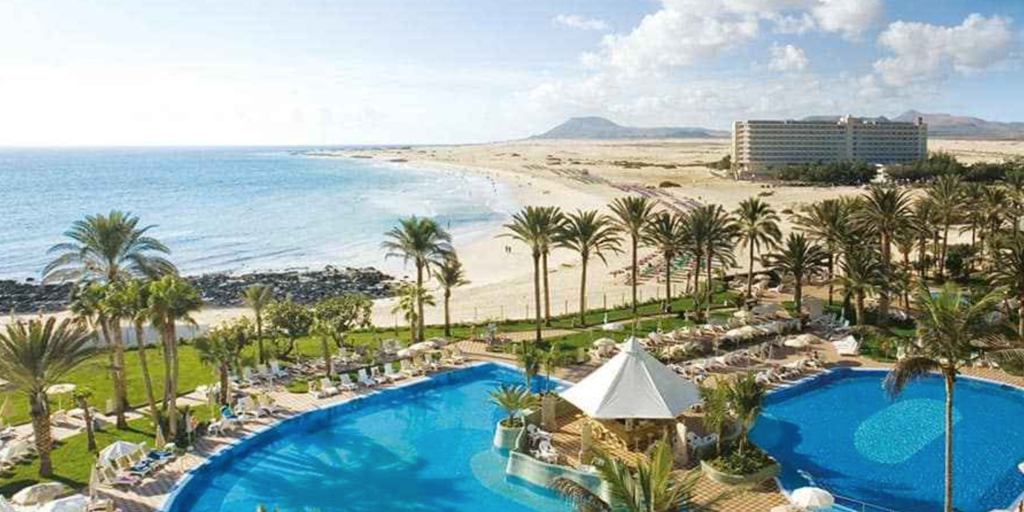
Tensions Rise Over Hotel Tres Islas: A Legal and Political Quagmire in Fuerteventura
Laura Bautista, writing from the vibrant Las Palmas de Gran Canaria, highlights an escalating situation concerning the Hotel Tres Islas, situated in the picturesque Dunas de Corralejo, Fuerteventura. This once-celebrated establishment, which opened its doors back in 1976, is embroiled in a contentious legal battle that is putting a strain on the already delicate relationship between the Canary Islands and the Spanish state.
A Demolition Order in Limbo
Recent developments indicate that the Ministry for Ecological Transition is moving towards a demolition order for the hotel, as reported by Diario de Fuerteventura. This decision follows a lengthy bureaucratic process highlighted by the hotel’s problematic occupancy of public maritime land, a situation that dates back to a concession expiration initiated in 2021. One of the primary offenses by the hotel operator, the Riu chain, was an unauthorized expansion of the hotel’s facilities, which led to escalating fines levied by coastal authorities. Despite paying the fines, the hotel remains standing, caught in a legal limbo that has yet to be definitively resolved.
Politicians and Workers Rally for the Hotel’s Future
While the bureaucratic processes unfold, the sentiment among local workers remains clear—they wish for the hotel to remain operational. Ángel Víctor Torres, the president of the Canary Islands government, has reached out to employees, calling for calm. He assured them that the hotel facilities, including the Riu Oliva Beach Resort and Riu Palace Tres Islas, will continue to operate as discussions regarding the future of the hotel evolve.
The Fuerteventura branch of the PSOE (Spanish Socialist Workers’ Party) has echoed this desire, publicly stating their unwavering opposition to any demolition orders concerning the Hotel Tres Islas. They argue that locals deserve a say in such significant decisions that could impact the community’s socio-economic wellbeing.
The Role of Local and Regional Politics
At the forefront of this issue is Blas Acosta, the PSOE candidate for the presidency of the Cabildo (local government) of Fuerteventura. Acosta has expressed resolute commitment to blocking any demolition efforts for the hotel, emphasizing that the region’s autonomy means that decisions about coastal management and development lie with the Canary Islands rather than the central government. His arguments hinge on the assertion that the hotel was constructed long before protective designations were established and, therefore, should not face demolition.
Moreover, Acosta noted the importance of balancing environmental sustainability with the island’s development needs. He believes that the future of Fuerteventura depends on preserving its historical and economic foundations—namely, establishments like the Hotel Tres Islas that contribute to the tourism industry.
A Call for Sustainable Development
One of the compelling arguments presented by Acosta involves the overarching commitment of the PSOE to sustainability, as framed within the context of the 2030 Agenda. He contends that respecting the past should go hand in hand with planning for the future. The local government is reportedly engaged in long-term strategies aimed at enhancing protections for both land and marine environments while bolstering local economic growth.
The question now looms large: How can the island reconcile its rich tourism history with modern ecological imperatives? The challenge, Acosta suggests, is in finding a middle ground where hotels can operate responsibly without infringing on the ecological integrity of the stunning natural landscape that attracts tourists from around the world.
Navigating Political Challenges
As local elections approach, the rhetoric surrounding the Hotel Tres Islas will undoubtedly play a significant role in shaping political campaigns. Many locals and stakeholders seek clarity in the murky waters of bureaucracy. Acosta argues that it’s time for Fuerteventura to assert its rights, emphasizing that the island is mature enough to make autonomous decisions. The lingering uncertainty, he states, is detrimental—not just to businesses and workers, but to the entire socio-economic landscape of the island.
The inherent complexity of this situation underscores deeper issues related to governance, local autonomy, and sustainable tourism in the Canary Islands. The Hotel Tres Islas stands as a focal point in these larger conversations, representing the balancing act that must be maintained between preserving the environment, fostering economic development, and respecting the wishes of local communities.