Discovering Granada: A Journey Through History, Culture, and Cuisine
The Moorish Legacy: Puerta de Elvira
As I step off the bus in Granada, the first glimpse of the city’s Moorish history greets me: the Puerta de Elvira. Its ochre hue stands out vibrantly against the dreary, cement skies that have been weeping for weeks. The rain in Granada adds a certain charm, enveloping the city in a misty embrace that feels both melancholic and romantic.
A Cozy Refuge: Jerusalem Books Cafe
Next to the Puerta, I find Jerusalem Books Cafe, a haven with floor-to-ceiling windows that beckon me inside. Here, the atmosphere is dry and peaceful, filled with students whose discerning tastes I trust. The cafe is adorned with an olive tree that stretches toward a crystal chandelier, creating a serene ambiance. I order the Palestinian breakfast, a colorful array of dishes that promises to be a feast for the senses. Nearby, two students are engrossed in a Spanish-to-Korean textbook, while I work on my own translation, a piece of advice scrawled in Finnish from a fellow traveler on the bus.
A Culinary Delight: Palestinian Breakfast
When my breakfast arrives, I am greeted by a vibrant spread: falafel, warm babaganoush, partly crushed favas, ripe avocado, thick yogurt, ivory hummus, cherry tomatoes, a mound of green olives, and a hill of za’atar swimming in olive oil. The dishes are garnished with chopped parsley, paprika, and sumac, giving everything a magical, dusted appearance. Instead of utensils, I’m provided with a small basket of flatbread, signaling that this will be a breakfast to remember.
Exploring the Albaicín
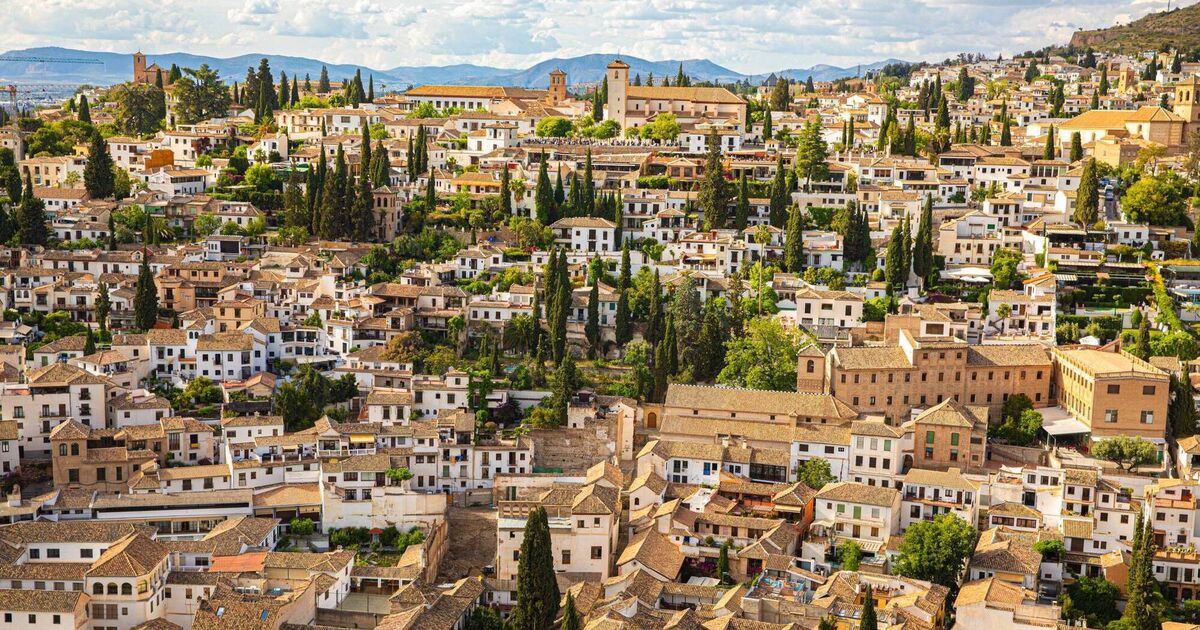
After dropping my bags at the hostel and purchasing a makeshift umbrella, I wander through the city, seeking the enchanting Albaicín neighborhood. This area is a labyrinth of hilly, winding streets, devoid of parallel lines, where the paths seem to have been crafted by a playful dog chasing a rabbit. The rain trickles down the cobblestones, and as I ascend, the entire city of Granada unfolds below me, merging with the clouds that cling to the mountain tops.
A Hidden Gem: The Royal Convent of Saint Isabel
An engraved archway catches my eye, leading me into a beautiful courtyard adorned with flowering trees. At the back, I notice a small wooden panel beneath a cross. Curiosity piqued, I ring a bell, and after a moment, the panel creaks open. A nun from the Royal Convent of Saint Isabel appears, and after a comical exchange in broken Spanish, I find myself exchanging five euros for a bag of homemade coconut macaroons. The sweet, chewy treats are a delightful surprise, and I can’t help but chuckle at the experience.
Evening in the Flamenco Caves
As evening descends, the darkening sky signals it’s time to indulge in some local wine. I head to Cueva la Faraona, one of the Flamenco caves nestled in the Albaicín. Arriving early, I strike up a conversation with David, the guitarist, whose long ponytail and half-rolled cigarette add to his artistic aura. He offers to teach me flamenco guitar, emphasizing that here, the performance is a dialogue between artist and audience.
The music begins, and I’m captivated by the enchanting guitar, filled with dissonance and surprise. A powerful singer’s voice resonates through the cave, conveying deep emotions that transcend language. A dancer enters, her dress swirling in black and white polka dots, captivating everyone in the room. The atmosphere is electric, and I feel as though I’m witnessing a living, breathing piece of art.
Tapas and Local Characters: Bar Poë
After the flamenco performance, I make my way to Bar Poë, where drinks come with complimentary tapas. The bar is vibrant, filled with locals, including Matthew, the British owner who fell in love with Granada two decades ago. Despite the rain, the bar buzzes with energy. I choose spicy chicken livers as my tapas, which pair perfectly with the cool beer and later, a glass of red wine.
Regina, an elderly woman in a fabulous scarf, adds to the charm of the evening. Her quick wit and playful banter with Matthew create a warm, inviting atmosphere. As she leaves, I can’t help but feel that if I lived here, I too would become a regular at Bar Poë.
A New Day: Restaurante Jerusalén
The next day, I wake up late and head to Restaurante Jerusalén, a Palestinian take-out spot that has caught my attention. Despite the rain, a crowd spills out onto the street, drawn by the jovial atmosphere. The walls are adorned with maps of Gaza, and the menu promises a taste of home. I order the falafel plate, and as the man prepares my meal, I’m captivated by a potted olive tree nearby, its trunk tied with a note that reads, “If the olive trees knew the hands that planted them, their oil would become tears.”
When my falafel plate arrives, I’m greeted by six steaming falafels nestled on a bed of hummus, accompanied by a vibrant salad and a drizzle of spicy sauce. Breaking through the crispy exterior reveals a fragrant, pistachio-green interior that is simply divine.
Finding Authenticity: Bultaco Bar
Instead of hopping from bar to bar, I prefer to immerse myself in one place. I settle at Bultaco Bar, a hidden gem away from the tourist crowds. The bartender, an old man with a scraggly beard and a denim flat cap, exudes a charm that draws me in. I order a homemade vermut, served with a slice of ginger, and it arrives alongside a dish of fried potatoes topped with melted cheese and walnuts.
The atmosphere is genuine, with only Spanish spoken around me. I sip my vermut, jotting down notes, feeling as though I’ve stumbled upon the heart of Granada—a city rich in culture, history, and culinary delights. The vibrant colors of the architecture, the rushing rivers, and the looming mountains all contribute to the city’s unique charm, making it a place where travelers can find both adventure and solace.