A Dissection of the Campbell-Stewart Interview with Pedro Sánchez
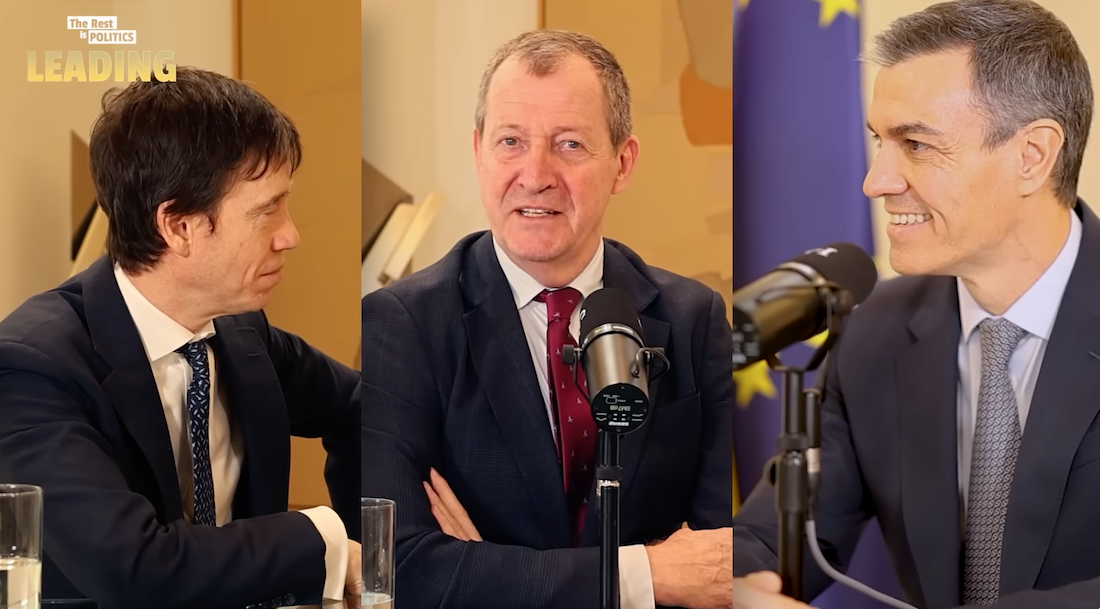
In a recent episode of The Rest is Politics, Alastair Campbell and Rory Stewart interviewed Spanish Prime Minister Pedro Sánchez. While the conversation aimed to delve into pressing global issues, it quickly became apparent that the interview lacked the incisiveness many viewers might have hoped for.
The Opening Gambit
The interview kicked off with a pertinent question regarding Donald Trump’s threats against Spain for its refusal to allow the U.S. to use military bases for attacks on Iran. Campbell’s inquiry was timely, reflecting a concern that resonates with many in Spain. However, instead of addressing the potential repercussions of such threats, Sánchez veered off into a discussion about Greenland, Ukraine, and the EU’s relationship with the U.S. This diversion left viewers wondering if the Prime Minister was dodging the question rather than providing a substantive answer.
The Art of Evasion
Rory Stewart, known for his earnest approach, sought to explore what could have been done to achieve a more coordinated international response at the onset of the war. Sánchez’s response, while politically correct, felt more like a rehearsed speech than an answer to the question. He spoke about the inevitable casualties and instability resulting from war, drawing parallels to the Iraq conflict. While his sentiments were valid, they did little to address Stewart’s inquiry directly.
The Trump Dilemma
The conversation took another turn when Campbell asked Sánchez whether he considered Trump to be “far right.” Instead of a straightforward affirmation, Sánchez opted for a diplomatic response, emphasizing the importance of international law and the need to “upgrade” the international order. This reluctance to directly label Trump seemed to stem from a fear of potential repercussions, particularly given Trump’s previous threats against Spain.
Coordination Among Allies
Stewart’s concern about the lack of coordination among Western allies prompted Sánchez to acknowledge the need for unity within the European Union. However, his lengthy response about disunity in Europe felt more like a filler than a solution. As viewers, we were left wondering if Sánchez had anything concrete to offer in terms of actionable steps toward greater coordination.
Misunderstanding Spanish Politics
As the interview progressed, it became evident that Campbell might not fully grasp the intricacies of Spanish politics. He lauded Sánchez for accommodating a wide spectrum of political views in his cabinet, including a “right-wing Catalonian.” In reality, Sánchez’s cabinet is predominantly composed of socialists, with only a few ministers from a smaller leftist party. This mischaracterization raised questions about Campbell’s understanding of the political landscape he was discussing.
Brexit and Its Implications
At one point, Campbell claimed that many Brits view Brexit as a “complete catastrophe.” However, Sánchez’s actual statement was more measured, suggesting that the UK should reflect on its decision regarding Brexit. This discrepancy highlighted a potential disconnect between the interviewers and the subject matter.
The Green Transition and Corruption
When Sánchez discussed Spain’s “green transition,” viewers might have hoped for a probing follow-up regarding the recent blackout that left millions without electricity. Similarly, his assertion that Spain does not have a corruption problem seemed at odds with the country’s recent drop in Transparency International’s Corruption Perceptions Index. These missed opportunities for deeper inquiry left many questions unanswered.
The Enthusiasm of the Interviewers
Despite the apparent shortcomings of the interview, Campbell and Stewart expressed enthusiasm for Sánchez’s performance. They labeled him a “great communicator of values” and a “phenomenal politician.” Stewart even quoted Aristotle on the principles of rhetoric, suggesting that Sánchez’s ability to engage was commendable. However, the question remains: did he truly answer the questions posed, or merely dance around them?
The Final Thoughts
As the interview wrapped up, Campbell’s assertion that Sánchez would “listen to a question and answer the question” felt somewhat optimistic. While Sánchez certainly spoke at length, the depth and relevance of his responses were often lacking. For viewers seeking clarity on pressing issues, this interview may have fallen short of expectations, leaving many to ponder the effectiveness of political discourse in such formats.