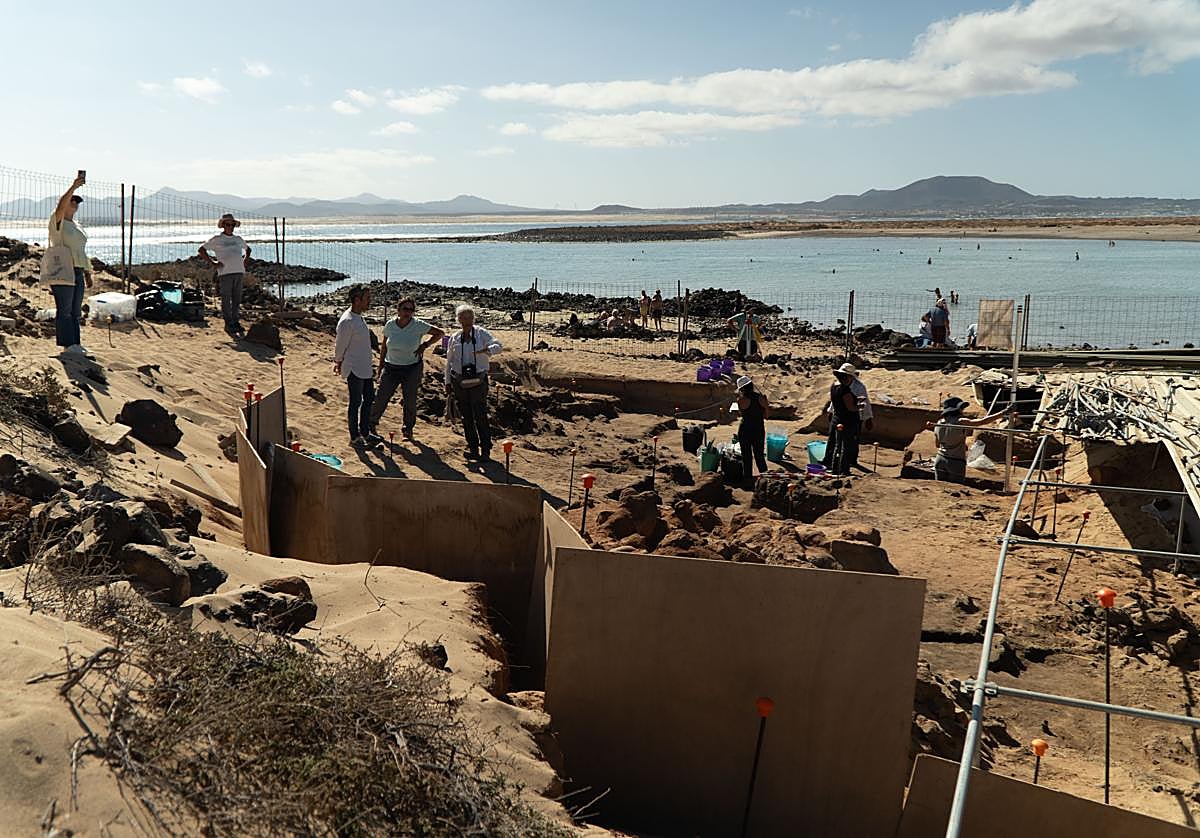
Exploring La Pared de Jandía: A Historical Gem of Fuerteventura
Nestled in the southernmost part of Fuerteventura, within the municipality of Pájara, lies a remarkable vestige of the pre-European past of the Canary Islands: La Pared de Jandía. This ancient stone construction historically traversed the isthmus that links the Jandía Peninsula with the rest of the island, spanning a distance of about six kilometers, as highlighted in historical references and social media accounts such as the TikTok profile Historia para gandules.
A Recognized Archaeological Site
Far from being mere legend, La Pared is officially designated as an archaeological site. The Government of the Canary Islands has classified it as a Bien de Interés Cultural (BIC) with the category of Archaeological Zone, recognizing it as one of the most significant sites in Fuerteventura due to its size, the number of structures, and its historical and cultural importance to the local population.
A Unique Site in the Canary Islands
La Pared is located on the Jandía isthmus, a strategically significant point that connects the southern region of the island to the broader territory. The site is characterized by a dry stone wall and approximately 40 structures either attached to it or nearby, indicating a sophisticated spatial organization by the ancient inhabitants of Fuerteventura.
Documentary evidence dates back to the 15th century, specifically in the French chronicle Le Canarien, where a wall crossing the island is mentioned. Later, in the 17th century, the importance of this site was further corroborated by the maps created by Yñigo de Brizuela, which highlighted its geographical relevance.
From Sea to Sea: A Structure That Spanned the Island
Research conducted by historians and archaeologists, including Sebastián Jiménez Sánchez and Elías Serra Rafols, supports the notion that La Pared extended from the north to the south, effectively traversing the isthmus. Today, the wall rarely exceeds 80 centimeters in height, and its width varies between 1 and 1.5 meters in certain sections. Much of the original structure has succumbed to time and repurposing, leading to its increased vulnerability due to road construction and urban development.
The Purpose of La Pared
The reason behind the construction of La Pared sparks varied interpretations among scholars. Some authors posit that the wall was designed to prevent disputes over pasture and livestock, thereby restricting access to the fertile Jandía dehesa, known for its abundant water sources and flora.
Conversely, historian Elías Serra Rafols suggested that the structure may have served a defensive purpose, although a definitive consensus remains elusive. What remains indisputable is that La Pared functioned for centuries as a physical barrier, separating the Jandía Peninsula from the rest of Fuerteventura while marking a recognized territorial division.
A Fragile Heritage of Enormous Cultural Value
The protected area, recognized as a Bien de Interés Cultural, spans over 328,000 square meters, encompassing not only the visible remnants of La Pared but also the natural surroundings where the original structure might have extended. This includes both historical documentation and oral accounts that affirm its significance.
For the Government of the Canary Islands, La Pared symbolizes a site of immense historical and cultural significance. Its protection is crucial for preserving one of the clearest testaments to the territorial organization of the ancient inhabitants of Fuerteventura.
Today, amidst the shifting sands and winds, the remnants of this wall stand as a testament to the island’s rich history—a reminder that centuries ago, Fuerteventura was divided by a stone boundary long before European contact became a reality.
“Like a silent witness to history, La Pared de Jandía continues to narrate the tales of past societies and their territorial struggles, intertwining the island’s past with the present.”
For further insights into this intriguing piece of history, feel free to explore the TikTok video linked above, providing a glimpse into the past stories of Fuerteventura.