100 Years of Annexation: Tetir and Puerto Cabras
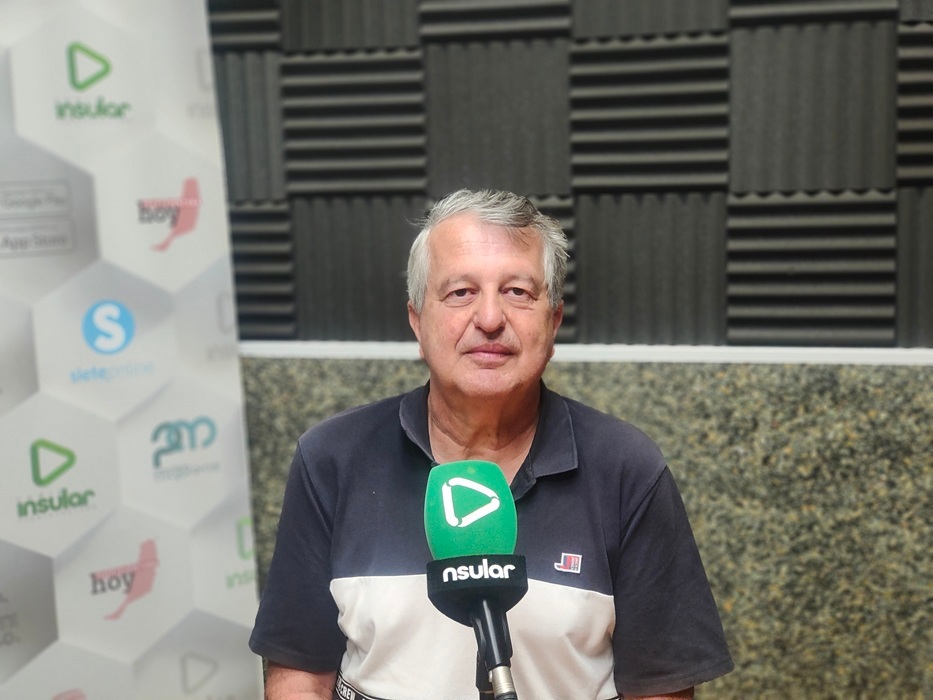
Puerto del Rosario, the capital of Fuerteventura, has not fully recognized the historical significance and contributions of Tetir. As historian Carlos Vera notes, while we commemorate a century since the annexation of Tetir to Puerto Cabras, we must confront the reality that, post-unification, “Tetir dissolved” into obscurity.
Historical Context of the Annexation
The annexation occurred on June 24, 1925, amidst a landscape where Tetir was one of the eight municipalities on the island. At that time, it had a population exceeding a thousand residents—approximately double that of the small community of Puerto Cabras, which had been established as a municipality in 1835 following the Constitution of 1812. Interestingly, Tetir was the only municipality without its own parish, a unique aspect that set it apart from its counterparts.
Historical records indicate that despite its larger population, Tetir struggled to maintain essential services. Documentation highlights that the town was unable to pay its secretary or teacher, painting a picture of dire economic conditions. This scenario contrasted sharply with the burgeoning interest in Puerto Cabras, driven mainly by the development of its maritime dock and commercial growth.
Tensions and Interests
The growth of Puerto Cabras led to ongoing disputes concerning territorial boundaries with Tetir. The Castañeyra family from Puerto used their political connections in Madrid, while the Velázquez family from Tetir sought to assert their own influence. Ultimately, however, economic pressures became overwhelming, culminating in the annexation that would erase Tetir’s status as an independent municipality.
A Dark Chapter: The Disappearance of Records
One of the more troubling aspects of this historical narrative is the disappearance of crucial documents from 1925. Vera emphasizes that all acts from that year related to Tetir are missing, which raises questions about accountability and transparency. Reports indicate that while Puerto Cabras has records—albeit based on a so-called certification from Tetir—there is complete silence from Tetir’s side. Vera speculates that someone may have had a vested interest in concealing these documents to shape the narrative differently.
In this centenary of the annexation, the evolution of Tetir from a prosperous municipality with its own parish to a forgotten corner of the island is deeply lamented. Vera insists that “without Tetir, many aspects of Puerto remain incomprehensible.” For instance, until 1904, all vital registrations—baptisms, marriages, and deaths—conducted in Puerto Cabras were documented in Tetir.
The Cry for Recognition
Historically, Vera believes that Tetir deserves more acknowledgment in the broader narrative of Puerto del Rosario. He advocates for physical representations of Tetir’s legacy, such as a dedicated building or a branch office to honor its history.
However, contemporary demands of Tetir’s residents are more immediate and tangible. Basic infrastructure issues persist, notably the absence of adequate sewage systems and the insufficient access routes into the village. Despite the installation of two oversized roundabouts, entry to the village remains problematic, often acting as a bottleneck for traffic.
Honoring the Past: Acknowledging Notable Residents
Additionally, many illustrious figures hail from Tetir, such as banker Juan Rodríguez, notary Antonio María Manrique, and even the grandfather of César Manrique, who is native to Tetir. Notably, this rich fabric of historical significance goes unrecognized today. Vera expresses frustration that visitors arrive in Tetir without any knowledge of its storied past and the influential personalities it has produced.
A Call to Action
This Wednesday, historians including Carlos Vera, Paco Cerdeña, and Rosario Cerdeña will partake in a roundtable discussion aimed at re-establishing the memory and significance of Tetir. Vera asserts, “I don’t think it’s too much to ask.” His words express a yearning for justice and historical reparation that resources and recognition for Tetir have yet to fulfill.
The journey of connecting past grievances and current realities remains a vital mission, underscoring the importance of preserving the heritage of places like Tetir in the collective memory of Fuerteventura.